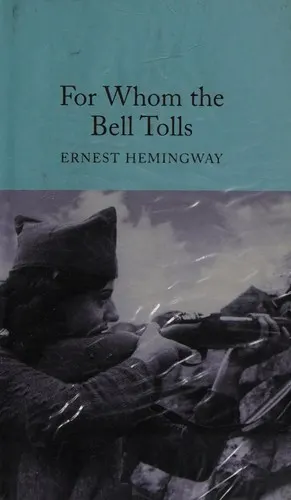
Books like For Whom the Bell Tolls
Above the bridge, Robert Jordan lies among the pine needles, measuring a military objective while the mountain earth presses cool beneath him. These novels share that fusion of physical immediacy, moral danger, comradeship, and love lived under the pressure of death.
If you liked For Whom the Bell Tolls, you’ll love these
Not lookalikes — kindred books. Each one shares something essential with For Whom the Bell Tolls, and we tell you exactly what.
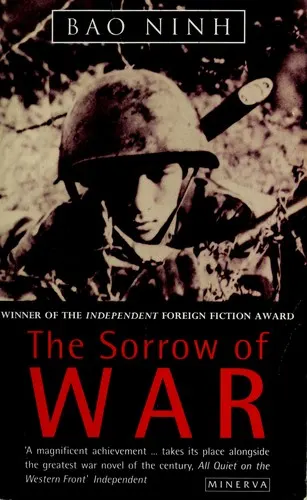
Like Hemingway, Bao Ninh writes with the authority of a combat veteran who distrusts heroic abstractions. His North Vietnamese soldier, Kien, survives the war only to find that memory has shattered chronology: comrades, forests, terror, and a lost love return with the force of present experience.
Where For Whom the Bell Tolls compresses life into a few charged days, this acclaimed modern classic shows those days echoing across a lifetime. Its prose can be hallucinatory, but its emotional discipline is severe. Few novels convey so powerfully that courage may be real even when victory cannot redeem what violence destroys.
For the reader gripped by Robert Jordan’s arguments with himself—about duty, ideology, killing, and whether one life can matter to history—Man’s Fate is essential. During the opening phase of the 1927 Shanghai uprising, Malraux moves among conspirators forced to turn political conviction into irrevocable action.
Winner of the Prix Goncourt, the novel has the heat of a thriller and the intellectual pressure of tragedy. Its characters are not symbols delivering positions; they are frightened, proud, isolated people who discover that solidarity can be both a political commitment and an answer to mortality. It captures, as Hemingway does, the strange enlargement of life when there may be almost none left.
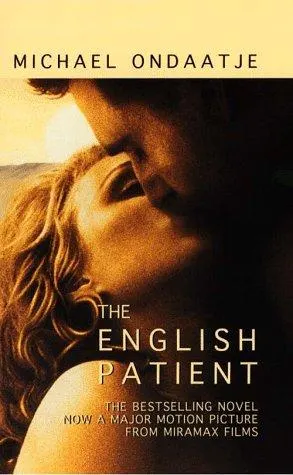
Read this for the element in Hemingway that is sometimes overshadowed by the guns: the intoxicating belief that love can create a whole private world while history closes around it. In an Italian villa near the end of the Second World War, four damaged people tend wounds, exchange stories, and cautiously enter one another’s solitude.
Ondaatje’s style is lush where Hemingway’s is spare, yet both make landscape, touch, and fleeting happiness carry enormous emotional weight. The Booker Prize–winning novel—later chosen as the Golden Man Booker by public vote—treats love neither as consolation nor escape, but as another form of danger. Its beauty has the ache of something already vanishing as you read it.