Author
Books like Edgar Allan Poe
8 books we recommend to Edgar Allan Poe readers, drawn from The Fall of the House of Usher, The Cask of Amontillado and The Tell-Tale Heart — each with the reason why.
If you loved The Fall of the House of Usher
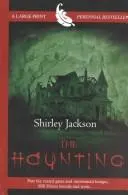
Jackson’s acknowledged masterpiece offers perhaps the purest continuation of Poe’s achievement. Hill House is described with such subtly wrong angles and proportions that architecture becomes psychological pressure; even before anything overtly uncanny occurs, the building seems to be thinking around its visitors.
Like Poe, Jackson makes terror depend on unstable perception. Her lonely protagonist, Eleanor, is vulnerable to the house precisely because she longs to belong somewhere, and Jackson’s elegant, sly prose keeps shifting the boundary between supernatural assault and inward collapse. Few haunted-house novels have been so influential, and fewer still remain this frightening: to miss it is to miss the book that perfected Poe’s idea of a dwelling as both monster and mind.
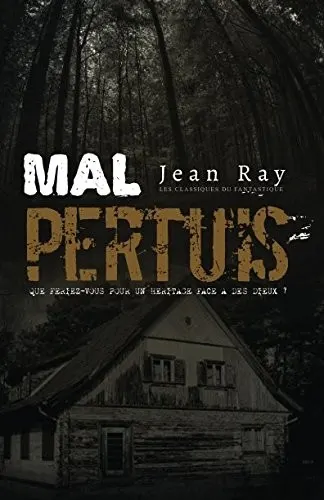
For the feverish, baroque side of “Usher,” enter Malpertuis. Jean Ray’s cult classic of Belgian fantastical literature assembles manuscripts and testimonies around a labyrinthine mansion where a grotesque family has gathered under the authority of a dying patriarch. The effect is deliberately disorienting: locked rooms, competing narrators, obscure prohibitions, and glimpses of something ancient behind the household’s decay.
Where Jackson is precise, Ray is delirious. Malpertuis feels like a Gothic inheritance contaminated by myth and nightmare, its mysteries multiplying until the house becomes a private universe with its own malignant laws. It has long inspired devotion among readers of weird fiction, and its strangeness is still genuinely singular.
Hundreds Hall is not spectacularly ruined; it is being defeated room by room—stained plaster, failing finances, obsolete grandeur. Sarah Waters uses that material decline to create a remarkably patient dread. A country doctor becomes involved with the family still clinging to the estate, and his observant, reasonable narration only makes the house’s disturbances harder to interpret.
This Booker Prize–shortlisted novel shares Poe’s fascination with families imprisoned by inheritance, but adds class resentment, thwarted desire, and the humiliations of social decline. Waters never cheapens the ambiguity by telling you exactly what to fear. The result is a slow, cold haunting whose final implications continue rearranging the novel after you finish it.
If you loved The Cask of Amontillado
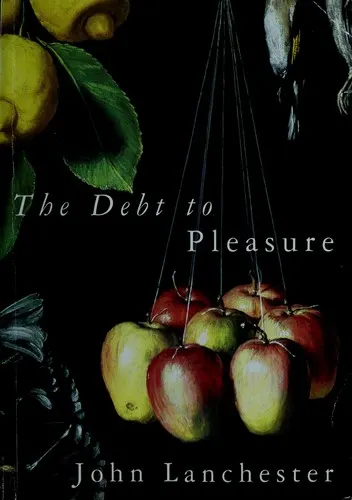
Tarquin Winot’s culinary memoir begins as an erudite tour of recipes, travel, wine, and taste—then darker implications emerge between the courses. Like Montresor, Tarquin treats refinement as both camouflage and proof of superiority, trusting his exquisite style to make cruelty seem almost reasonable.
Winner of the Whitbread First Novel Award, Lanchester’s debut is wickedly controlled: funny, appalling, and constructed so that innocent-looking remarks acquire lethal aftertastes. Anyone who relishes Poe’s fusion of connoisseurship, irony, and revenge should find this irresistible.
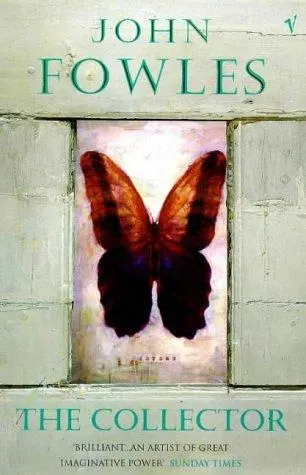
Frederick Clegg collects butterflies. When a sudden fortune gives him freedom, his habit of possessing beautiful things takes a human form. He narrates with such drab, self-excusing calm that the horror lies not in theatrical villainy but in his inability to understand why his desires might be monstrous.
Fowles turns confinement into an intimate psychological contest, forcing the reader to notice every rationalization and shift of power. An enduring modern classic, The Collector has disturbed generations because its prison is built not only from walls but from language: the captor keeps revising his story until he can imagine himself innocent.
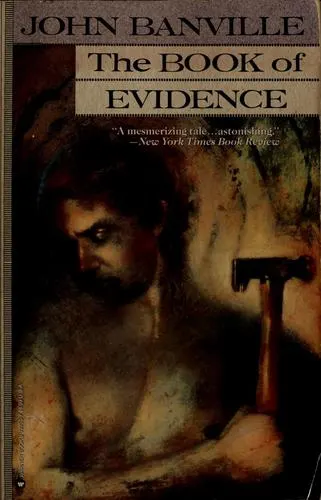
Freddie Montgomery addresses the court after committing a terrible crime, offering not repentance so much as a dazzling account of himself. His intelligence and verbal beauty continually threaten to seduce the reader—even as his vanity, evasions, and aesthetic posturing expose him.
This is the closest of the three to Poe’s pleasure in a murderer who cannot resist displaying his own artistry. Banville’s sentences are sumptuous, but their elegance sharpens rather than softens the moral chill. Shortlisted for the Booker Prize, the novel is a master class in the unreliable confession: skip it, and you miss one of fiction’s most brilliantly compromised voices.
If you loved The Tell-Tale Heart
Poe’s frantic confession expands here into one of literature’s supreme studies of a mind trying to reason its way past conscience. Raskolnikov, an impoverished student, develops a theory that certain exceptional people may step beyond ordinary morality—and decides to test it.
Dostoevsky makes thought itself suspenseful: stray remarks feel accusatory, ordinary encounters become interrogations, and physical sensations acquire unbearable significance. Like Poe’s narrator, Raskolnikov is most revealing when he believes himself most logical. This is a monumental classic not because it offers tidy moral instruction, but because it traps you inside the fever, pride, dread, and desperate ingenuity of self-justification.
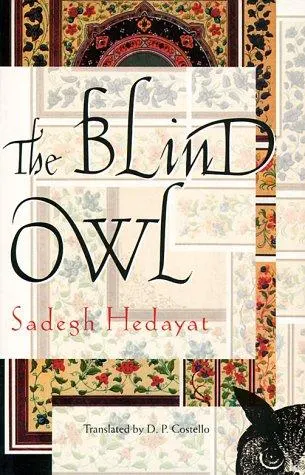
If what seized you was Poe’s rhythm—the repetitions, hallucinated details, and sense that confession is becoming delirium—read this short, hypnotic masterpiece. Its unnamed narrator writes for his shadow, circling an enigmatic woman, a grotesque old man, and images that recur with the force of nightmares.
Hedayat never lets reality settle. Scenes seem to echo, decay, and return altered, while the voice draws you deeper into isolation and psychic terror. Long regarded as a foundational work of modern Persian fiction, The Blind Owl has inspired unusually fierce devotion because it feels less like a story one finishes than a dream one contracts. Its darkness lingers in the imagination with Poe-like persistence.