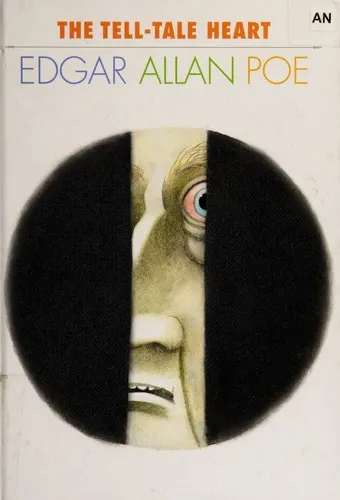
Books like The Tell-Tale Heart
A sealed room, an overalert ear, a mind insisting on its sanity as every sentence proves otherwise: these novels preserve Poe’s suffocating intimacy while twisting guilt, obsession, and self-deception in distinct ways.
If you liked The Tell-Tale Heart, you’ll love these
Not lookalikes — kindred books. Each one shares something essential with The Tell-Tale Heart, and we tell you exactly what.
Poe’s frantic confession expands here into one of literature’s supreme studies of a mind trying to reason its way past conscience. Raskolnikov, an impoverished student, develops a theory that certain exceptional people may step beyond ordinary morality—and decides to test it.
Dostoevsky makes thought itself suspenseful: stray remarks feel accusatory, ordinary encounters become interrogations, and physical sensations acquire unbearable significance. Like Poe’s narrator, Raskolnikov is most revealing when he believes himself most logical. This is a monumental classic not because it offers tidy moral instruction, but because it traps you inside the fever, pride, dread, and desperate ingenuity of self-justification.
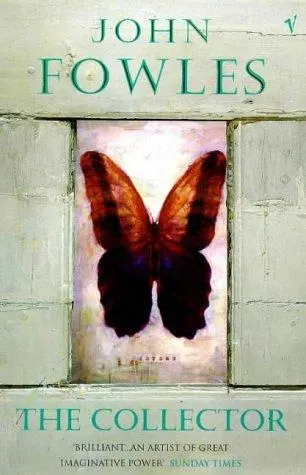
Frederick Clegg speaks with the mild, methodical tone of a man explaining a perfectly reasonable hobby. He collects butterflies; then his attention settles on a young woman named Miranda. The horror lies less in what he admits than in the emotional reality his careful language excludes.
That makes Fowles’s celebrated debut a chilling descendant of “The Tell-Tale Heart.” Both narrators treat precision as proof of innocence, yet every neat explanation exposes a deeper moral blindness. Clegg’s banal phrases and aggrieved politeness are horribly persuasive as characterization: you hear a man continually editing evil into misfortune. Few novels make an unreliable voice feel so clean, airless, and inescapable.
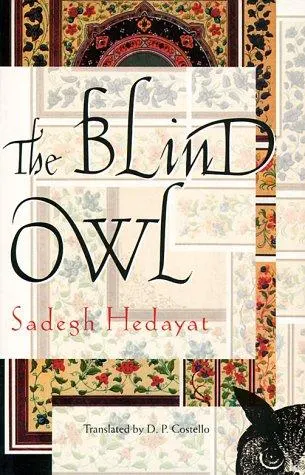
If what seized you was Poe’s rhythm—the repetitions, hallucinated details, and sense that confession is becoming delirium—read this short, hypnotic masterpiece. Its unnamed narrator writes for his shadow, circling an enigmatic woman, a grotesque old man, and images that recur with the force of nightmares.
Hedayat never lets reality settle. Scenes seem to echo, decay, and return altered, while the voice draws you deeper into isolation and psychic terror. Long regarded as a foundational work of modern Persian fiction, The Blind Owl has inspired unusually fierce devotion because it feels less like a story one finishes than a dream one contracts. Its darkness lingers in the imagination with Poe-like persistence.