
Books like Malpertuis
—because what lingers after Malpertuis is not merely its secret, but the feeling of being trapped inside a maliciously playful mythology, where architecture, testimony, and identity cannot be trusted. These three novels reproduce that deeper enchantment in strikingly different ways.
If you liked Malpertuis, you’ll love these
Not lookalikes — kindred books. Each one shares something essential with Malpertuis, and we tell you exactly what.
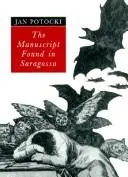
Potocki offers the closest match to Jean Ray’s delight in making a book itself into a haunted building. A discovered manuscript leads into Alphonse van Worden’s journey through the Sierra Morena, where gallows, seductive strangers, cabalists, demons, and competing explanations accumulate—and every story opens a door into another story.
The pleasure lies in never knowing whether you inhabit supernatural horror, philosophical comedy, erotic folktale, or an elaborate confidence trick. Like Malpertuis, it makes uncertainty sumptuous rather than frustrating: the elaborate narrative architecture is the monster. Long admired as a masterpiece of the European fantastic, it is one of those inexhaustible cult novels whose readers become evangelists. Anyone susceptible to Malpertuis’s boxes-within-boxes construction should consider Potocki essential.
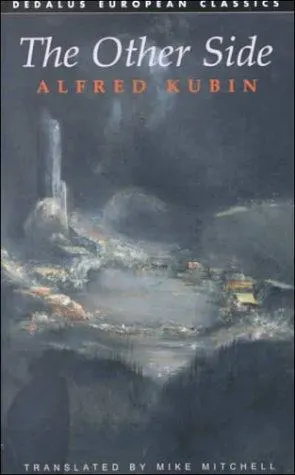
Kubin’s only novel begins with an invitation to a strange, enclosed realm called the Dream Kingdom. Its capital, Pearl, is assembled from aging buildings and ruled by an elusive sovereign; gradually, ordinary life there takes on the clammy illogic of nightmare.
What connects it to Malpertuis is the sense that decay has become a governing intelligence. Rooms, streets, objects, animals, and grotesque citizens all seem implicated in a metaphysical trap. Kubin—celebrated above all as a visionary illustrator—punctuated the novel with his own unnerving drawings, so its world feels doubly authored by nightmare. A landmark of German-language fantastic literature and Expressionist imagination, The Other Side is dirtier, more panoramic, and more apocalyptic than Jean Ray, but it exerts the same rare pressure: the suspicion that reality is only a shabby façade stretched over something ancient and ravenous.
Carrington supplies the element that less perceptive admirers of Malpertuis sometimes overlook: its wicked comedy. Ninety-two-year-old Marian Leatherby receives a hearing trumpet, learns that her family intends to send her away, and enters an institution whose bizarre architecture and occult atmosphere make respectable reality look far madder than myth.
From that premise Carrington creates an anarchic mixture of Gothic mystery, esoteric lore, fairy tale, and deadpan rebellion. Her elderly women meet absurdity without becoming absurd themselves; they possess appetites, loyalties, and metaphysical curiosity in abundance. The result is at once hilarious and genuinely uncanny, with mythology treated not as decorative symbolism but as a force capable of overturning the world. Long a beloved Surrealist cult classic, The Hearing Trumpet has the liberating strangeness of a book that recognizes no border between joke, vision, and revelation. If Malpertuis made you laugh just as the floor vanished beneath you, Carrington is indispensable.