Author
Books like C. P. Snow
8 books we recommend to C. P. Snow readers, drawn from The Masters, Corridors of Power and The Light and the Dark — each with the reason why.
If you loved The Masters
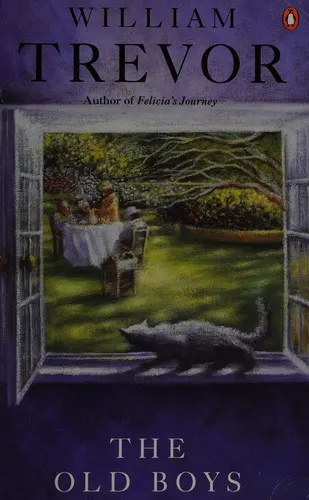
An alumni association must elect a new president, and its elderly members begin canvassing, bargaining, remembering slights, and settling scores. Yet Trevor’s novel is far more than an academic-election comedy. Like Snow, he understands that a vote is never merely a vote: it becomes a test of loyalty, vanity, fear, and the stories people tell about their own decency.
Trevor’s touch is more mischievous and more openly comic than Snow’s, but no less exact. His ensemble is wonderfully differentiated, and sympathy keeps shifting as each apparently ridiculous old man reveals an injury or need. This early triumph, winner of the Hawthornden Prize, announced the humane precision that would make Trevor one of the most revered short-story writers and novelists of his generation. Anyone who relished watching the balance of power alter conversation by conversation in The Masters should find The Old Boys irresistible.
Trollope begins with an institutional controversy that places a gentle, conscientious clergyman in an almost impossible position. Reformers, newspapers, lawyers, relatives, and church authorities all have arguments to make; inconveniently, several opposing arguments are persuasive at once.
That moral distribution is the deep link with The Masters. Trollope refuses the comfort of simple villains. He shows how honorable motives become entangled with status, affection, procedure, and self-interest, while his narrator’s irony makes every turn entertaining. The first of the Barsetshire novels, The Warden remains beloved because its modest scale conceals a profound question: what can a decent person do when justice, loyalty, and institutional survival point in different directions? Snow’s readers will recognize the dilemma—and may discover one of its great nineteenth-century masters.
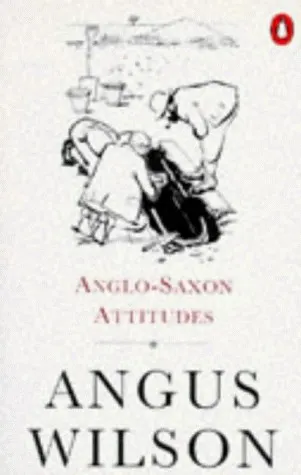
An aging historian looks back on an archaeological scandal and realizes that his scholarly detachment has also been a form of evasion. From that opening unease, Angus Wilson constructs a broad network of academics, families, protégés, and rivals whose present lives remain shaped by old compromises.
Where The Masters concentrates pressure within a single election, Wilson lets consequence accumulate across decades. His characters are intelligent enough to rationalize nearly anything, and the novel’s fierce comedy never cancels its compassion for them. Ideas matter here—not as decoration, but as instruments of ambition, camouflage, and belated self-knowledge.
Often regarded as Wilson’s masterpiece, Anglo-Saxon Attitudes combines the social reach of a Victorian novel with the psychological sharpness of postwar fiction. Its portrait of intellectual society is caustic, crowded, and finally moving; a reader drawn to Snow’s union of public maneuvering and private conscience would be missing a major companion work by overlooking it.
If you loved Corridors of Power
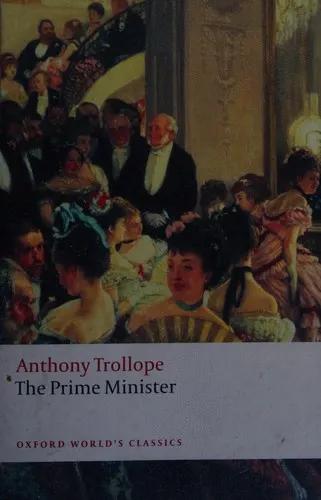
Trollope is Snow’s great predecessor in treating politics not as spectacle but as a daily test of temperament. Plantagenet Palliser unexpectedly finds himself leading a fragile coalition, and the resulting drama lies in appointments, alliances, reputation, and the maddening gap between possessing office and being free to act.
Like Snow, Trollope watches ambitious people without simplifying them into heroes or cynics. His politicians want influence, approval, money, usefulness, and moral self-respect—usually in incompatible combinations. The parallel story of the dazzling, suspect financier Ferdinand Lopez gives the novel an especially sharp understanding of how charm and social access can imitate legitimacy. Among Trollope’s celebrated Palliser novels, this is the fullest anatomy of authority as both privilege and burden; missing it means missing one of fiction’s foundational studies of political life from the inside.
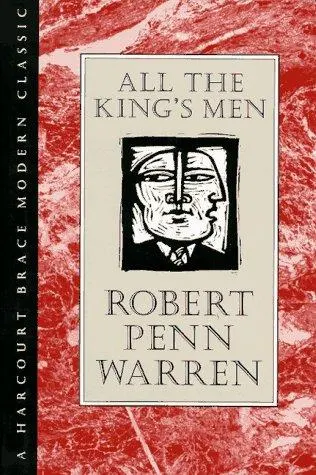
If Roger Quaife fascinated you as a man whose public cause cannot be separated from the pressures and compromises around him, Willie Stark will be irresistible. Warren’s populist governor is seen through Jack Burden, an intelligent, historically minded aide who observes power closely while pretending observation exempts him from responsibility.
The novel has more heat and rhetorical thunder than Snow, but the kinship is deep: both ask whether worthwhile ends survive the means required to achieve them, and both understand that political facts become weapons only through intimate knowledge of human weakness. Winner of the Pulitzer Prize and long established as a classic of American political fiction, it earns that stature through psychological complexity rather than topical scandal. Its sentences, moral intelligence, and mounting sense of implication make it much more than a portrait of a demagogue: it is a novel about the danger of imagining oneself merely a spectator.
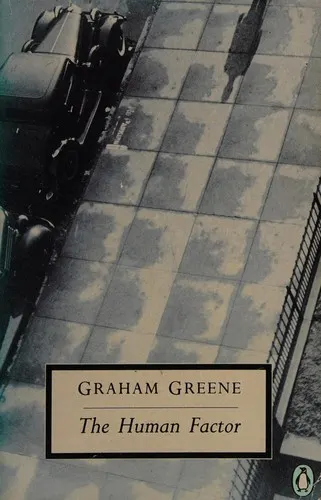
Greene shifts the action from Cabinet politics to British intelligence, but his true subject is one Snow knew intimately: the quiet institution whose bland rooms conceal choices with irreversible human costs. When a leak is detected in a small African section, routine office life becomes an inquiry into loyalty, suspicion, and the inadequacy of official categories.
This is Greene at his most controlled—little glamour, almost no heroic posturing, and tremendous pressure accumulating beneath courteous exchanges. His own intelligence experience gives the bureaucracy its persuasive texture, while his moral imagination insists that betrayal may grow from love or gratitude rather than ideology. Often regarded as one of his finest late novels, The Human Factor offers the particular pleasure Snow provides: watching intelligent professionals reason carefully inside a system that cannot measure what matters most.
If you loved The Light and the Dark
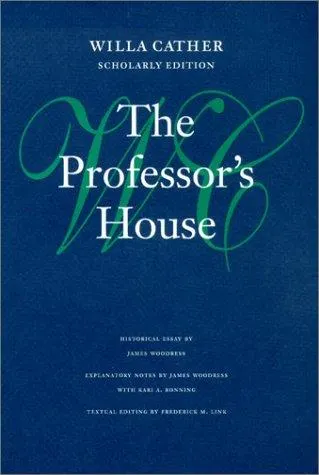
Cather begins with an accomplished historian unable to leave the shabby study where his life’s work was written. Beneath that modest resistance lies a profound estrangement—from success, family life, and even his former self.
A lover of Roy Calvert’s brilliance and darkness will recognize Cather’s refusal to reduce intellectual melancholy to a diagnosis or moral lesson. Her professor’s scholarship is not decorative characterization: it has formed his deepest loyalties and made ordinary life harder to inhabit. Spare, structurally daring, and one of Cather’s most admired novels, The Professor’s House achieves in a few pages what larger books often cannot: it makes the life of the mind feel both sustaining and perilous.
Bedford’s celebrated first novel follows two intermarrying German families before the First World War: one cultivated, wealthy, and Jewish; the other Catholic, aristocratic, and ruled by inherited codes. Its real subject is how intelligence, charm, prejudice, and institutional power coexist long before catastrophe makes their implications unmistakable.
Like Snow, Bedford distrusts easy hindsight. Her people do not know they are living in an ominous historical prelude; they are absorbed in marriages, lawsuits, loyalties, and social humiliations. The prose is glitteringly controlled, yet the accumulating moral pressure is immense. A Legacy offers the same unsettling recognition that civilization and darkness are not opposites safely separated from one another—they may occupy the same drawing room, the same friendship, even the same mind.