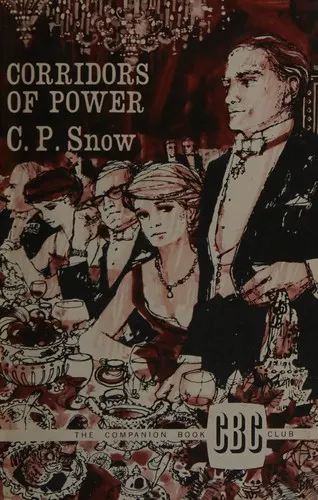
Books like Corridors of Power
You responded to Snow’s rare ability to make meetings, loyalties, and restrained conversations carry the force of high drama. These three novels likewise understand that power is exercised through people—and that private character inevitably becomes public consequence.
If you liked Corridors of Power, you’ll love these
Not lookalikes — kindred books. Each one shares something essential with Corridors of Power, and we tell you exactly what.
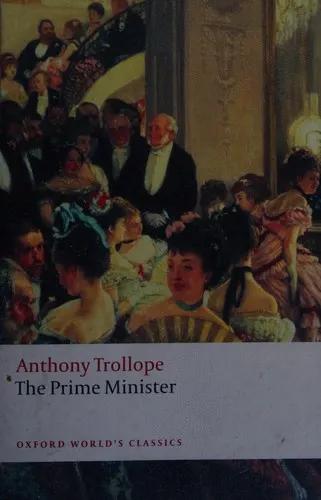
Trollope is Snow’s great predecessor in treating politics not as spectacle but as a daily test of temperament. Plantagenet Palliser unexpectedly finds himself leading a fragile coalition, and the resulting drama lies in appointments, alliances, reputation, and the maddening gap between possessing office and being free to act.
Like Snow, Trollope watches ambitious people without simplifying them into heroes or cynics. His politicians want influence, approval, money, usefulness, and moral self-respect—usually in incompatible combinations. The parallel story of the dazzling, suspect financier Ferdinand Lopez gives the novel an especially sharp understanding of how charm and social access can imitate legitimacy. Among Trollope’s celebrated Palliser novels, this is the fullest anatomy of authority as both privilege and burden; missing it means missing one of fiction’s foundational studies of political life from the inside.
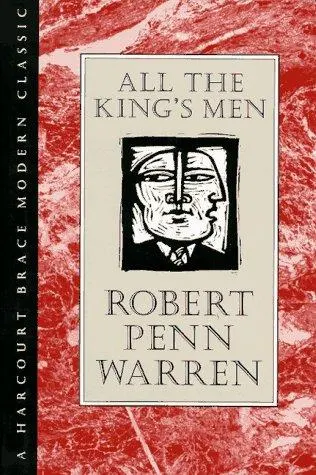
If Roger Quaife fascinated you as a man whose public cause cannot be separated from the pressures and compromises around him, Willie Stark will be irresistible. Warren’s populist governor is seen through Jack Burden, an intelligent, historically minded aide who observes power closely while pretending observation exempts him from responsibility.
The novel has more heat and rhetorical thunder than Snow, but the kinship is deep: both ask whether worthwhile ends survive the means required to achieve them, and both understand that political facts become weapons only through intimate knowledge of human weakness. Winner of the Pulitzer Prize and long established as a classic of American political fiction, it earns that stature through psychological complexity rather than topical scandal. Its sentences, moral intelligence, and mounting sense of implication make it much more than a portrait of a demagogue: it is a novel about the danger of imagining oneself merely a spectator.
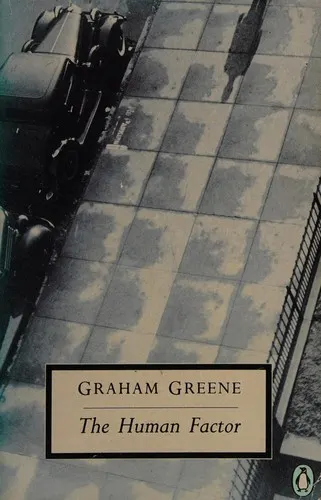
Greene shifts the action from Cabinet politics to British intelligence, but his true subject is one Snow knew intimately: the quiet institution whose bland rooms conceal choices with irreversible human costs. When a leak is detected in a small African section, routine office life becomes an inquiry into loyalty, suspicion, and the inadequacy of official categories.
This is Greene at his most controlled—little glamour, almost no heroic posturing, and tremendous pressure accumulating beneath courteous exchanges. His own intelligence experience gives the bureaucracy its persuasive texture, while his moral imagination insists that betrayal may grow from love or gratitude rather than ideology. Often regarded as one of his finest late novels, The Human Factor offers the particular pleasure Snow provides: watching intelligent professionals reason carefully inside a system that cannot measure what matters most.