Books like A Legacy
Drawing rooms sparkle with wit, family legends harden into destiny, and the cultivated surface of Europe trembles above approaching disaster. These novels preserve that intoxicating mixture of elegance, comedy, intimacy, and historical unease.
If you liked A Legacy, you’ll love these
Not lookalikes — kindred books. Each one shares something essential with A Legacy, and we tell you exactly what.
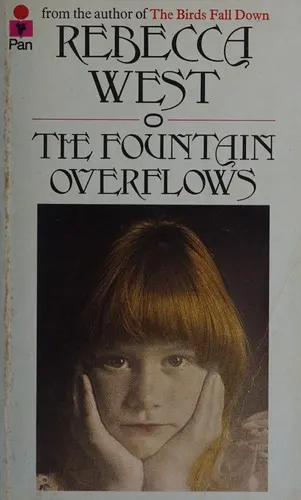
Like Bedford, West transforms eccentric family history into something richer than memoir: a whole moral and artistic education. Rose Aubrey grows up among gifted siblings, chronic shortages of money, a brilliant but ruinously unreliable father, and a mother whose musical standards divide humanity into the elect and everyone else. The children’s fierce judgments are funny, exact, and sometimes devastating.
Often regarded as West’s finest novel, it has Bedford’s gift for making remembered households feel inexhaustibly alive. Every quarrel reveals a hierarchy; every comic anecdote carries an undertow of fear. Yet West’s prose has its own sensuous abundance, especially when she writes about music and the strange certainty with which children perceive adult weakness. The Aubreys become one of those fictional families readers miss after the final page.
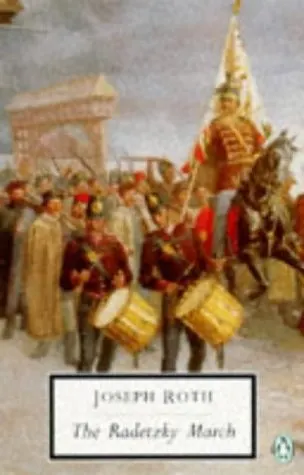
Bedford’s Germany is a place where manners, property, marriage, and bureaucracy quietly manufacture fate. Roth performs a comparable miracle with the Austro-Hungarian Empire, tracing the ennobled Trotta family after an ancestor unexpectedly saves the emperor’s life. He sees how public myths enter private character: a portrait on a wall, a uniform, or a ritual meal can exert more power than conscious desire.
This is Roth’s central masterpiece and one of the great novels of Europe’s vanished imperial world, but it never feels like a dutiful historical monument. Its irony is tender, its ceremonial scenes are wonderfully concrete, and its melancholy gathers almost imperceptibly. A reader who loved Bedford’s ability to let an entire political order disclose itself through family habits will find Roth indispensable.
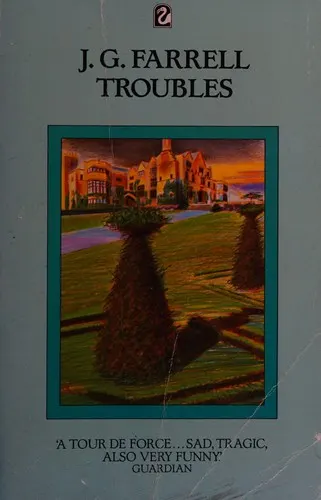
Major Brendan Archer arrives at the immense, decaying Majestic Hotel in Ireland to clarify an uncertain engagement and finds himself absorbed into the hotel’s resident Anglo-Irish family, its bewildering customs, and its steadily multiplying cats. Farrell makes dilapidation hilarious: corridors wander, vegetation invades, ceilings threaten, and everyone behaves as though proper form might still hold the world together.
The kinship with A Legacy lies above all in the tonal balance. Farrell can make privilege preposterous without flattening its inhabitants into villains, while political violence remains a real pressure beyond their insulated comedy. Awarded the retrospective Lost Man Booker Prize, Troubles has become admired precisely for this feat: it turns historical collapse into social farce without trivializing either. Its ruined hotel is as memorable and revealing as any family in Bedford.