Books like The Masters
Quiet pressure. The Masters makes committees, loyalties, and small concessions feel momentous because every institutional decision exposes private character. These novels possess the same gift for finding moral drama beneath civilized manners.
If you liked The Masters, you’ll love these
Not lookalikes — kindred books. Each one shares something essential with The Masters, and we tell you exactly what.
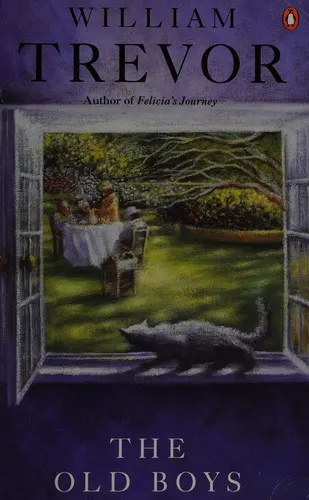
An alumni association must elect a new president, and its elderly members begin canvassing, bargaining, remembering slights, and settling scores. Yet Trevor’s novel is far more than an academic-election comedy. Like Snow, he understands that a vote is never merely a vote: it becomes a test of loyalty, vanity, fear, and the stories people tell about their own decency.
Trevor’s touch is more mischievous and more openly comic than Snow’s, but no less exact. His ensemble is wonderfully differentiated, and sympathy keeps shifting as each apparently ridiculous old man reveals an injury or need. This early triumph, winner of the Hawthornden Prize, announced the humane precision that would make Trevor one of the most revered short-story writers and novelists of his generation. Anyone who relished watching the balance of power alter conversation by conversation in The Masters should find The Old Boys irresistible.
Trollope begins with an institutional controversy that places a gentle, conscientious clergyman in an almost impossible position. Reformers, newspapers, lawyers, relatives, and church authorities all have arguments to make; inconveniently, several opposing arguments are persuasive at once.
That moral distribution is the deep link with The Masters. Trollope refuses the comfort of simple villains. He shows how honorable motives become entangled with status, affection, procedure, and self-interest, while his narrator’s irony makes every turn entertaining. The first of the Barsetshire novels, The Warden remains beloved because its modest scale conceals a profound question: what can a decent person do when justice, loyalty, and institutional survival point in different directions? Snow’s readers will recognize the dilemma—and may discover one of its great nineteenth-century masters.
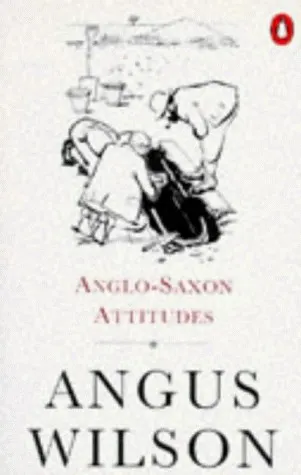
An aging historian looks back on an archaeological scandal and realizes that his scholarly detachment has also been a form of evasion. From that opening unease, Angus Wilson constructs a broad network of academics, families, protégés, and rivals whose present lives remain shaped by old compromises.
Where The Masters concentrates pressure within a single election, Wilson lets consequence accumulate across decades. His characters are intelligent enough to rationalize nearly anything, and the novel’s fierce comedy never cancels its compassion for them. Ideas matter here—not as decoration, but as instruments of ambition, camouflage, and belated self-knowledge.
Often regarded as Wilson’s masterpiece, Anglo-Saxon Attitudes combines the social reach of a Victorian novel with the psychological sharpness of postwar fiction. Its portrait of intellectual society is caustic, crowded, and finally moving; a reader drawn to Snow’s union of public maneuvering and private conscience would be missing a major companion work by overlooking it.