Author
Books like William Golding
9 books we recommend to William Golding readers, drawn from Lord of the Flies, The Inheritors and The Spire — each with the reason why.
If you loved Lord of the Flies
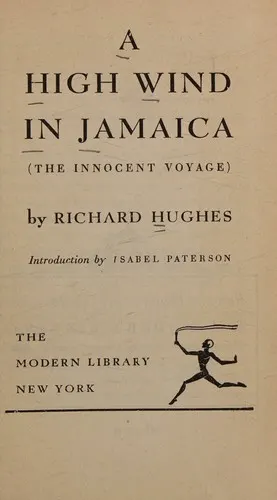
Few novels dismantle sentimental ideas about childhood as audaciously as this 1929 classic. After a hurricane, a group of English children sailing home from Jamaica ends up aboard a pirate ship. Hughes refuses to make them either innocents in peril or miniature villains; they possess their own unstable morality, emotional weather, and alarming freedom from adult logic.
Like Golding, Hughes makes childish games and misunderstandings genuinely dangerous, while his deceptively airy prose keeps horror just beneath the surface. Hugely influential in its portrayal of children as psychologically alien rather than naturally pure, this is the ancestor every admirer of Golding should discover.
Mishima’s short, immaculate novel enters the mind of Noboru, a thirteen-year-old boy who secretly observes his widowed mother and becomes fascinated by the sailor she loves. Noboru belongs to a group of boys who regard ordinary adult feeling as weakness and have constructed a severe private philosophy of glory, purity, and power.
The kinship with Jack’s tribe lies not in scenery but in the terrifying conversion of abstraction into permission: language hardens into doctrine, and doctrine makes brutality feel righteous. Mishima renders this with cold beauty, charged symbolism, and mounting inevitability. It is one of his most widely read novels, and its final stretch has the merciless formal precision of tragedy.
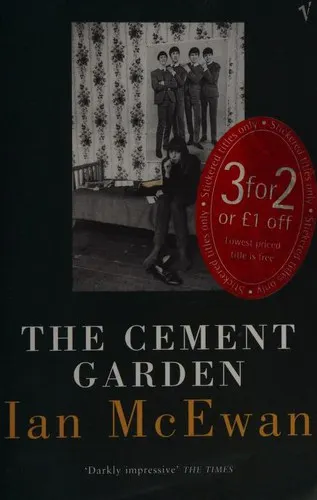
Four siblings find themselves abruptly isolated inside their decaying family home and decide to preserve their independence from the adult world. McEwan tells the story through adolescent Jack, whose flat, self-absorbed voice makes each transgression more disturbing: he rarely understands the significance of what he reports, even when the reader does.
Where Golding builds a public society of rules, factions, and ceremonies, McEwan explores the sealed household—the family as its own island. The same questions press in: what restrains us when supervision disappears, and how easily can necessity become an excuse for desire? This notorious early novel established McEwan’s gift for elegant psychological unease; compact and claustrophobic, it leaves an afterimage far larger than its length.
If you loved The Inheritors
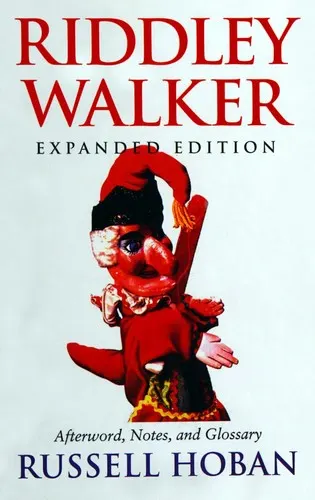
Hoban’s cult masterpiece offers the closest equivalent to Golding’s feat of imaginative immersion. Its young narrator inhabits a post-catastrophe England whose broken language preserves scraps of forgotten knowledge as jokes, legends and sacred formulas. Reading it is an act of excavation: every mangled word may contain a clue to the civilization Riddley cannot comprehend.
Like The Inheritors, it makes limited understanding feel not primitive but intensely alive. Its invented dialect soon becomes startlingly expressive, while the story’s violence and dark comedy expose how human beings turn fear into myth and myth into power. Few novels alter the reader’s consciousness so completely; missing it would mean missing one of fiction’s great demonstrations that language can create an entire mind.
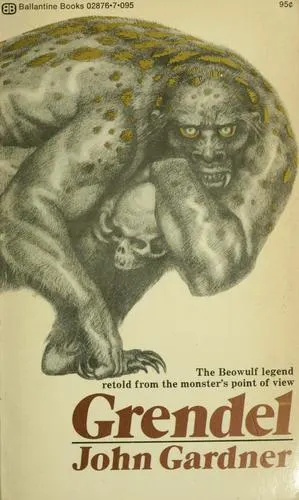
Gardner enters the consciousness of the monster from Beowulf and discovers not a simple victim but a furious, lonely intelligence: comic, vain, philosophical and painfully susceptible to beauty. Watching human beings from the margins, Grendel is appalled by their brutality yet fascinated by their ability to transform brutality into heroic song.
That tension should strike directly at a reader of Golding. Both novels ask whether art, ritual and abstract thought ennoble humanity or merely give violence better stories to tell about itself. But where The Inheritors is sensory and tender, Grendel is verbally dazzling and mordantly funny. Long established as a modern classic, it does the rarest thing a retelling can do: after Gardner, the old poem’s monster can never become faceless again.
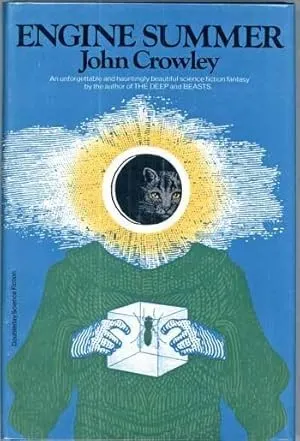
Rush That Speaks grows up in a small community devoted to ‘truthful speaking,’ then sets out after the girl he loves. He narrates with serene confidence, but the reader gradually senses histories and meanings beyond the limits of his understanding. That gap produces the same ache as Lok’s perspective in The Inheritors: innocence is preserved on the page even as we perceive the vastness of what has been lost.
Crowley’s prose is lucid rather than linguistically fractured, full of weather, gardens, customs and half-understood remnants. The result is less brutal than Golding but equally haunting—a pastoral whose beauty deepens its sadness. Though quieter than Crowley’s celebrated Little, Big, Engine Summer has inspired unusually devoted readers because its final emotional resonance seems to expand long after the book is closed.
If you loved The Spire
Fourteen-year-old Francis Tarwater has been raised by his fanatical great-uncle to believe he is a prophet. Once left to himself, he must decide whether that vocation is divine, delusional, or somehow both.
Like Golding, O’Connor refuses the comfortable opposition between enlightened reason and foolish faith. Her characters’ spiritual claims are grotesquely entangled with pride, violence, hunger, and resistance; yet the possibility of genuine revelation is never safely dismissed. Her fierce comic prose makes every physical object seem charged with judgment. One of O’Connor’s two extraordinary novels, it has the concentrated, disturbing authority of a parable whose meaning will not sit still.
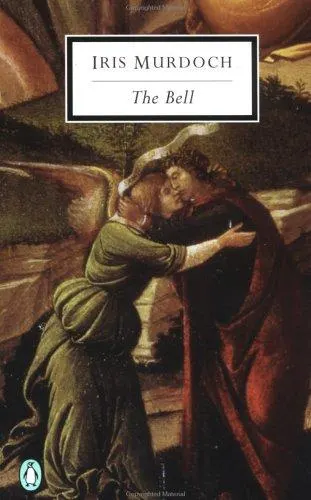
At Imber Court, a lay religious community attempts to build a disciplined life beside an enclosed order of nuns. Into it comes Dora Greenfield, reluctantly returning to her domineering husband—and bringing unruly desire, vanity, kindness, and confusion into an institution sustained by ideals.
Murdoch is less feverish than Golding but equally alert to the damage done when people turn moral aspiration into control. She moves among several minds, revealing how each person edits reality to preserve a cherished self-image. The result is compassionate, witty, and quietly devastating: a novel in which holiness and hypocrisy do not cancel each other but coexist. The Bell remains one of Murdoch’s most loved novels because its moral intelligence is inseparable from its wonderfully tangible human mess.
On the Day of the Dead in Mexico, the former British consul Geoffrey Firmin drinks while his estranged wife returns hoping their marriage can still be saved. Around that simple beginning, Malcolm Lowry constructs a world of signs, echoes, political menace, private guilt, and thwarted salvation.
A reader enthralled by Golding’s immersion in Jocelin’s consciousness will recognize the experience: reality bends around one damaged man’s obsession, while the prose makes his inner catastrophe feel monumental. Lowry’s imagery accumulates with architectural precision, but the foundation is painfully intimate—the gulf between what Firmin can perceive and what he can admit. Its hard-won reputation as a modernist masterpiece rests on this fusion of symbolic grandeur and bodily degradation. Few novels make damnation feel so lucid, seductive, and heartbreakingly avoidable.