Books like The Sailor Who Fell from Grace with the Sea
Salt air, immaculate surfaces, forbidden desire, and the suspicion that beauty becomes most powerful at the instant it turns destructive linger through these books.
If you liked The Sailor Who Fell from Grace with the Sea, you’ll love these
Not lookalikes — kindred books. Each one shares something essential with The Sailor Who Fell from Grace with the Sea, and we tell you exactly what.

This is the essential next Mishima. Mizoguchi, a stuttering young acolyte, becomes obsessed with Kyoto’s Golden Pavilion: its perfection seems to expose everything misshapen and ordinary in himself. As in The Sailor, reverence gradually curdles into hostility, and beauty becomes an intolerable demand rather than a consolation.
Mishima’s lucid, sensuous prose gives destructive thought the force of logic. Based on a notorious real event and widely considered one of his major novels, it carries The Sailor’s conflict between ideal form and compromised life to its fiercest conclusion.

McEwan’s first novel enters a household from which adult authority is slowly disappearing. Its adolescent narrator, Jack, watches his siblings with a mixture of detachment, rivalry, desire, and incomprehension; together they begin forming a private moral climate in which ordinary taboos lose their stability.
What connects it to The Sailor is not merely youthful transgression, but the sealed logic children can build against the adult world. McEwan’s prose is spare, tactile, and unnervingly calm, making domestic objects and bodily details feel illicit. The book helped earn the young author his early “Ian Macabre” reputation, and its disturbing intimacy remains difficult to shake.
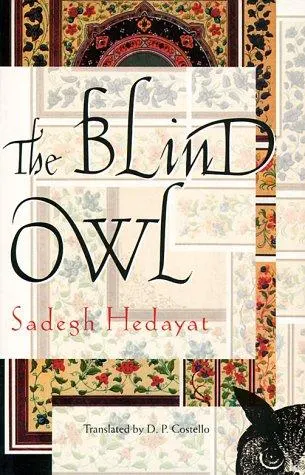
An isolated painter addresses his shadow after glimpsing a mysterious woman who seems to embody an impossible purity. From there, desire, disgust, memory, and death begin folding into one another. Like Mishima, Hedayat understands that idealization can be a form of violence: the beloved becomes unbearable once imagination confronts flesh.
The Blind Owl replaces Mishima’s crystalline realism with feverish repetition and dream logic, yet it produces the same dangerous intoxication—the sense of being trapped inside a beautiful, merciless consciousness. A cult classic long regarded as a masterpiece of modern Persian fiction, this brief novel has the density and afterlife of a nightmare you cannot quite interpret or forget.