Author
Books like V. S. Naipaul
7 books we recommend to V. S. Naipaul readers, drawn from A House for Mr Biswas, The Mimic Men and The Mystic Masseur — each with the reason why.
If you loved A House for Mr Biswas
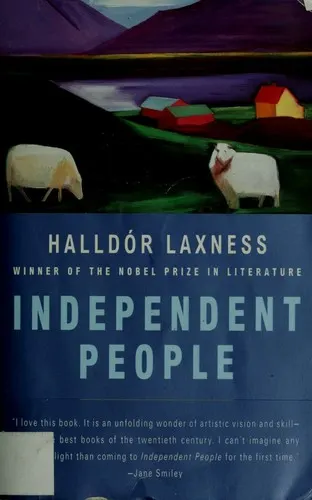
After eighteen years as a shepherd, Bjartur finally acquires a bleak Icelandic croft and resolves never again to depend on anyone. His faith in self-sufficiency is magnificent, absurd and ruinously inflexible—the same unstable mixture of dignity and folly that makes Mr Biswas unforgettable.
Laxness treats poverty without sentimentality and ambition without condescension. The landscape is harsher and the prose more mythic than Naipaul’s, but the comedy likewise exposes the human cost of turning a home into proof of one’s worth. Widely considered the Nobel laureate’s masterpiece, Independent People is one of the great novels about how a noble ideal can become a personal tyranny.

Margayya begins beneath a banyan tree, dispensing financial guidance to Malgudi’s poor while nursing grander dreams for himself. Narayan understands, as Naipaul does, that status is made from tiny humiliations: a dismissive official, an unimpressive workplace, the suspicion that one’s relatives and neighbours are laughing.
The delight lies in the precision of the comedy. Margayya’s ingenuity deserves admiration, yet every attempt at advancement reveals another pocket of vanity or self-deception. Malgudi becomes as complete a social organism as Biswas’s Trinidad—full of institutions, gossip, commerce and family pressure. This is Narayan’s celebrated fictional world at its sharpest: effortless to read, exact in judgment and far less gentle than it first appears.

On a cold London evening, the veteran migrant Moses Aloetta goes to Waterloo Station to meet a newcomer from Trinidad. From that modest beginning Selvon creates an episodic chorus of men whose boasts, schemes and comic performances keep disappointment from defining them.
What connects it most powerfully to A House for Mr Biswas is its belief that comedy can preserve dignity without disguising hardship. Selvon’s transformed vernacular narration lets an entire community think and joke on the page; the language does not merely record its characters but gives them possession of the novel. Now foundational to Black British literature, The Lonely Londoners remains startlingly alive—funny, musical and tender without ever becoming soft.
If you loved The Mimic Men

An unnamed Sudanese narrator returns from Europe and encounters Mustafa Sa’eed, a brilliant, enigmatic man whose life has been shaped by the colonial metropolis. Like Ralph Singh, Mustafa makes identity into a performance—and Salih keeps asking whether eloquence is self-knowledge or merely a more seductive disguise.
This short, feverishly concentrated classic of Arabic literature has Naipaul’s gift for exposing the psychic afterlife of empire without reducing anyone to a political symbol. Its doubles, competing confessions, erotic power struggles, and treacherous storytelling make it feel inexhaustible: a novel to finish in a sitting and argue with for years.
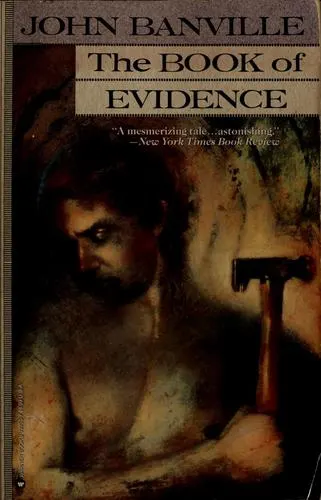
Freddie Montgomery narrates his own appalling crime with fastidious intelligence, aesthetic rapture, and almost comic vanity. The kinship with Ralph Singh lies in the dangerous pleasure of listening to a man arrange his failures into beautiful prose. Every elegant sentence offers apparent candor while quietly raising the question: what is he refusing to understand?
Shortlisted for the Booker Prize, Banville’s novel is among the finest modern examples of the self-indicting confession. Its language is lush but exact, its comedy ice-cold, and its moral pressure relentless. If the controlled brilliance and evasive autobiography of The Mimic Men were central to its appeal, Freddie’s voice is one you should not miss.
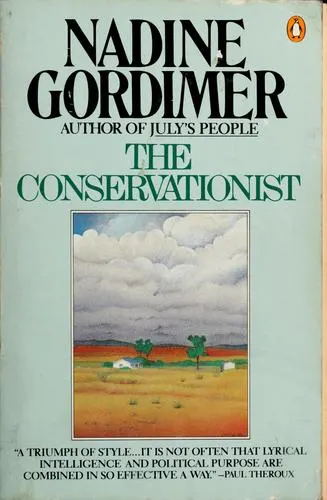
Mehring, a wealthy white industrialist, buys a South African farm and imagines himself its responsible custodian. Gordimer gradually reveals how ownership, benevolence, and political innocence become stories he tells to keep reality at a flattering distance. Like Naipaul, she lets a compromised consciousness expose itself through its habits of perception rather than through authorial verdicts.
The farm’s textures and surrounding lives continually resist Mehring’s private mythology, giving the novel an earthy, polyphonic force very different from Naipaul’s metropolitan chill. Joint winner of the 1974 Booker Prize, The Conservationist is one of Gordimer’s defining achievements: formally daring, morally unsparing, and devastating about the gap between possessing a country and belonging to it.
If you loved The Mystic Masseur
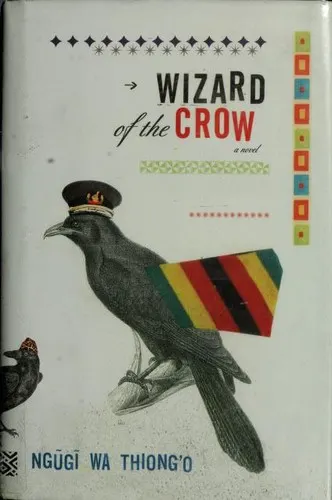
Here the comedy of improvised authority grows to national scale. In the imaginary dictatorship of Aburĩria, power depends upon spectacle, rumor, credulity, and the endless willingness of officials to flatter themselves. Into this world steps an accidental wizard whose reputation begins acquiring a life of its own.
Readers who loved the way Ganesh’s mystical persona becomes socially useful will recognize the exhilarating logic, but Ngũgĩ turns it into a vast, carnivalesque assault on tyranny and political unreality. The novel moves with the energy of oral storytelling: jokes breed new jokes, grotesque claims become policy, and fantasy exposes facts ordinary realism could barely contain. It is one of the major political satires of postcolonial literature—furious, generous, and so inventive that its great length feels like abundance rather than weight.