Author
Books like Sigrid Nunez
6 books we recommend to Sigrid Nunez readers, drawn from The Friend and What Are You Going Through — each with the reason why.
If you loved The Friend
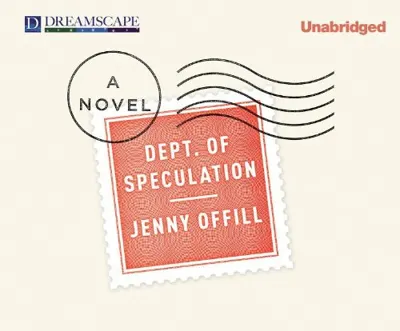
Offill builds a marriage story from glittering fragments: jokes, quotations, scientific curiosities, domestic details, and sudden admissions of pain. Like Nunez, she makes intellectual digression feel emotionally urgent; every borrowed fact is another instrument for examining love, betrayal, parenthood, and the unstable identity of a writer.
This slender novel became a touchstone for contemporary fragmentary fiction because its white space carries as much force as its sentences. It is funny without trivializing anguish and formally daring without losing intimacy. Readers of The Friend who underlined Nunez’s aphorisms will find themselves doing the same here—then discovering that Offill’s shards have quietly assembled into something devastatingly whole.

A celebrated writer recalls her long, difficult bond with Emerence, the formidable housekeeper who enters her life and refuses nearly every conventional form of intimacy. Their attachment becomes a struggle over pride, privacy, dependence, and the dangerous belief that we know what is best for someone we love.
The deep kinship with The Friend lies in its moral self-scrutiny. Szabó’s narrator does not use grief to absolve herself; she turns memory into an unsparing inquiry into loyalty and guilt. Now regarded internationally as one of the Hungarian master’s defining novels, The Door inspires unusual devotion because Emerence is not merely vivid but inexhaustible—a character who permanently complicates the reader’s ideas about care.
Decades after a brief failure of kindness toward a childhood friend, Maxwell’s narrator returns to the memory and to the rural tragedy surrounding it. He tries to reconstruct lives he only partly witnessed, continually acknowledging where knowledge ends and imagination begins.
That tension will be instantly meaningful to a reader of The Friend: How can a writer honor the dead without turning them into material? Maxwell answers in prose of extraordinary gentleness and precision, allowing remorse, invention, and compassion to coexist. Winner of the William Dean Howells Medal, this brief novel is often cherished as a near-perfect example of what fiction can do with memory. Its modest dimensions conceal an emotional reach that many much larger books never attain.
If you loved What Are You Going Through
Helen prepares her spare room for Nicola, an old friend with terminal cancer who is pursuing a dubious alternative treatment. What follows is not a consoling portrait of saintly caregiving but a fierce examination of friendship under pressure: tenderness competes with anger, exhaustion, skepticism, and fear.
Garner, one of Australia’s most revered writers, has Nunez’s gift for stripping moral questions of their reassuring abstractions. Her prose is tauter and more combustible, yet just as alert to the indignities surrounding illness and to the terrible difficulty of respecting another person’s choices. Few novels admit so honestly that love may include impatience and disbelief. If Nunez’s refusal of easy virtue moved you, this devastatingly lucid book is indispensable.
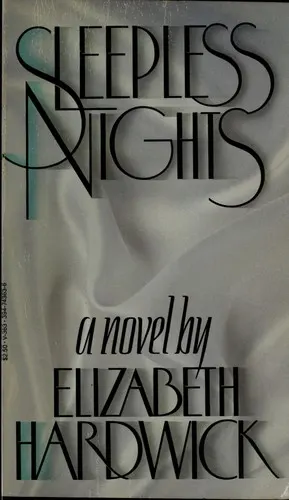
This 1979 novel moves through remembered rooms, friendships, overheard lives, vanished lovers, and solitary nights rather than along a conventional plot. Its narrator keeps turning away from herself toward other people—especially those whose suffering or strangeness might otherwise go unrecorded.
That associative movement will feel deeply familiar to a Nunez reader: anecdote becomes meditation, other people’s stories alter the teller, and cultural observation sits naturally beside grief. Hardwick’s sentences are sharper-edged and more glittering, but they possess the same skeptical intimacy. Long regarded as a landmark of fragmentary autobiographical fiction, Sleepless Nights helped make possible the kind of formally free, intellectually alive novel Nunez writes. Reading it feels like discovering an essential ancestor.
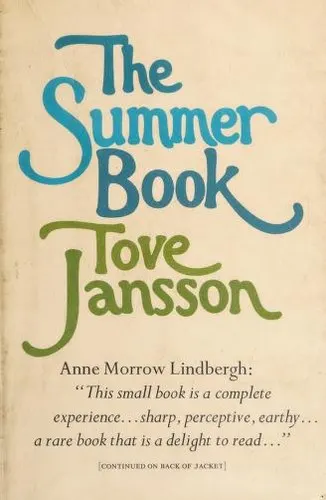
On a small Finnish island, an elderly woman and her young granddaughter talk, quarrel, explore, invent games, and contemplate the natural world. Jansson builds the novel from brief episodes whose apparent slightness conceals enormous emotional weight: a storm, a dead animal, a difficult question, a moment of irritation between two people who understand each other almost too well.
Like Nunez, Jansson distrusts both sentimentality and solemnity. Mortality is everywhere, but so are comedy, stubbornness, boredom, and sensuous pleasure. The grandmother never turns into a dispenser of wisdom; the child is neither innocent nor symbolic. Their companionship remains prickly, private, and real. This beloved modern classic performs a rare feat: it makes acceptance of death feel inseparable from sharper attention to life.