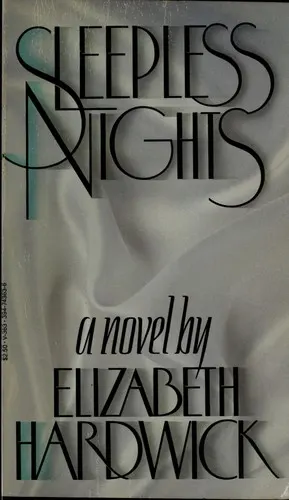
Books like Sleepless Nights
In Sleepless Nights, memory does not restore the past; it catches people briefly in the hard, beautiful light of a sentence before letting them disappear again.
If you liked Sleepless Nights, you’ll love these
Not lookalikes — kindred books. Each one shares something essential with Sleepless Nights, and we tell you exactly what.
This is the closest match for Hardwick’s exhilarating refusal to make a life behave like a conventional story. Adler’s narrator, Jen Fain, moves through journalism, love affairs, parties, classrooms, jokes, dangers, and scraps of overheard speech. Meaning accumulates through abrupt juxtaposition: each fragment is lucid, funny, and slightly alarming, while the gaps do as much work as the words.
First published in 1976, Speedboat became a cult novel and later a touchstone for writers of fragmentary fiction. But its form never feels like an exercise. Adler shares Hardwick’s appetite for social absurdity and her ability to compress an entire judgment into one apparently casual observation. Reading it produces the rare sensation that intelligence itself has become a narrative voice.
Ginzburg reconstructs a family not through orderly reminiscence but through its private vocabulary: repeated jokes, complaints, nicknames, songs, and phrases whose meanings deepen over decades. People emerge as they do in Sleepless Nights—through verbal habits and charged details rather than explanatory portraiture. The result is at once intimate and withholding, affectionate without sentimentality.
Winner of Italy’s Strega Prize and now regarded as one of Ginzburg’s masterpieces, Family Lexicon quietly enlarges from domestic comedy into a record of life under Fascism and war. Ginzburg never forces the family to become symbolic; history enters through interruptions, absences, and altered voices. Hardwick readers will recognize the moral power of preserving what seems incidental—and may finish convinced that incidental things are what a life is made of.
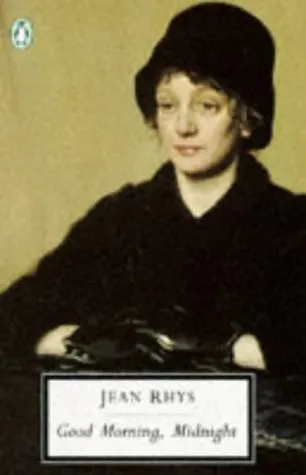
Sasha Jansen begins the novel alone in a Paris hotel room, trying to impose a manageable routine on days crowded by memory, humiliation, alcohol, and chance encounters. Rhys’s kinship with Hardwick lies less in this outward loneliness than in her gaze: both writers notice shabby rooms, compromised gestures, clothes, money, and the tiny social cruelties by which vulnerable women are measured.
Rhys writes with devastating economy. A café or a face can suddenly open onto years of feeling, yet she never pleads for Sasha or turns suffering into nobility. Neglected on publication in 1939, Good Morning, Midnight is now recognized as one of Rhys’s essential novels, cherished for the precision with which it makes despair funny, theatrical, and fiercely alive. Anyone drawn to Hardwick’s unsparing tenderness toward women on the margins should not miss it.