Author
Books like Shirley Jackson
10 books we recommend to Shirley Jackson readers, drawn from The Lottery, The Haunting of Hill House, We Have Always Lived in the Castle and The Sundial — each with the reason why.
If you loved The Lottery
A stranger begins holding auctions in a small farming community, requesting donations for supposedly public-minded causes. Each concession seems too minor to resist; together they become terrifying.
Samson understands exactly what Jackson did: coercion works best when disguised as neighborliness, custom, and common sense. Her plain, unshowy prose tracks how decent people rationalize each surrender until compliance becomes the community’s governing instinct. Long cherished as a cult classic, this compact 1975 novel is among the most unnervingly plausible studies of collective submission in American fiction.
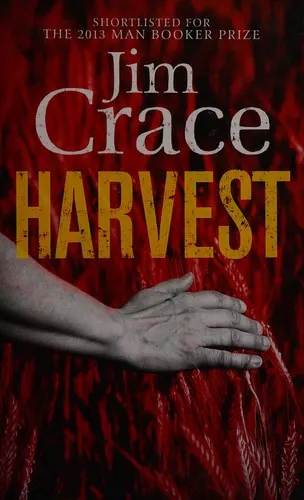
A remote village wakes to two disturbances: smoke from a fire and the arrival of strangers. From those small disruptions, fear begins organizing the villagers’ perceptions and loyalties.
Crace’s Booker-shortlisted novel shares Jackson’s fascination with the instant when “everyone” becomes more powerful—and less moral—than anyone. His sensuous, rhythmically charged prose makes communal life feel intimate and ancient, then shows suspicion rewriting its rules. Winner of the International Dublin Literary Award, Harvest is both beautiful and pitiless: a novel about how quickly belonging can demand a victim.
If you loved The Haunting of Hill House
Waters turns a decaying English country house into an exquisitely controlled instrument of doubt. A village doctor becomes increasingly involved with the diminished family living there, just as strange disturbances begin to trouble the household. Every incident admits competing explanations: haunting, repression, class resentment, or some poisonous mixture of all three.
Shortlisted for the Booker Prize, the novel has Hill House’s rare patience and psychological precision. Waters understands that a room becomes frightening not when something appears in it, but when desire and humiliation have made every interpretation suspect. Its slow tightening is masterful; by the end, you may distrust the novel’s silences more than its apparitions.
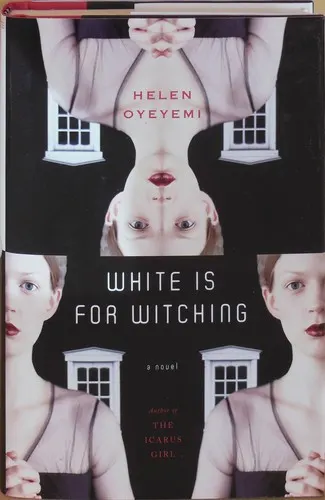
Oyeyemi gives the haunted house a voice—and makes it only one voice among several fractured, competing accounts. In Dover, a grieving young woman named Miranda lives in a house that resists outsiders and carries the prejudices of its former inhabitants. The prose slips between speakers, pronouns, memory, and nightmare with mesmerizing assurance.
Winner of a Somerset Maugham Award, this is a formally audacious descendant of Jackson rather than a conventional ghost story. It shares Eleanor’s aching need for belonging, but expands the house’s malice into questions of inheritance, xenophobia, family love, and exclusion. The result is beautiful, disorienting, and genuinely strange: a novel that seems to rearrange itself while you are reading it.
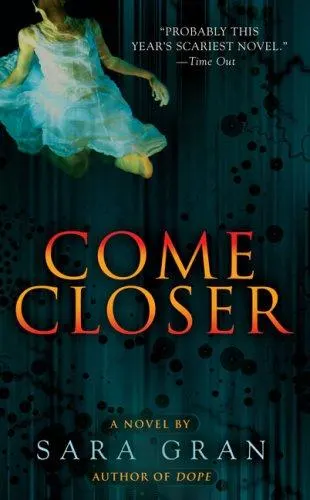
For the intimate horror of Eleanor’s unraveling, read this razor-short novel of possible possession. Amanda’s orderly life begins to acquire small wrongnesses: an unexplained sound, altered work, disturbing dreams. Gran’s first-person prose remains lucid and almost casual even as Amanda’s confidence in her own intentions begins to erode.
The book has earned a devoted cult readership because it accomplishes in roughly two hundred pages what many horror novels cannot manage at twice the length. Like Jackson, Gran knows that the most frightening voice may be the one speaking from inside the self—and that clarity of style can make madness more, not less, terrifying. It is difficult to put down and harder to shake.
If you loved We Have Always Lived in the Castle
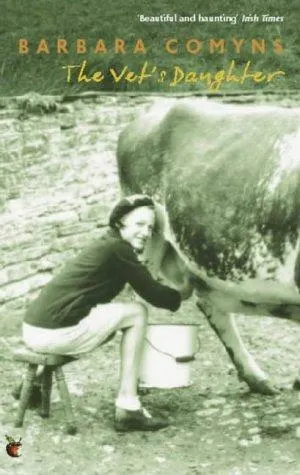
Alice Rowlands lives above her tyrannical father’s veterinary surgery, narrating brutality and uncanny events in a voice so plain and guileless that the grotesque becomes strangely funny. Like Jackson, Comyns understands how an endangered young woman can build a private reality from ritual, fantasy, and fierce emotional loyalties.
This compact 1959 novel has become a cult classic because its apparent simplicity conceals something savage: a fairy tale written with no faith that respectable society will rescue anyone. Readers who treasure Merricat’s unsettling innocence will recognize a similarly singular spell.
Frank, the teenage narrator, patrols his family’s isolated Scottish island, consulting homemade oracles and maintaining an elaborate system of sacrificial rituals. Banks makes Frank’s worldview repellent, comic, ingenious, and horribly persuasive—the same dangerous intimacy Jackson creates when she lets Merricat tell us exactly how sensible she believes herself to be.
This is considerably more graphic than Jackson, but its true power lies not in shock: it lies in the seductive authority of an outsider’s voice and in a household governed by secrets, private mythology, and distorted love. Banks’s notorious debut has endured as a modern cult novel because few books make complicity feel so thrilling.
Ninety-two-year-old Marian Leatherby learns that her family intends to place her in an institution. From that grimly recognizable betrayal, Carrington proceeds with serene, anarchic confidence into a world where institutional rules, occult mysteries, and ordinary domestic objects all seem equally absurd.
If the pleasure of Jackson’s novel lies partly in watching women reject the terms offered by a hostile society and invent stranger ones of their own, this feminist-surrealist cult classic is indispensable. Carrington’s comedy is wilder than Jackson’s, but it has the same liberating refusal to distinguish meekness from monstrosity—or confinement from the beginning of a new kingdom.
If you loved The Sundial
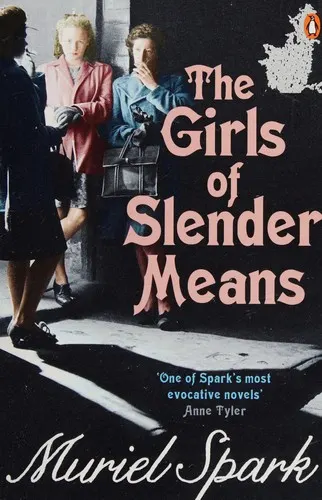
Spark’s May of Teck Club is a miniature civilization governed by beauty, scarcity, gossip, and social rank. Its young residents share clothes, ration soap, sunbathe on the roof, and measure one another with merciless precision while postwar London celebrates peace outside.
Like Jackson, Spark can make a chorus of selfish voices both viciously funny and strangely enchanting. Her prose is even more compressed: a dress, a window, or a casual remark acquires ominous force without losing its comic absurdity. The novel announces from the outset that something terrible lies ahead, then lets frivolity and danger occupy the same sentence. Widely considered among Spark’s finest novels, it offers the rare pleasure of comedy sharpened until it becomes revelation.
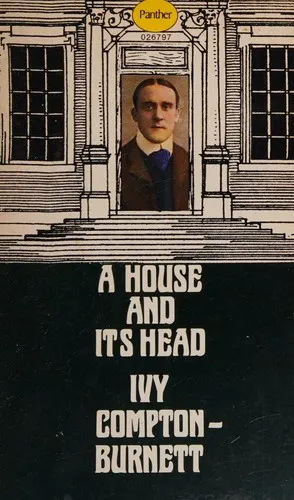
If the Hallorans’ conversational blood sport was your favorite part of The Sundial, meet Duncan Edgeworth and his household. Compton-Burnett strips family life down to dialogue: ceremonious exchanges in which affection is leverage, honesty is aggression, and every polite question conceals a bid for power.
There is almost no narrative cushioning, so the reader learns to hear every hesitation and euphemism as a weapon. The effect is austere, addictive, and savagely comic; terrible conduct is met not with melodrama but with another beautifully balanced sentence across the dinner table. Often regarded as one of Compton-Burnett’s masterpieces, A House and Its Head reveals the literary tradition behind Jackson’s most poisonous domestic comedy—and may permanently alter how you listen to fictional families.