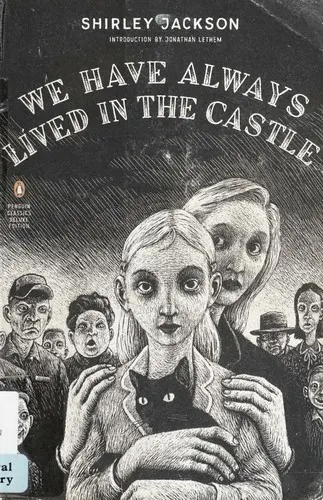
Books like We Have Always Lived in the Castle
Merricat makes malice feel like magic: inside her private logic, cruelty, devotion, superstition, and domestic routine become almost indistinguishable.
If you liked We Have Always Lived in the Castle, you’ll love these
Not lookalikes — kindred books. Each one shares something essential with We Have Always Lived in the Castle, and we tell you exactly what.

Alice Rowlands lives above her tyrannical father’s veterinary surgery, narrating brutality and uncanny events in a voice so plain and guileless that the grotesque becomes strangely funny. Like Jackson, Comyns understands how an endangered young woman can build a private reality from ritual, fantasy, and fierce emotional loyalties.
This compact 1959 novel has become a cult classic because its apparent simplicity conceals something savage: a fairy tale written with no faith that respectable society will rescue anyone. Readers who treasure Merricat’s unsettling innocence will recognize a similarly singular spell.
Frank, the teenage narrator, patrols his family’s isolated Scottish island, consulting homemade oracles and maintaining an elaborate system of sacrificial rituals. Banks makes Frank’s worldview repellent, comic, ingenious, and horribly persuasive—the same dangerous intimacy Jackson creates when she lets Merricat tell us exactly how sensible she believes herself to be.
This is considerably more graphic than Jackson, but its true power lies not in shock: it lies in the seductive authority of an outsider’s voice and in a household governed by secrets, private mythology, and distorted love. Banks’s notorious debut has endured as a modern cult novel because few books make complicity feel so thrilling.
Ninety-two-year-old Marian Leatherby learns that her family intends to place her in an institution. From that grimly recognizable betrayal, Carrington proceeds with serene, anarchic confidence into a world where institutional rules, occult mysteries, and ordinary domestic objects all seem equally absurd.
If the pleasure of Jackson’s novel lies partly in watching women reject the terms offered by a hostile society and invent stranger ones of their own, this feminist-surrealist cult classic is indispensable. Carrington’s comedy is wilder than Jackson’s, but it has the same liberating refusal to distinguish meekness from monstrosity—or confinement from the beginning of a new kingdom.