Author
Books like Roberto Bolaño
9 books we recommend to Roberto Bolaño readers, drawn from 2666, The Savage Detectives and By Night in Chile — each with the reason why.
If you loved 2666
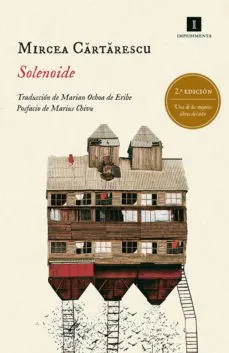
A failed writer teaching in a bleak Bucharest school fills his journal with bodily terrors, childhood visions, grotesque classrooms, insects, architecture, and dreams of escaping reality itself. Like 2666, Solenoid keeps enlarging: what begins as an embittered life becomes a metaphysical inquiry in which every grubby detail may conceal an opening into the infinite.
Cărtărescu has Bolaño’s conviction that literature is simultaneously salvation, pathology, and cosmic joke, but his hallucinatory imagery is entirely his own. The novel’s cult reputation expanded dramatically in English translation, culminating in the 2024 Dublin Literary Award. Its thousand pages feel less like bulk than total immersion. Anyone moved by 2666’s audacity should experience this other contemporary masterpiece of beautiful, diseased obsession.
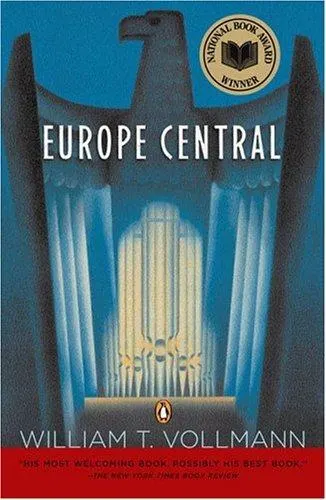
Vollmann constructs a vast mosaic of artists, generals, collaborators, and lovers caught between Nazi Germany and Stalin’s Soviet Union. Chapters change form and perspective; documentary fact merges with speculation; a composer’s private compromises become inseparable from mechanized violence.
The crucial kinship with 2666 is architectural and moral. Both novels approach historical evil indirectly, circling it through compromised witnesses rather than pretending it can be neatly explained. Vollmann can be learned, lurid, tender, sardonic, and frightening within a few pages, and he never lets aesthetic beauty absolve its makers. Winner of the National Book Award, Europe Central is one of the rare large-scale historical novels whose formal daring matches the magnitude of its subject.
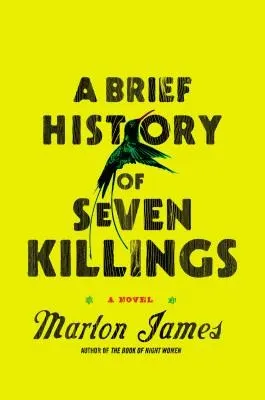
After gunmen attack a famous Jamaican singer in 1976, Marlon James lets an unruly multitude seize the narrative: gang members, intelligence operatives, politicians, journalists, ghosts, and people trying simply to survive. Each voice has its own velocity and moral weather; together they reveal systems no single narrator could comprehend.
A lover of 2666 will recognize the exhilarating movement from individual testimony to a whole network of power, money, myth, and violence. Yet James’s language—profane, musical, funny, volatile—makes the experience radically different. The novel won the 2015 Booker Prize, but its real authority comes from its polyphonic force: it does not describe a world from above; it makes that world speak, quarrel, lie, and haunt you.
If you loved The Savage Detectives
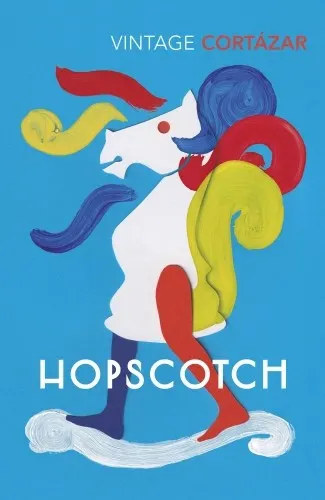
This is one of the great ancestors of Bolaño’s novel: a formally rebellious, darkly comic book about people who treat poetry, argument, love, and wandering as necessities rather than hobbies. Horacio Oliveira drifts through Paris with La Maga and a circle of expatriates, while Cortázar invites readers to follow the chapters conventionally or leap through them in a prescribed alternative order.
What connects it to The Savage Detectives is not simply bohemia but the mixture of intellectual swagger and emotional helplessness. Its talkers are brilliant, ridiculous, tender, and often blind to the lives directly before them. Published in 1963, Hopscotch became a defining novel of the Latin American Boom because its experiments feel like lived freedom, not decoration. Bolaño’s young poets would recognize it as contraband from an earlier revolution; his readers may find it equally difficult to leave behind.
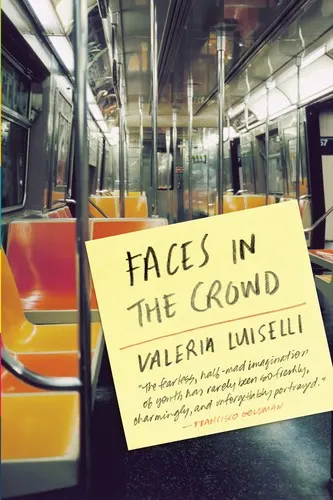
Luiselli’s slender debut has the uncanny density of a much larger novel. A writer in Mexico City remembers her younger self in New York, where she worked for a publisher and became obsessed with the elusive Mexican poet Gilberto Owen. Soon memory, invention, translation, and haunting begin to occupy the same sentences.
A reader who loved the search for Cesárea Tinajero will recognize the deeper attraction: the absent poet becoming more vivid—and more unstable—through other people’s language. Yet Luiselli’s method is entirely her own. Instead of Bolaño’s continent-spanning chorus, she uses brief, luminous fragments that quietly alter one another. The novel won the Los Angeles Times’ first-fiction prize, and deservedly so: it makes literary history feel intimate, ghostly, and dangerously available for reinvention.
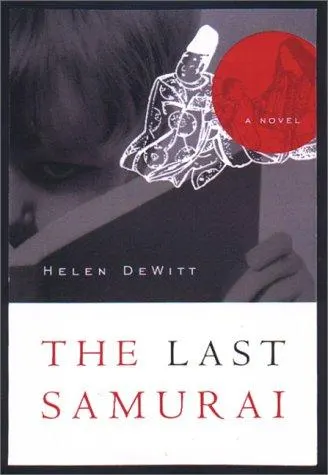
Read this for the reckless intelligence of The Savage Detectives—the pleasure of watching people refuse to accept the cultural life they have been allotted. Sibylla, a ferociously learned single mother, raises her prodigious son Ludo on Greek, mathematics, obscure reference works, and repeated viewings of Kurosawa’s Seven Samurai. Ludo, meanwhile, develops his own ideas about knowledge, heroism, and the missing father he has never met.
DeWitt turns erudition into comedy, suspense, and genuine feeling. Alphabets and equations are not displays of cleverness; they are tools her characters use to escape loneliness and construct themselves. Neglected after its original 2000 publication, the novel acquired devoted advocates and returned as a modern cult classic through New Directions. Like Bolaño, DeWitt understands that intellectual obsession can be absurd, sustaining, and heartbreaking at once. Few novels make brilliance feel so exhilarating—or so costly.
If you loved By Night in Chile
A psychiatrist addresses a woman in a Lisbon bar, circling back obsessively to his service in Portugal’s brutal colonial war in Angola. Like Father Urrutia, he uses eloquence partly to testify and partly to hide; his glittering metaphors keep revealing what his self-pity would rather obscure.
Lobo Antunes’s sentences are denser and more sensuous than Bolaño’s, but they exert the same claustrophobic pressure: private vanity, national myth and institutional violence become impossible to separate. This early masterpiece established him as one of Portugal’s essential postwar novelists. Readers haunted by Bolaño’s final pages should experience its equally merciless examination of what a cultivated man permits himself not to know.
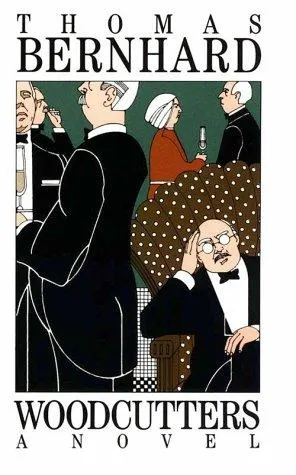
At an “artistic dinner” in Vienna, the narrator sits in a wing chair and silently annihilates the assembled cultural elite. Every pose, betrayal and careerist compromise is worried at until comedy becomes indictment. Anyone who relished Bolaño’s treatment of poets, critics and salon intellectuals will recognize the peculiar pleasure of watching cultural prestige stripped of its moral alibis.
Yet Bernhard’s narrator is no impartial scourge: his hatred binds him to the people he condemns. The repetition is musical, cumulative and savagely funny, producing a monologue that seems capable of consuming its speaker. The novel was briefly seized in Austria after a defamation suit—an apt episode for a book whose satire feels dangerously personal. Few novels make literary society look so ridiculous, or so damning.
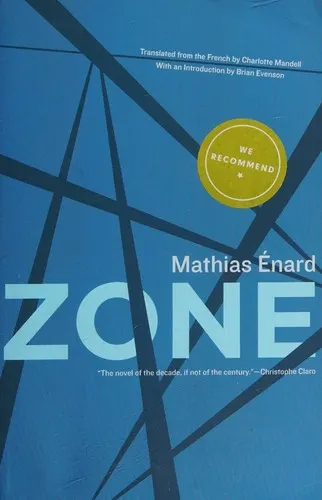
Francis Mirković, a former intelligence operative, travels by train from Milan to Rome carrying a dossier and reviewing a life entangled with the wars of the Mediterranean. Most of the novel unfolds in one immense sentence, but this is no sterile stunt: its onward rush captures a mind unable to stop converting atrocity into history, quotation, anecdote and excuse.
Where Bolaño compresses complicity into a single night, Énard stretches it across borders and centuries. Both novels distrust cultivated men who imagine that knowledge places them above violence; both show erudition becoming either witness or camouflage. Winner of the Prix du Livre Inter and widely regarded as Énard’s breakthrough, Zone has the scale of an epic and the intimacy of an interrogation. Submit to its current and ordinary historical fiction may afterward feel morally and formally tame.