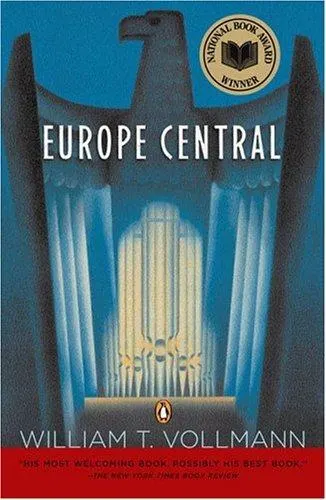
Books like Europe Central
History presses down like weather: artists, soldiers, zealots, and compromised witnesses struggle to preserve a private conscience while nations turn human beings into material.
If you liked Europe Central, you’ll love these
Not lookalikes — kindred books. Each one shares something essential with Europe Central, and we tell you exactly what.
Grossman offers perhaps the essential companion to Europe Central—not merely because both confront Stalinism and Nazism, but because both ask how ordinary tenderness survives systems that demand absolute allegiance. Beginning around Stalingrad, Life and Fate moves among scientists, soldiers, prisoners, bureaucrats, and families, allowing an immense political catastrophe to register through intimate choices.
Grossman had reported from the front and witnessed the liberation of Treblinka; his knowledge gives the novel extraordinary authority without reducing it to testimony. The Soviet state considered the manuscript so dangerous that even its carbon copies were seized. Yet the book’s lasting force lies in its refusal of ideological comfort: its deepest faith is in small, irrational acts of human kindness. Often hailed as a twentieth-century successor to War and Peace, it earns that comparison through moral reach rather than scale alone. Anyone moved by Vollmann’s compassionate scrutiny of complicity should consider it indispensable.
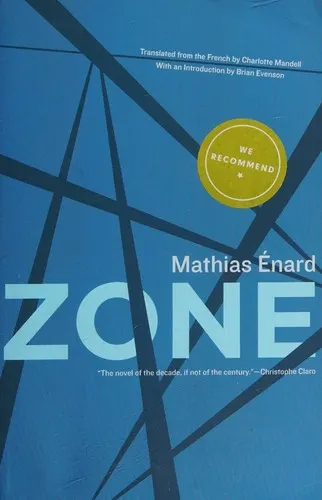
A French intelligence operative boards a train carrying a briefcase of secrets, and his journey unleashes an almost unbroken, book-length sentence crowded with wars, betrayals, artworks, myths, and the remembered dead. Zone has Europe Central’s charged accumulation: history arrives not as orderly background but as a chorus that will not stop speaking.
Énard’s bravura form is not a stunt. The rushing syntax traps the reader inside a mind trained to catalogue violence yet increasingly unable to keep that violence at a professional distance. Homer, fascism, Balkan wars, espionage, and private guilt collide until the Mediterranean becomes a vast archive of recurring brutality. Winner of the Prix du Livre Inter and translated into English with formidable rhythmic control by Charlotte Mandell, Zone is one of the rare maximalist novels whose erudition intensifies its emotional pressure. Read it and the history you thought you knew begins to feel dangerously alive.
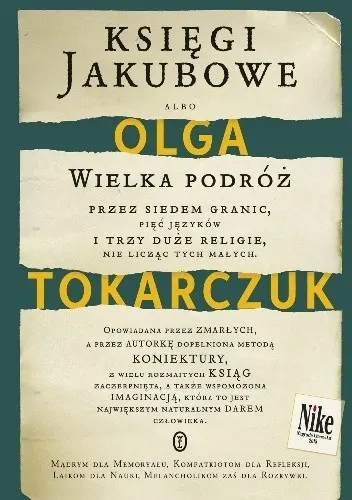
Tokarczuk constructs an eighteenth-century world from letters, sermons, gossip, official records, mystical visions, and the perspectives of people whom conventional histories leave at the margins. At its center is Jacob Frank, a magnetic and destabilizing religious leader, but the novel’s true subject is how collective belief is manufactured—and how charisma, persecution, longing, and opportunism become inseparable.
A lover of Vollmann will recognize the audacity of entering real historical consciousnesses without pretending they can be made simple. Tokarczuk continually changes angle and scale, moving from bodily discomfort and domestic bargaining to theological upheaval and imperial politics. The result is learned, strange, funny, and morally alert rather than monumentally solemn. The novel won Poland’s Nike Award, and Jennifer Croft’s English translation was shortlisted for the International Booker; it is widely regarded as a summit of Tokarczuk’s Nobel-crowned career. Its thousand pages do not merely recreate a lost Europe—they make certainty itself feel like the most perilous force in history.