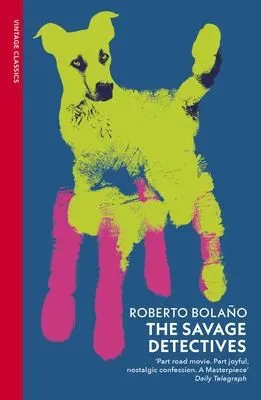
Books like The Savage Detectives
A seventeen-year-old poet is admitted to the visceral realists before he even knows what visceral realism is. These three novels share that intoxicating sense that literature may be a secret society, a way of life, or a magnificent mistake.
If you liked The Savage Detectives, you’ll love these
Not lookalikes — kindred books. Each one shares something essential with The Savage Detectives, and we tell you exactly what.
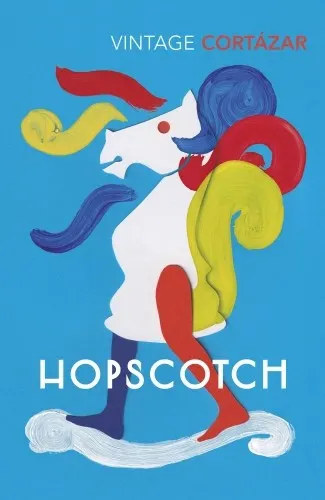
This is one of the great ancestors of Bolaño’s novel: a formally rebellious, darkly comic book about people who treat poetry, argument, love, and wandering as necessities rather than hobbies. Horacio Oliveira drifts through Paris with La Maga and a circle of expatriates, while Cortázar invites readers to follow the chapters conventionally or leap through them in a prescribed alternative order.
What connects it to The Savage Detectives is not simply bohemia but the mixture of intellectual swagger and emotional helplessness. Its talkers are brilliant, ridiculous, tender, and often blind to the lives directly before them. Published in 1963, Hopscotch became a defining novel of the Latin American Boom because its experiments feel like lived freedom, not decoration. Bolaño’s young poets would recognize it as contraband from an earlier revolution; his readers may find it equally difficult to leave behind.
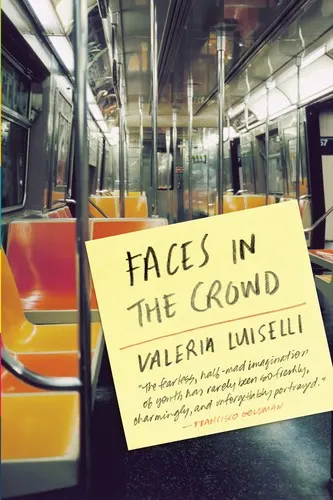
Luiselli’s slender debut has the uncanny density of a much larger novel. A writer in Mexico City remembers her younger self in New York, where she worked for a publisher and became obsessed with the elusive Mexican poet Gilberto Owen. Soon memory, invention, translation, and haunting begin to occupy the same sentences.
A reader who loved the search for Cesárea Tinajero will recognize the deeper attraction: the absent poet becoming more vivid—and more unstable—through other people’s language. Yet Luiselli’s method is entirely her own. Instead of Bolaño’s continent-spanning chorus, she uses brief, luminous fragments that quietly alter one another. The novel won the Los Angeles Times’ first-fiction prize, and deservedly so: it makes literary history feel intimate, ghostly, and dangerously available for reinvention.
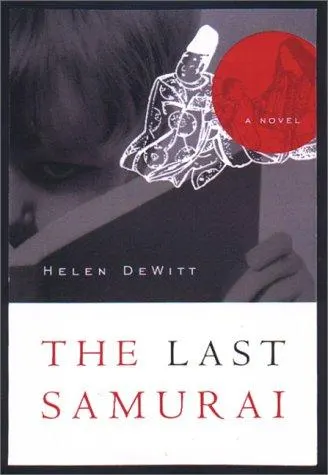
Read this for the reckless intelligence of The Savage Detectives—the pleasure of watching people refuse to accept the cultural life they have been allotted. Sibylla, a ferociously learned single mother, raises her prodigious son Ludo on Greek, mathematics, obscure reference works, and repeated viewings of Kurosawa’s Seven Samurai. Ludo, meanwhile, develops his own ideas about knowledge, heroism, and the missing father he has never met.
DeWitt turns erudition into comedy, suspense, and genuine feeling. Alphabets and equations are not displays of cleverness; they are tools her characters use to escape loneliness and construct themselves. Neglected after its original 2000 publication, the novel acquired devoted advocates and returned as a modern cult classic through New Directions. Like Bolaño, DeWitt understands that intellectual obsession can be absurd, sustaining, and heartbreaking at once. Few novels make brilliance feel so exhilarating—or so costly.