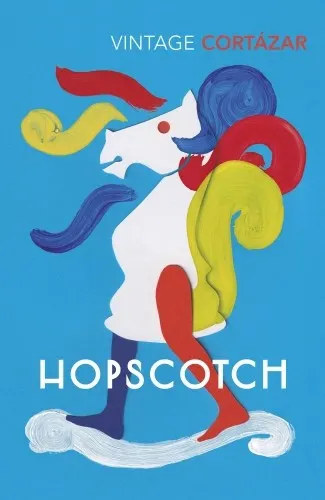
Books like Hopscotch
…because what survives Hopscotch is the sensation that a novel can be a game, a city, an argument, and an emotional wreckage all at once. These three make the reader an accomplice without sacrificing human urgency.
If you liked Hopscotch, you’ll love these
Not lookalikes — kindred books. Each one shares something essential with Hopscotch, and we tell you exactly what.
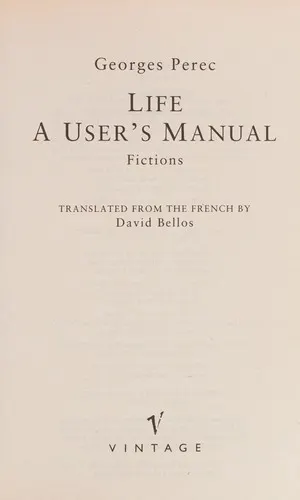
Perec turns a Paris apartment building into a vast narrative puzzle, moving room by room through its inhabitants, possessions, secrets, and unfinished schemes. The book’s elaborate Oulipian constraints—including a route modeled on a knight’s tour—offer the same delight as Cortázar’s alternative reading order: structure becomes an invitation to play.
Yet this Prix Médicis–winning masterpiece is no sterile contraption. Its inventories gradually become intimate; objects disclose thwarted loves, obsessions, and entire vanished lives. Like Hopscotch, it uses comedy and intellectual games to approach something painfully unreachable. Few novels so triumphantly prove that formal ingenuity can enlarge, rather than diminish, human feeling.
Read this for the verbal electricity: nightclub chatter, jokes, parodies, gossip, songs, mistranslations, and voices impersonating other voices. Cabrera Infante’s Havana is created less through description than through talk—the city exists because its night people cannot stop reinventing it in language.
A landmark of the Latin American Boom, the novel shares Hopscotch’s appetite for jazzlike improvisation and its refusal to separate high art from bad puns, seduction, or drunken performance. Beneath the exuberance lies the melancholy of a world already disappearing. Its wordplay is famously unruly, but surrender to its rhythm and it becomes one of the most intoxicating novels ever written about friendship, art, and the doomed desire to keep a night alive by telling it better.
A sportswriter arrives in a city and finds memories of a dead friend breaking into the assignment before him. Johnson gives that involuntary process a physical form: the novel consists of twenty-seven unbound sections in a box, with only the first and last fixed. You shuffle the rest and discover the book in an order no other reader need share.
Where Hopscotch asks whether rearranging a novel might change how life is understood, Johnson makes disorder inseparable from grief: memory does not proceed neatly because loss does not. The result is short, candid, funny, and devastating—not a gimmick but one of British experimental fiction’s cult treasures. It offers the rare thrill of holding a broken form that could not honestly have been whole.