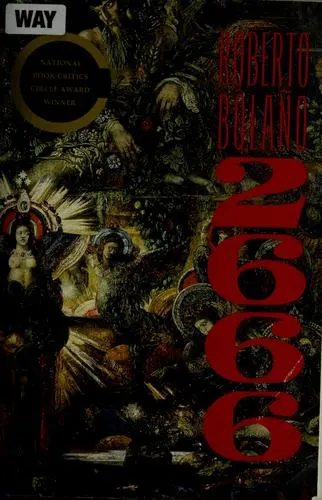
Books like 2666
The devoted 2666 reader wants fiction that can contain scholarship and farce, private obsession and historical atrocity—books vast enough to make the search for meaning feel both indispensable and doomed.
If you liked 2666, you’ll love these
Not lookalikes — kindred books. Each one shares something essential with 2666, and we tell you exactly what.
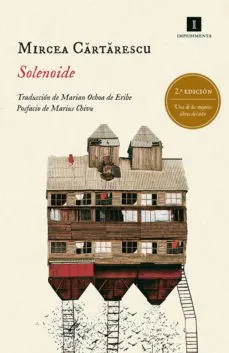
A failed writer teaching in a bleak Bucharest school fills his journal with bodily terrors, childhood visions, grotesque classrooms, insects, architecture, and dreams of escaping reality itself. Like 2666, Solenoid keeps enlarging: what begins as an embittered life becomes a metaphysical inquiry in which every grubby detail may conceal an opening into the infinite.
Cărtărescu has Bolaño’s conviction that literature is simultaneously salvation, pathology, and cosmic joke, but his hallucinatory imagery is entirely his own. The novel’s cult reputation expanded dramatically in English translation, culminating in the 2024 Dublin Literary Award. Its thousand pages feel less like bulk than total immersion. Anyone moved by 2666’s audacity should experience this other contemporary masterpiece of beautiful, diseased obsession.
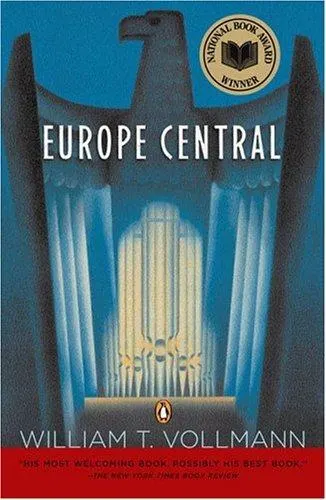
Vollmann constructs a vast mosaic of artists, generals, collaborators, and lovers caught between Nazi Germany and Stalin’s Soviet Union. Chapters change form and perspective; documentary fact merges with speculation; a composer’s private compromises become inseparable from mechanized violence.
The crucial kinship with 2666 is architectural and moral. Both novels approach historical evil indirectly, circling it through compromised witnesses rather than pretending it can be neatly explained. Vollmann can be learned, lurid, tender, sardonic, and frightening within a few pages, and he never lets aesthetic beauty absolve its makers. Winner of the National Book Award, Europe Central is one of the rare large-scale historical novels whose formal daring matches the magnitude of its subject.
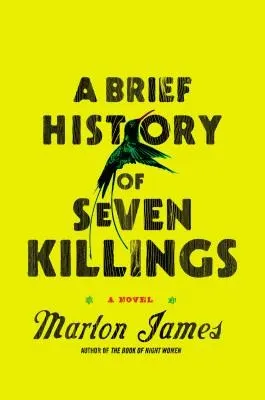
After gunmen attack a famous Jamaican singer in 1976, Marlon James lets an unruly multitude seize the narrative: gang members, intelligence operatives, politicians, journalists, ghosts, and people trying simply to survive. Each voice has its own velocity and moral weather; together they reveal systems no single narrator could comprehend.
A lover of 2666 will recognize the exhilarating movement from individual testimony to a whole network of power, money, myth, and violence. Yet James’s language—profane, musical, funny, volatile—makes the experience radically different. The novel won the 2015 Booker Prize, but its real authority comes from its polyphonic force: it does not describe a world from above; it makes that world speak, quarrel, lie, and haunt you.