Author
Books like Neil Gaiman
9 books we recommend to Neil Gaiman readers, drawn from American Gods, The Ocean at the End of the Lane and Stardust — each with the reason why.
If you loved American Gods
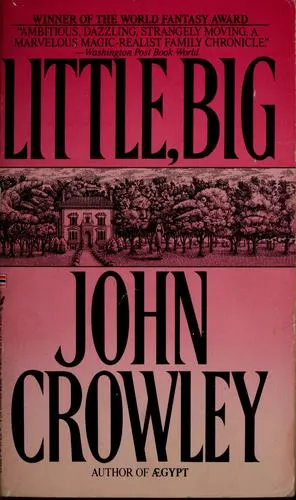
Crowley makes the American landscape feel built over an older, half-glimpsed reality. At the strange country house called Edgewood, one family’s marriages, children, and private legends become entangled with a vast story they can never see whole.
Like American Gods, this is fantasy steeped in wonder and melancholy rather than mere spectacle. Crowley’s intricate prose rewards surrender: coincidences acquire mythic weight, family stories become cosmology, and the everyday seems one step from enchantment. Winner of the World Fantasy Award and cherished as a modern fantasy masterpiece, Little, Big is the rarer book—the kind readers spend years pressing into other readers’ hands.
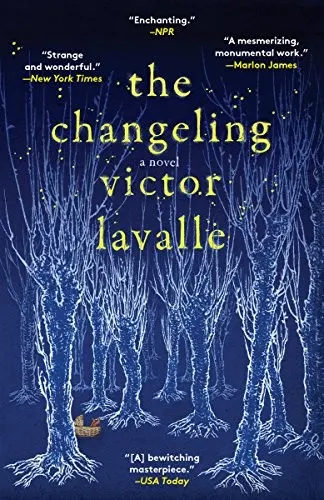
Apollo Kagwa is a New York rare-book dealer, a husband, and a new father who believes he understands the shape of his life. Then the assurances of parenthood begin to give way beneath him.
LaValle shares Gaiman’s gift for discovering that folklore has not vanished; it has adapted to apartment blocks, smartphones, and the blind spots of modern society. But his World Fantasy Award-winning novel has its own fierce emotional engine: fatherhood, inherited wounds, and the question of whose fears are dismissed as impossible. It begins with intimate realism, tightens into a nightmare, and opens onto something wondrous and terrible.
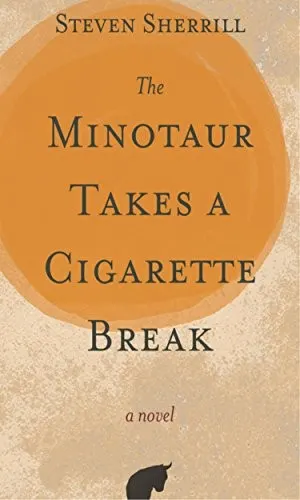
Here the Minotaur is not guarding a labyrinth. He is five thousand years old, living in a trailer park, and working as a line cook in the American South. His horns snag on things; his tongue cannot form human speech; loneliness has outlasted kingdoms.
This quiet cult novel isolates one of American Gods’ most affecting ideas: immortality may be less a blessing than a long estrangement from the world. Sherrill replaces divine combat with kitchen burns, broken machinery, awkward desire, and the fragile possibility of companionship. The result is funny, tactile, and devastatingly humane—a mythic novel whose greatest marvel is making an ancient monster’s solitude feel exactly like our own.
If you loved The Ocean at the End of the Lane
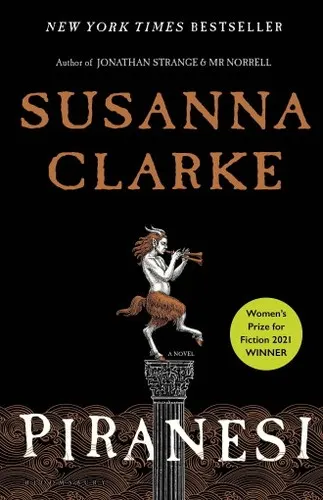
Piranesi lives in an apparently endless House of marble halls, tides, statues, and birds, recording its wonders with reverent precision. Like Gaiman, Clarke gives the impossible the texture of daily life, then lets small disturbances reveal how memory can be damaged and reality controlled.
What makes this Women’s Prize winner irresistible is its narrator’s gentleness. His openness is never treated as foolishness; it becomes a form of moral strength. Readers who loved the Hempstocks’ ancient kindness—and the melancholy beneath Gaiman’s enchantment—will find Piranesi’s strange, lucid voice hard to leave behind.
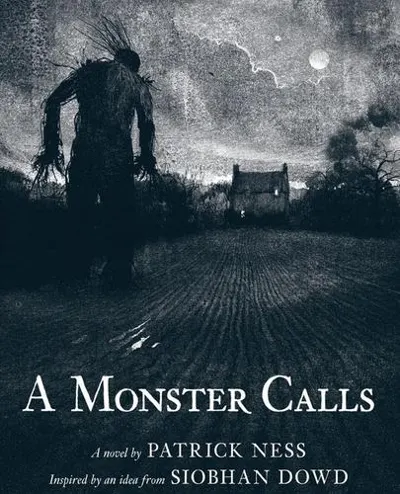
Shortly after midnight, a monster comes to thirteen-year-old Conor—but not for the reason Conor expects. The monster tells stories, and those stories refuse the comforting division between innocence and guilt, courage and fear.
This novel shares Gaiman’s conviction that fantasy can express truths too painful for realism to approach directly. Patrick Ness, completing an idea by the late Siobhan Dowd, writes with devastating restraint; Jim Kay’s shadowy illustrations make the original edition feel like an artifact from Conor’s nightmares. The first book to win both the Carnegie Medal and the Kate Greenaway Medal, it earns its reputation by leaving readers emotionally altered.
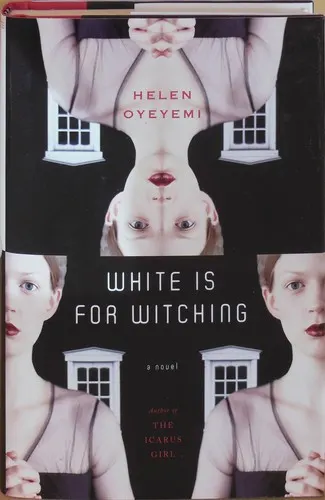
In Dover, a bereaved family lives in a house that dislikes strangers—and may be speaking to the reader. Miranda, grieving her mother and struggling with an appetite for inedible things, becomes increasingly entangled with the building’s possessive history.
Oyeyemi takes the domestic menace of The Ocean at the End of the Lane and makes it sharper, stranger, and more formally daring: voices interrupt one another, the house becomes a character, and grief seems capable of rewriting physical space. Winner of the Somerset Maugham Award, White Is for Witching is less consoling than Gaiman’s novel, but its haunted language and sense of inherited evil make it unforgettable.
If you loved Stardust
In the respectable town of Lud, citizens pretend neighboring Fairyland is indecent nonsense—until forbidden fairy fruit begins slipping across the border and upsetting every sensible certainty. Mirrlees treats enchantment not as decorative magic but as something intoxicating, unruly, and psychologically necessary.
Published in 1926, this once-neglected masterpiece became a foundational work of modern fantasy; Neil Gaiman himself helped restore it to readers’ attention. Its civilized absurdities are funny, its mysteries genuinely eerie, and its prose can turn from dry wit to numinous beauty in a sentence. Anyone who loved the wall-crossing, dangerous glamour, and autumnal undertow of Stardust should discover one of its deepest literary ancestors.
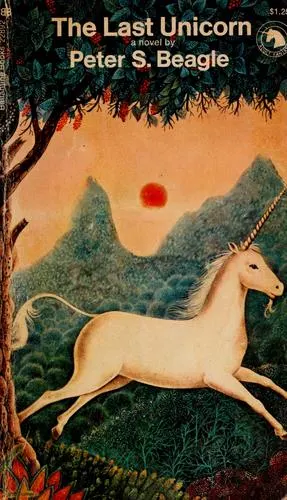
A unicorn overhears that she may be the last of her kind and ventures beyond the safety of her forest to learn what happened to the others. From that simple beginning, Beagle creates a quest full of incompetent magic, unsettling marvels, comic indignities, and piercing encounters with time and loss.
Like Stardust, it understands that fairy tales become more powerful—not less—when their impossible creatures have vanity, fear, longing, and regret. Beagle’s language is crystalline and endlessly quotable, and the novel has inspired unusually fierce devotion for generations. It is beautiful without becoming precious, funny without puncturing its wonder, and heartbreaking in precisely the places a lesser fantasy would settle for triumph.
Sophie Hatter has absorbed the fairy-tale rule that eldest children are destined to fail. When a witch transforms her into an old woman, she abandons meekness, enters the roaming castle of the notorious wizard Howl, and begins ordering its impossible household into shape.
Jones’s magic is exuberantly untidy: spells have loopholes, legends conceal domestic squabbles, and glamorous heroes can be spectacularly ridiculous. Beneath the comedy lies a superbly constructed romance about seeing past the roles people perform—including the roles they have mistaken for their own identities. Few fantasy novels match its combination of narrative cleverness, romantic friction, and sheer rereadable pleasure; if Stardust made you want another fairy tale that grows wiser as it overturns its own conventions, this is indispensable.