Author
Books like Milan Kundera
8 books we recommend to Milan Kundera readers, drawn from The Unbearable Lightness of Being, The Book of Laughter and Forgetting and The Joke — each with the reason why.
If you loved The Unbearable Lightness of Being
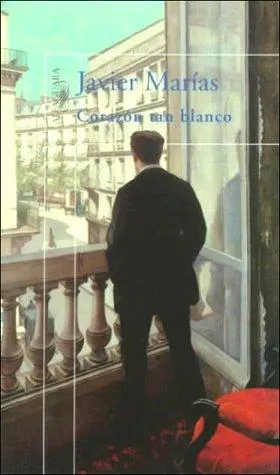
Marías begins with a death and a narrator’s ominous declaration: he did not want to know, but he has learned. From there, the novel circles marriage, secrecy, translation, and the danger of hearing what cannot be unheard. Its long, hypnotic sentences follow thought as it doubles back, revises itself, and discovers implications hidden inside ordinary words.
Kundera’s lovers will recognize the fascination with how a casual gesture can acquire unbearable moral weight—and how intimacy depends upon both revelation and concealment. Yet Marías offers a darker, more suspenseful pleasure: philosophical inquiry conducted with the tightening pressure of a thriller. Winner of the International Dublin Literary Award and central to Marías’s formidable reputation, it is the rare novel that makes thinking feel perilous.
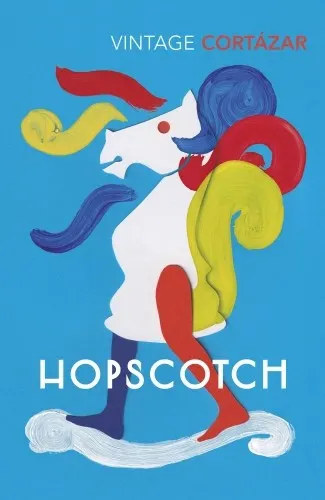
A reader may proceed through Hopscotch conventionally or follow Cortázar’s alternative sequence, leaping among chapters. That famous device is no gimmick: it turns reading into a choice haunted by paths not taken. At its center are Horacio Oliveira, his elusive lover La Maga, and a circle of expatriates in Paris who pursue art, jazz, metaphysics, and one another.
Like Kundera, Cortázar distrusts the solemnity of the traditional novel. He mixes intellectual argument with slapstick, erotic longing with linguistic games, and genuine anguish with jokes that puncture every grand theory. A landmark of the Latin American Boom and an enduring cult novel, Hopscotch offers something increasingly rare: the sense that a book might reorganize not just a story, but the reader’s habits of attention.
If you loved The Book of Laughter and Forgetting
Ugrešić builds her novel from photographs, lists, anecdotes, dreams, and apparently stray objects—the portable remains of a life fractured by exile. Like Kundera, she understands that history enters private existence through jokes, love affairs, habits, and embarrassing scraps of recollection rather than through grand declarations.
The book’s collage form is integral to its emotional force: fragments become what a displaced person carries when a coherent past is no longer available. Ugrešić’s wit is dry, unsentimental, and sharpened by her own estrangement from the former Yugoslavia. Now recognized as one of her essential works, this is the closest recommendation here to Kundera’s peculiar fusion of intellectual freedom, political grief, and mischievous formal invention.
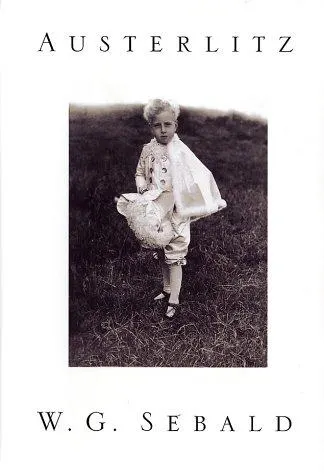
A chance meeting in a railway station begins a long, recursive act of remembrance. Sebald’s narrator listens as Jacques Austerlitz circles a childhood whose meaning has been withheld from him; photographs interrupt the prose, buildings seem to store buried time, and memory advances by detour rather than revelation.
Where Kundera is quick, teasing, and aphoristic, Sebald is hypnotic and mournful. Yet both ask the same devastating question: what remains of a person when history has tampered with the past? Widely regarded as Sebald’s masterpiece, Austerlitz turns historical forgetting into an intimate pressure felt in rooms, faces, and inexplicable fears. Its grave, dreamlike beauty makes it difficult to leave behind.
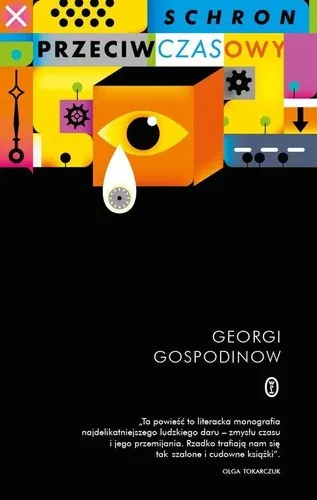
A therapist creates a clinic in which rooms reproduce past decades for patients losing their memories. From that brilliant premise, Gospodinov develops a comedy of nostalgia that gradually expands beyond medicine: if individuals seek shelter in vanished time, why shouldn’t entire nations do the same?
This is the recommendation for the reader who loved Kundera’s audacity—the sudden pivots from farce to dread, the essayistic digressions, and the sense that a joke can diagnose a political catastrophe more accurately than solemn rhetoric. Winner of the 2023 International Booker Prize, Time Shelter has become a defining European novel of our era because it recognizes nostalgia not as harmless sentiment but as a dangerous technology of power. It is playful, melancholy, and alarmingly current.
If you loved The Joke
A minor official impulsively kills a Soviet leader, and the regime responds by manufacturing an immense conspiracy. Serge then moves among investigators, prisoners, apparatchiks, and true believers, showing how ideology recruits vanity, fear, and private grievance into its machinery.
Like The Joke, this is political fiction with no abstract “politics”: history is felt as embarrassment, compromised love, opportunism, and the desperate need to make one’s life fit an official story. Serge—himself imprisoned and exiled by Stalin—writes with unusual moral generosity, even about the compromised. Widely regarded as his masterpiece, the novel has Kundera’s gift for making catastrophe look simultaneously monstrous, logical, and absurd.
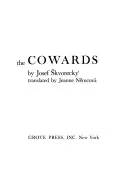
Danny Smiricky is young, saxophone-obsessed, girl-crazy, and far less heroic than the historic moment around him demands. His ruefully comic voice exposes the distance between public legend and the muddier truth of how people actually behave.
That discrepancy will delight a reader who loved Ludvik’s mixture of intelligence, vanity, appetite, and self-deception. Škvorecký refuses both patriotic uplift and ideological hindsight; his hero’s shabby motives become a way of telling the truth. The novel caused a scandal when it appeared in Czechoslovakia in 1958 and became a landmark of Czech postwar fiction. Its irreverence still feels dangerous because it attacks not one approved narrative but the human hunger for approved narratives altogether.
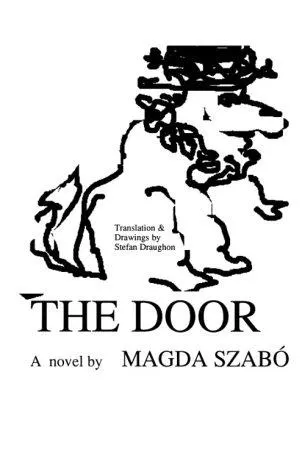
Here the reckoning is intensely private. A celebrated writer looks back on her relationship with Emerence, the formidable housekeeper who admits almost no one past her literal or emotional door. Affection, dependence, class, pride, and betrayal become so entangled that every generous act carries a shadow of domination.
Szabó shares Kundera’s pitiless understanding that people often wound others while arranging the story in which they themselves are innocent. Yet The Door replaces his cool irony with an almost unbearable intimacy: it reads like confession subjected to cross-examination. Long revered in Hungary and revitalized internationally by Len Rix’s acclaimed translation, it has become a modern classic of moral self-indictment. Its final emotional force is difficult to shake—and impossible to reduce to a lesson.