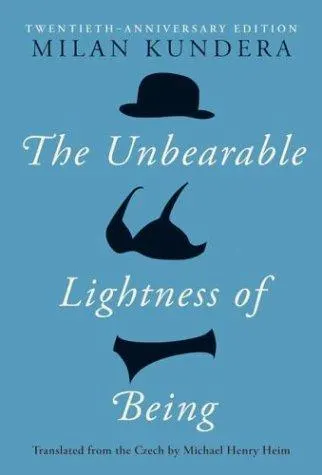
Books like The Unbearable Lightness of Being
Gravity games. These novels turn love, memory, chance, and political catastrophe into problems the mind can worry at—without sacrificing erotic charge, formal daring, or a saving current of irony.
If you liked The Unbearable Lightness of Being, you’ll love these
Not lookalikes — kindred books. Each one shares something essential with The Unbearable Lightness of Being, and we tell you exactly what.
This is the essential next Kundera: a seven-part novel in which stories, autobiography, political reflection, fantasy, and variations on a theme continually interrupt and illuminate one another. It opens with an unforgettable image of a purged politician being erased from a photograph, then asks what survives when power edits history and individuals revise their own pasts.
If The Unbearable Lightness of Being thrilled you whenever Kundera stepped outside conventional storytelling to examine a word or overturn an assumption, this book makes that freedom its governing principle. Its movement between private betrayal and public forgetting feels playful, mournful, and intellectually electric. Widely regarded as one of Kundera’s defining works, it reveals the full audacity of the form he perfected.
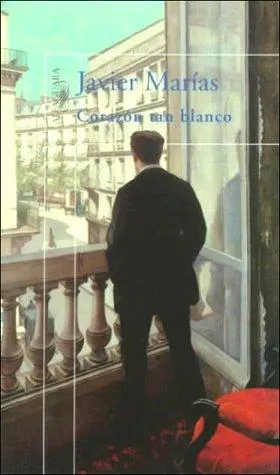
Marías begins with a death and a narrator’s ominous declaration: he did not want to know, but he has learned. From there, the novel circles marriage, secrecy, translation, and the danger of hearing what cannot be unheard. Its long, hypnotic sentences follow thought as it doubles back, revises itself, and discovers implications hidden inside ordinary words.
Kundera’s lovers will recognize the fascination with how a casual gesture can acquire unbearable moral weight—and how intimacy depends upon both revelation and concealment. Yet Marías offers a darker, more suspenseful pleasure: philosophical inquiry conducted with the tightening pressure of a thriller. Winner of the International Dublin Literary Award and central to Marías’s formidable reputation, it is the rare novel that makes thinking feel perilous.
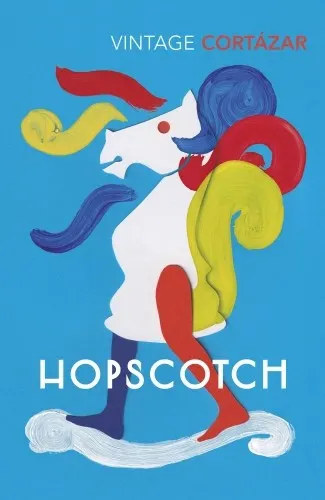
A reader may proceed through Hopscotch conventionally or follow Cortázar’s alternative sequence, leaping among chapters. That famous device is no gimmick: it turns reading into a choice haunted by paths not taken. At its center are Horacio Oliveira, his elusive lover La Maga, and a circle of expatriates in Paris who pursue art, jazz, metaphysics, and one another.
Like Kundera, Cortázar distrusts the solemnity of the traditional novel. He mixes intellectual argument with slapstick, erotic longing with linguistic games, and genuine anguish with jokes that puncture every grand theory. A landmark of the Latin American Boom and an enduring cult novel, Hopscotch offers something increasingly rare: the sense that a book might reorganize not just a story, but the reader’s habits of attention.