Author
Books like Kōbō Abe
10 books we recommend to Kōbō Abe readers, drawn from The Woman in the Dunes, The Face of Another, The Ruined Map and Secret Rendezvous — each with the reason why.
If you loved The Woman in the Dunes
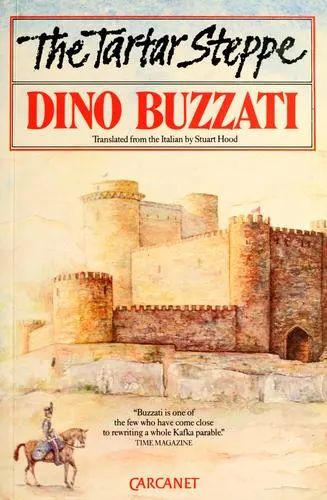
A young officer arrives at a remote fortress expecting a brief posting, only to find that its emptiness offers one intoxicating possibility: someday, something important might happen there. Buzzati turns waiting into a trap as palpable as Abe’s sand pit.
What the novels share most deeply is their understanding that captivity need not be imposed outright. Habit, hope, and the need to make one’s life meaningful can secure the bars. Buzzati’s lucid, deceptively simple prose makes passing time feel both absurd and terrifying. Long regarded as his masterpiece, The Tartar Steppe is one of the essential existential novels—and its final emotional force is devastating precisely because it never raises its voice.
A wealthy woman enters her former maid’s nearly empty room and encounters a cockroach. From that stark beginning, Lispector creates one of literature’s most intense confrontations with matter, identity, and the horror of existing without the consoling stories we tell about ourselves.
Abe’s sand is at once substance, environment, adversary, and philosophical problem; Lispector gives physical reality the same unbearable immediacy. Her narrator’s thoughts twist, recoil, and advance with an almost erotic dread, making the book feel less like an allegory to decode than an experience happening to your nervous system. Lispector’s reputation as a singular modernist rests heavily on this strange, ferocious novel. Readers willing to submit to it often become its evangelists.
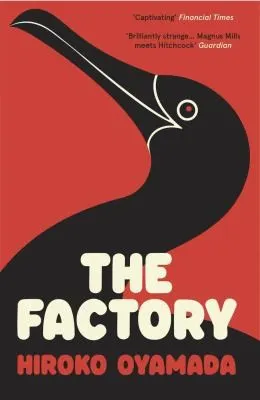
Three people take jobs at an immense factory: one shreds documents, one proofreads incomprehensible material, and one studies the facility’s mosses. Their tasks are mundane, yet the factory’s geography, wildlife, and purpose become increasingly difficult to grasp.
Oyamada inherits Abe’s gift for letting practical details quietly overthrow reality. Work continues; procedures are followed; no grand explanation arrives. The result is funny, airless, and eerily concrete, with an ecosystem that seems to be absorbing the workers into itself. Winner of Japan’s Shincho Prize for New Writers, this compact novel helped establish Oyamada as a major voice in contemporary Japanese surrealism. Its brevity is deceptive: afterward, ordinary workplaces may look permanently stranger.
If you loved The Face of Another
A man detained at the Swiss border insists that he is not the missing sculptor everyone recognizes him as. Ordered to record his story in notebooks, he tries to write himself out of an identity—and only reveals how deeply he remains entangled in it.
Like Abe, Frisch turns a conceptual premise into an intimate examination of marriage, shame, resentment, and self-deception. The narrator’s problem is not simply that others have mistaken him; it is that every version of the self may be a story told to escape responsibility. A landmark of postwar German-language fiction, I’m Not Stiller has Abe’s rare combination of intellectual rigor and emotional cruelty: it makes the wish to become someone else feel both liberating and morally disastrous.
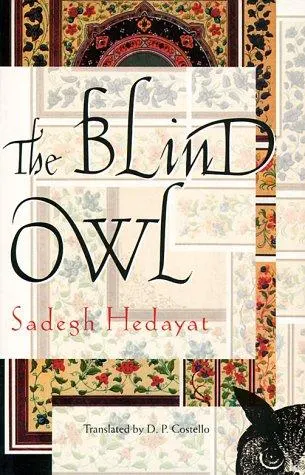
The unnamed narrator of The Blind Owl paints the same mysterious image again and again, addresses his confession to his own shadow, and watches reality fracture into obsessive repetitions. Hedayat’s prose is feverish yet exact: every object seems charged with private meaning, while every attempt at explanation makes the speaker less trustworthy.
A reader of The Face of Another will recognize the disturbing intimacy of being trapped inside a brilliant, estranged man’s account—especially when desire turns other people into projections and self-analysis becomes another form of concealment. But Hedayat replaces Abe’s clinical chill with nightmare lyricism, creating a book that feels ancient, narcotic, and startlingly modern. A foundational work of modern Persian fiction, it has inspired generations of devoted and unsettled readers; its images linger like memories you cannot prove are yours.
If you loved The Ruined Map
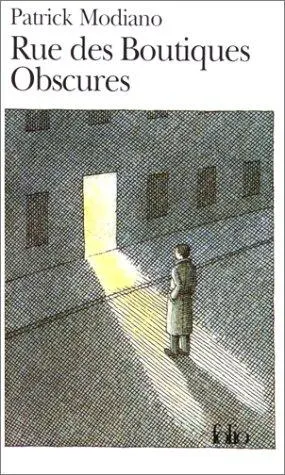
Guy Roland works for a Paris detective agency, but the person he must finally locate is himself: after years of amnesia, he follows names, photographs, addresses, and uncertain recollections toward a past that may or may not be his.
A reader of Abe will recognize the peculiar force of clues that deepen absence instead of dispelling it. Yet Modiano replaces The Ruined Map’s abrasive urban nightmare with hushed melancholy; every hotel lobby and old directory seems to preserve a faint human afterimage. Winner of the Prix Goncourt and central to the body of work that later earned Modiano the Nobel Prize, Missing Person is an exquisitely controlled novel about identity as something assembled from other people’s unreliable memories. Few books make uncertainty feel so intimate.
A detective named Wallas arrives in an unfamiliar city to investigate an apparent murder. The assignment should be straightforward, but streets repeat themselves, objects acquire an almost hostile vividness, and the conventions of detective fiction begin slipping out of alignment.
Robbe-Grillet, the leading theorist and practitioner of the nouveau roman, gives the physical world the unnerving authority Abe gives maps, matchboxes, and city blocks. The meticulous descriptions are not decorative: they make perception itself suspect, as though looking harder merely manufactures another false lead. The Erasers is colder and more geometrical than Abe, but it produces the same addictive dread—the sense that investigator, crime, and labyrinth may be parts of one mechanism. It remains one of experimental fiction’s most brilliantly engineered appropriations of the detective novel.

A late-night telephone call draws a solitary writer into impersonating a private detective. He begins following a stranger through Manhattan, recording routes and observations in a red notebook; soon the borrowed role exerts more pressure than the self beneath it.
City of Glass shares Abe’s deepest conceit: detection as a solvent of identity. Auster’s clean, quick prose makes the descent dangerously readable, while names, notebooks, language, and street patterns keep opening into intellectual abysses. The first volume of The New York Trilogy, the work that established Auster’s international reputation, it helped define the postmodern metaphysical detective story. If The Ruined Map left you wanting another novel in which the searcher becomes less substantial with every clue, City of Glass is indispensable.
If you loved Secret Rendezvous
Marian Leatherby acquires a hearing trumpet, discovers what her family says behind her back, and is dispatched to an institution whose bizarre architecture and rules only grow less explicable. Like Abe, Carrington understands that bureaucracy becomes most frightening—and funniest—when everyone treats its madness as ordinary.
The tone is more mutinous than Secret Rendezvous, but the pleasures are closely related: unstable identities, intrusive authorities, sexual and bodily strangeness, and rooms that seem to obey psychic rather than physical laws. Carrington, a major Surrealist painter as well as a writer, made this cult classic feel like an illustrated medieval apocalypse rewritten by an anarchic comedian. Its devoted readership is deserved: few novels make captivity feel so deliriously liberating.
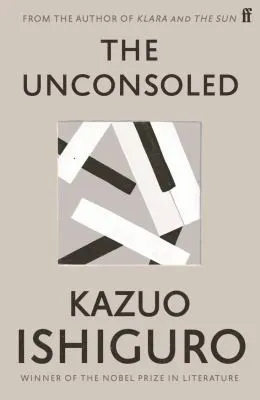
A celebrated pianist arrives in an unnamed European city for an important performance. Almost immediately, strangers begin assigning him errands, confidences, and obligations; distances change, appointments multiply, and every attempt to reach one destination opens another demand.
This is the closest match to Abe’s peculiar nightmare logic. Ishiguro makes each individual request sound reasonable while allowing their accumulation to become monstrous. His protagonist, like the husband in Secret Rendezvous, is trapped partly by the institution around him and partly by his own persistent belief that cooperation will eventually produce clarity.
Once one of Ishiguro’s most divisive novels, The Unconsoled has become one of his most passionately defended: the strange, enormous work in which the future Nobel laureate let dream logic govern an entire social world. Submit to its rhythm and ordinary responsibility becomes as unnerving as any conspiracy.