Books like Secret Rendezvous
Start with a ninety-two-year-old woman, a hearing aid, and a retirement home run like an esoteric prison. Leonora Carrington’s comic exuberance seems far from Abe’s clinical nightmare, yet both novels turn institutional logic into a trapdoor beneath reality. The other two choices pursue Abe’s distinctive unease through bodily revelation and dreamlike obligation.
If you liked Secret Rendezvous, you’ll love these
Not lookalikes — kindred books. Each one shares something essential with Secret Rendezvous, and we tell you exactly what.
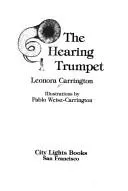
Marian Leatherby acquires a hearing trumpet, discovers what her family says behind her back, and is dispatched to an institution whose bizarre architecture and rules only grow less explicable. Like Abe, Carrington understands that bureaucracy becomes most frightening—and funniest—when everyone treats its madness as ordinary.
The tone is more mutinous than Secret Rendezvous, but the pleasures are closely related: unstable identities, intrusive authorities, sexual and bodily strangeness, and rooms that seem to obey psychic rather than physical laws. Carrington, a major Surrealist painter as well as a writer, made this cult classic feel like an illustrated medieval apocalypse rewritten by an anarchic comedian. Its devoted readership is deserved: few novels make captivity feel so deliriously liberating.
A wealthy woman enters her former maid’s nearly empty room and encounters something that begins to dismantle her sense of herself. From that modest opening, Lispector creates an ordeal of consciousness in which disgust, desire, matter, and identity become impossible to separate.
Anyone gripped by the way Secret Rendezvous turns the body into both evidence and enigma should recognize the pressure here. Lispector dispenses with Abe’s machinery and corridors, but reaches the same terrifying border where a person can no longer tell whether she is discovering her true self or losing the category of self altogether. Widely regarded as one of Lispector’s defining achievements, this is philosophical fiction with the immediacy of a physical crisis.

A celebrated pianist arrives in an unnamed European city for an important performance. Almost immediately, strangers begin assigning him errands, confidences, and obligations; distances change, appointments multiply, and every attempt to reach one destination opens another demand.
This is the closest match to Abe’s peculiar nightmare logic. Ishiguro makes each individual request sound reasonable while allowing their accumulation to become monstrous. His protagonist, like the husband in Secret Rendezvous, is trapped partly by the institution around him and partly by his own persistent belief that cooperation will eventually produce clarity.
Once one of Ishiguro’s most divisive novels, The Unconsoled has become one of his most passionately defended: the strange, enormous work in which the future Nobel laureate let dream logic govern an entire social world. Submit to its rhythm and ordinary responsibility becomes as unnerving as any conspiracy.