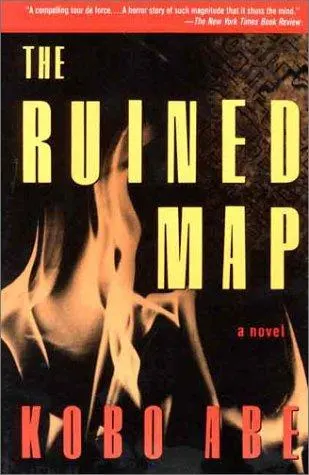
Books like The Ruined Map
Patrick Modiano makes disappearance feel like a half-recalled sorrow; Alain Robbe-Grillet makes it a trap built from objects, angles, and faulty deductions. Between them, Paul Auster turns the detective himself into the mystery. All three pursue what is most haunting in The Ruined Map: the moment an investigation ceases to recover a life and begins to erase one.
If you liked The Ruined Map, you’ll love these
Not lookalikes — kindred books. Each one shares something essential with The Ruined Map, and we tell you exactly what.
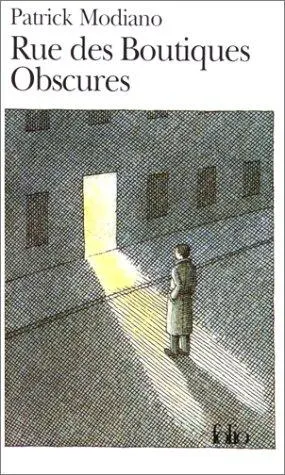
Guy Roland works for a Paris detective agency, but the person he must finally locate is himself: after years of amnesia, he follows names, photographs, addresses, and uncertain recollections toward a past that may or may not be his.
A reader of Abe will recognize the peculiar force of clues that deepen absence instead of dispelling it. Yet Modiano replaces The Ruined Map’s abrasive urban nightmare with hushed melancholy; every hotel lobby and old directory seems to preserve a faint human afterimage. Winner of the Prix Goncourt and central to the body of work that later earned Modiano the Nobel Prize, Missing Person is an exquisitely controlled novel about identity as something assembled from other people’s unreliable memories. Few books make uncertainty feel so intimate.
A detective named Wallas arrives in an unfamiliar city to investigate an apparent murder. The assignment should be straightforward, but streets repeat themselves, objects acquire an almost hostile vividness, and the conventions of detective fiction begin slipping out of alignment.
Robbe-Grillet, the leading theorist and practitioner of the nouveau roman, gives the physical world the unnerving authority Abe gives maps, matchboxes, and city blocks. The meticulous descriptions are not decorative: they make perception itself suspect, as though looking harder merely manufactures another false lead. The Erasers is colder and more geometrical than Abe, but it produces the same addictive dread—the sense that investigator, crime, and labyrinth may be parts of one mechanism. It remains one of experimental fiction’s most brilliantly engineered appropriations of the detective novel.
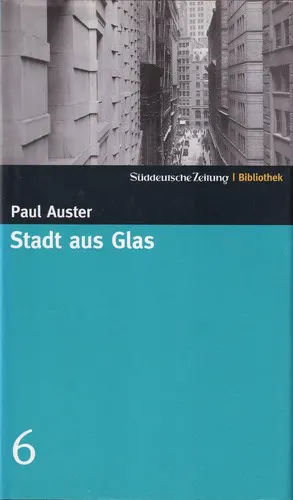
A late-night telephone call draws a solitary writer into impersonating a private detective. He begins following a stranger through Manhattan, recording routes and observations in a red notebook; soon the borrowed role exerts more pressure than the self beneath it.
City of Glass shares Abe’s deepest conceit: detection as a solvent of identity. Auster’s clean, quick prose makes the descent dangerously readable, while names, notebooks, language, and street patterns keep opening into intellectual abysses. The first volume of The New York Trilogy, the work that established Auster’s international reputation, it helped define the postmodern metaphysical detective story. If The Ruined Map left you wanting another novel in which the searcher becomes less substantial with every clue, City of Glass is indispensable.