Author
Books like Jean Rhys
7 books we recommend to Jean Rhys readers, drawn from Wide Sargasso Sea, Good Morning, Midnight and Voyage in the Dark — each with the reason why.
If you loved Wide Sargasso Sea
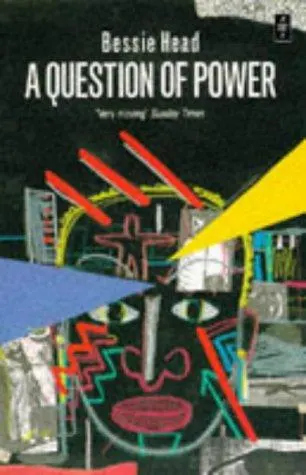
Elizabeth, exiled from apartheid South Africa to a village in Botswana, finds that displacement follows her inward: identity, desire, and power become the forces of an overwhelming psychological struggle. Like Rhys, Head refuses to keep personal breakdown separate from racial hierarchy or colonial history.
Head’s fiercely autobiographical novel moves between stark daily life and terrifying visions without reassuring the reader where one ends and the other begins. Its intensity can be punishing, but its compassion is equally radical. Now regarded as a major work of African literature, it offers the rare experience of a novel inventing a form adequate to a mind under siege.
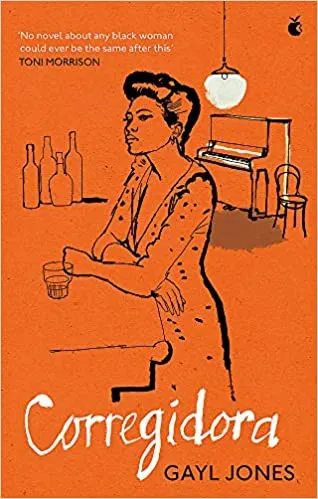
Ursa Corregidora is a blues singer whose voice carries a family history of enslavement and sexual violence. After an injury abruptly alters her future, she must confront what the women before her demanded she preserve—and what that inheritance has done to her capacity for intimacy.
Jones writes the way blues sounds: through repetition, pressure, broken phrases, and meanings that change each time they return. As in Wide Sargasso Sea, women’s bodies become contested archives, while male desire repeatedly mistakes possession for love. Edited by Toni Morrison and deeply influential since its 1975 publication, this short, scorching novel feels less like a story safely observed than a voice heard from inside the wound.
Ninety-two-year-old Marian Leatherby receives a hearing trumpet and promptly discovers that her family plans to shut her away in an institution. Where Rhys makes the imprisonment of the supposedly mad woman devastating, Carrington seizes that figure and gives her irreverence, appetite, friendship, and astonishing imaginative freedom.
Carrington’s cult classic begins with wonderfully dry comedy, then treats realism itself as another locked room to escape. Its surrealism is not decorative whimsy but a rebellion against the categories—old, female, dependent, insane—used to make Marian disappear. A reader haunted by Rhys’s attic will relish seeing an indomitable heroine refuse every architecture built to contain her.
If you loved Good Morning, Midnight
Judith Hearne arrives at a Belfast boarding house with shabby possessions, dwindling money, and a stubborn belief that respectability, romance, or religion might yet rescue her. Like Sasha Jansen, she survives by arranging small illusions around an unbearable loneliness—and by hiding her dependence on drink until she can no longer do so.
Moore’s great achievement is to expose Judith’s fantasies without treating her as a joke. Every strained conversation and misread kindness carries the threat of humiliation. The prose moves between cruel social observation and intimate sympathy, making the reader feel both how others see Judith and how desperately she needs not to see herself that way. The novel established Moore’s formidable reputation, and its unsparing tenderness makes it one of the essential portraits of loneliness in twentieth-century fiction.

Where Rhys draws us deep inside a woman’s wounded consciousness, Spark creates terror by withholding it. Lise, dressed in aggressively clashing colors, leaves on a journey whose violent destination the novel signals almost immediately. She seems at once frighteningly deliberate and impossible to understand.
Spark compresses an entire psychic catastrophe into a short, glitteringly sharp book. Shop assistants, hotel clerks, and fellow travelers enforce the same petty codes of femininity and acceptable behavior that torment Sasha, but Lise answers them with manic provocation. The result is colder and more formally audacious than Rhys: a reverse mystery, an anti-psychological character study, and one of Spark’s most fiercely admired novels. Its brevity only intensifies its power; once read, it is difficult to dislodge.
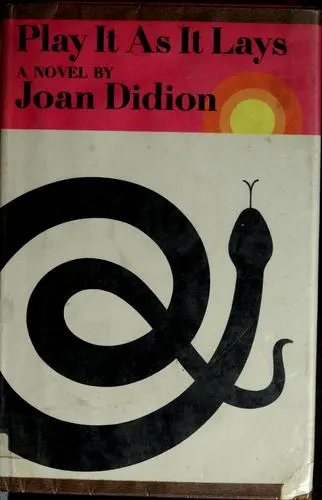
Maria Wyeth drives the Los Angeles freeways because motion is easier than thought. Around her, Hollywood reduces experience to appointments, transactions, and empty talk; Didion reduces the novel itself to brief chapters, white space, repetitions, and sentences stripped nearly bare.
A reader who loves Rhys’s ability to make despair sound lucid will recognize the force of Maria’s flat, exact voice. Both novels understand that breakdown is not always dramatic: it can look like choosing a dress, ordering another drink, memorizing routes, or answering a question with practiced indifference. Yet Didion’s coolness is not emptiness. Feeling accumulates beneath the immaculate surface until every ordinary detail seems charged with dread. A touchstone of American minimalism, this is one of those rare novels whose style becomes a way of seeing long after the final page.
If you loved Voyage in the Dark
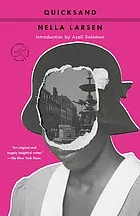
Helga Crane, introduced suffocating within the respectable discipline of a Southern school, possesses Anna Morgan’s fatal alertness to atmosphere. She reads rooms through colors, fabrics, voices, and tiny changes in courtesy; she also understands that other people are always trying to assign her a role. Her search for somewhere she can live without falsifying herself gives the novel its restless momentum.
Larsen adds race and respectability to the traps of money, sex, and belonging that Rhys exposes. Yet Quicksand never becomes schematic: Helga is proud, perceptive, contradictory, and hungry for beauty. A foundational Harlem Renaissance novel, it has the compression of a classic and the intimacy of a confession overheard at dangerous proximity.