Author
Books like Hermann Hesse
6 books we recommend to Hermann Hesse readers, drawn from Siddhartha and The Glass Bead Game — each with the reason why.
If you loved Siddhartha
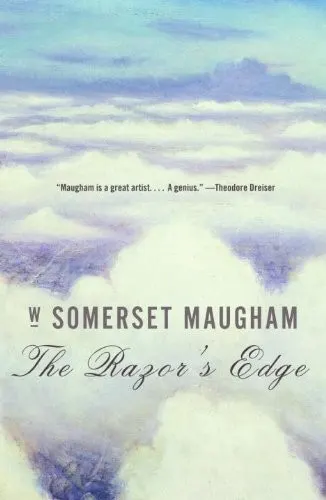
Larry Darrell returns from war unmoved by the prosperous life waiting for him. While friends pursue money, marriage, and social position, he searches for an understanding that cannot be inherited or bought.
Like Hesse, Maugham tests spiritual aspiration against lived experience rather than doctrine. But his urbane, ironic narration gives the quest a bracing counterweight: Larry’s serenity appears amid vanity, disappointment, and worldly temptation. One of Maugham’s most enduring novels, it makes renunciation feel neither quaint nor easy—and may leave you reconsidering what success costs.
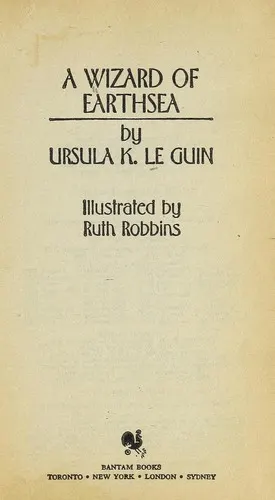
Le Guin’s young wizard Ged possesses extraordinary gifts, but pride drives him toward an encounter that turns his education into a deeper search for self-knowledge. The kinship with Siddhartha lies in the insight that wisdom is not power, purity, or victory over an external enemy; it begins when we stop dividing ourselves into acceptable and unacceptable parts.
Le Guin’s prose is spare, lucid, and almost scriptural, with the compression of a myth remembered for centuries. This enormously influential fantasy novel is often labeled a coming-of-age story, but its Taoist-inflected understanding of balance, humility, and wholeness gives it the depth of a spiritual classic.
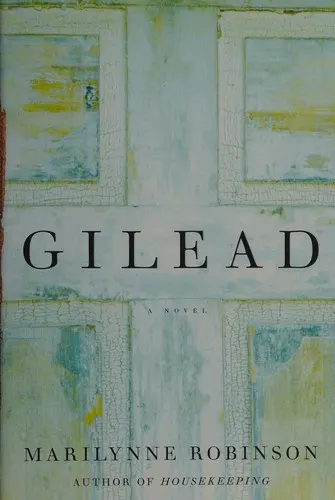
An elderly minister, knowing he will not see his young son grow up, writes him a long letter about family, failure, forgiveness, and the astonishing fact of being alive. There is little conventional adventure; the journey occurs through memory and ever-deepening attention.
Readers who loved the river passages in Siddhartha may recognize Robinson’s gift for making time feel layered rather than linear, and ordinary things radiant with meaning. Yet Gilead never offers easy consolation: its narrator must discover where his own learning has failed him. Winner of the Pulitzer Prize and cherished by many readers as a book to revisit throughout life, it can alter the texture of everyday seeing.
If you loved The Glass Bead Game
Mann offers the great dark counterpart to Hesse’s novel. Serenus Zeitblom recounts the life of the brilliant composer Adrian Leverkühn, whose austere pursuit of artistic innovation unfolds against Germany’s descent into catastrophe. As in The Glass Bead Game, music becomes a language for thinking about an entire civilization, while an earnest biographer struggles to understand a gifted, forbidding friend.
But where Hesse tests intellectual purity against ordinary life, Mann asks what happens when genius deliberately severs itself from warmth, fellowship, and moral responsibility. The musical discussions are not ornament: they make abstraction feel intoxicating, dangerous, and historically consequential. Widely regarded as one of Mann’s supreme achievements, Doctor Faustus is the novel to read if Castalia’s beauty left you wondering about its shadow.
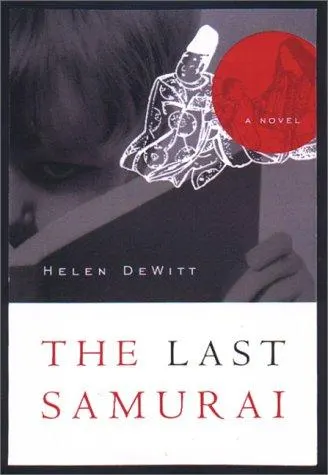
This cult masterpiece captures the exhilaration of learning more vividly than almost any contemporary novel. Sibylla, an intellectually ravenous single mother, raises her precocious son Ludo amid Greek, Japanese, mathematics, Icelandic sagas, and repeated viewings of Kurosawa’s Seven Samurai. Knowledge here is not a stately institution but a homemade survival system—improvised, comic, obsessive, and alive.
A lover of Hesse will recognize the dream of disciplines speaking to one another, yet DeWitt refuses to separate education from money, loneliness, parenthood, or the need for exemplary lives. Her formal daring is matched by emotional force, and the novel’s unusually devoted readership has grown steadily since its troubled initial publication. It feels like a Glass Bead Game rebuilt in a cramped apartment—and made urgent by love.
Behind the forbidding invented vocabulary lies one of the most absorbing novels ever written about communities devoted to thought. Its scholars live in secluded institutions, preserving mathematics, philosophy, and scientific inquiry while the outside world moves at a different tempo. Stephenson makes their rituals, rivalries, humor, and long arguments concrete enough that intellectual life acquires the texture of an adventure.
The crucial kinship with Hesse is not the cloistered setting but the pressure placed upon it: What is disciplined contemplation for, and when must the thinker re-enter history? Anathem gradually makes abstract reasoning feel suspenseful without cheapening it, joining metaphysics to loyalty, courage, and action. It is one of Stephenson’s most fiercely admired novels, and for readers who wished they could inhabit Castalia before interrogating its limits, it is nearly irresistible.