Author
Books like Greg Egan
7 books we recommend to Greg Egan readers, drawn from Permutation City, Diaspora and The Clockwork Rocket — each with the reason why.
If you loved Permutation City
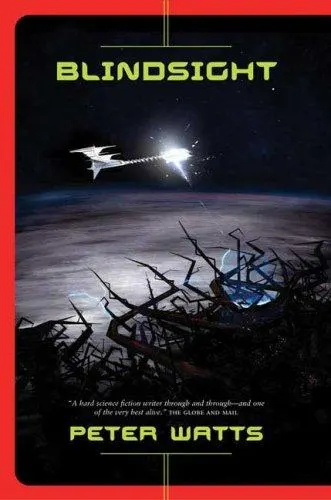
Permutation City questions whether a perfect continuation of a person really is that person. Blindsight performs an equally ruthless operation on consciousness itself: what if subjective awareness—the faculty we treasure most—is not the summit of intelligence but an expensive evolutionary mistake?
After a spectacular first-contact event, a neurologically altered observer joins a crew of radically modified specialists sent to investigate. Watts makes every member of that crew part of his argument, while the narrator’s uncertainty about other minds gives the novel an unnerving emotional core. A Hugo finalist that became a cult classic partly through Watts’s decision to release it freely online, Blindsight inspires unusually fierce devotion and debate. It is the rare hard-SF novel whose central proposition may continue bothering you years later.
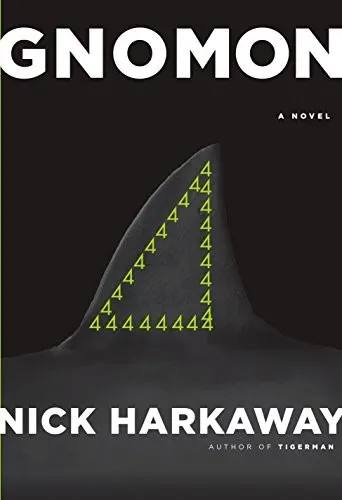
Gnomon begins with an apparent impossibility inside a near-total surveillance state: a woman has died while the system was examining her mind. An investigator enters the recorded interrogation and encounters identities, histories, and realities nested inside one another, each rendered in a different voice and genre.
Where Egan writes with crystalline austerity, Harkaway is exuberant, comic, erudite, and deliberately overwhelming. But both treat a mind as something that can contain worlds—and ask whether sufficiently coherent patterns possess their own claim to reality. Gnomon has earned a reputation as Harkaway’s maximalist masterpiece because its labyrinth is not decorative: its structure is the philosophical experiment. For a reader who loved watching Permutation City make ontology feel dangerously concrete, this is a magnificent maze to enter.
If you loved Diaspora
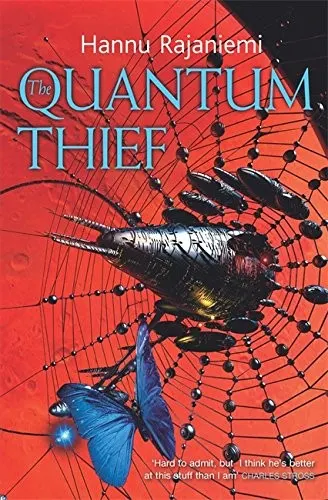
Rajaniemi offers the pleasure of being dropped into a civilization whose assumptions you must reconstruct for yourself. A legendary thief begins in a prison built from iterated game theory before being rescued into a Solar System of engineered minds, negotiated memories, cryptographic identities, and societies with radically different definitions of privacy and personhood.
Like Egan, Rajaniemi refuses to translate every idea into familiar terms. The density is part of the seduction: each unfamiliar word implies an entire technology or social compact, and comprehension arrives through accumulation rather than exposition. Yet beneath the glittering machinery lies an intimate story about memory, obligation, and whether identity survives revision. Few posthuman novels make strenuous reading feel this playful—or reward attention so lavishly.
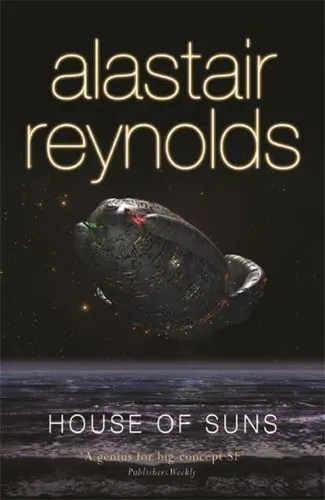
For the deep-time awe of Diaspora, read the Reynolds novel many of his admirers regard as his finest standalone. Abigail Gentian has created a thousand near-clones of herself, sending them across the galaxy to gather experience; every circuit of the Milky Way, the scattered “shatterlings” reunite and exchange memories. Campion and Purslane are two such travelers, arriving late to a gathering that has gone catastrophically wrong.
Reynolds makes millions of years feel lived rather than merely stated. Civilizations flower and vanish between meetings, while relationships persist in altered, sometimes painful forms. The book has the propulsion of a cosmic mystery, but its lasting power comes from the tension between astronomical duration and stubborn attachment. It supplies the grandeur Diaspora readers crave without sacrificing warmth—and its final reaches contain some of modern space opera’s most haunting images.
If you loved The Clockwork Rocket
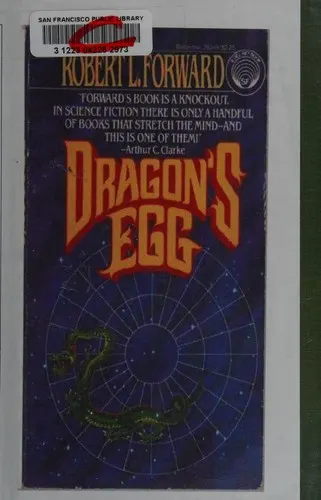
Few novels rival Egan’s pleasure in asking what life would become under radically different physical conditions. Forward—a physicist as well as a novelist—places a civilization on a neutron star, where crushing gravity, fierce magnetic fields, and an astonishingly accelerated timescale determine everything from anatomy to history.
A classic of rigorous hard science fiction, Dragon’s Egg does not merely decorate its story with astrophysics; it converts astrophysics into biology, culture, and destiny. If The Clockwork Rocket made you exhilarated by the moment an impossible world becomes logically inevitable, this is essential reading.
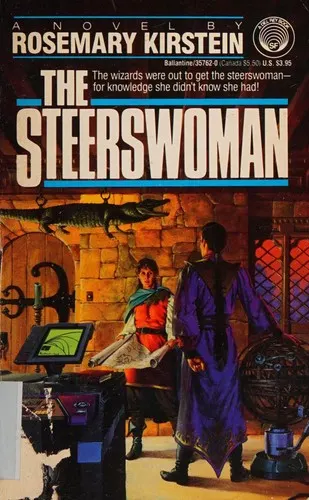
Rowan belongs to an order devoted to gathering and sharing knowledge. Steerswomen must answer any question put to them—and anyone who refuses theirs loses access to the order’s accumulated wisdom. Her investigation of some strange blue jewels begins modestly, but Kirstein makes observation, hypothesis, error, and revision as suspenseful as combat.
The kinship with Egan lies less in subject than in intellectual ethics: both novels trust readers to reason alongside women whose curiosity challenges entrenched power. The Steerswoman has become a fiercely cherished cult classic because its revelations feel earned rather than dispensed. It offers the rare thrill of watching a mind become more accurate, one stubborn question at a time.
On the ocean moon Shora, the Sharers have built an all-female society around sophisticated biological knowledge, ecological reciprocity, and disciplined nonviolence. When an expansionist culture seeks to dominate them, their science and their politics prove inseparable.
Like Egan, Slonczewski treats unfamiliar biology as a force that shapes language, social organization, and ideas of freedom—not as exotic scenery. Her scientists must confront the political uses of knowledge, while bodies dismissed as aberrant become sources of power and understanding. Winner of the John W. Campbell Memorial Award, A Door into Ocean is one of feminist science fiction’s major achievements: intellectually ambitious, morally demanding, and far too singular to miss.