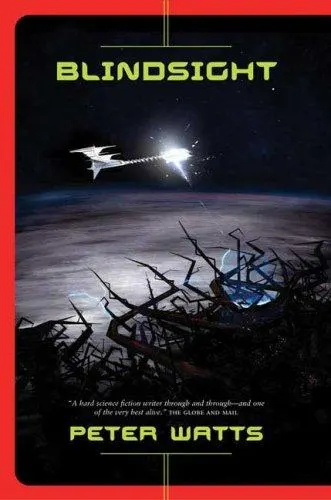
Books like Blindsight
Blindsight grips readers who want science fiction to endanger their most basic assumptions: that consciousness matters, that intelligence is legible, and that understanding is ultimately possible. These three novels apply that same intellectual pressure in strikingly different ways.
If you liked Blindsight, you’ll love these
Not lookalikes — kindred books. Each one shares something essential with Blindsight, and we tell you exactly what.
Scientists discover what may be a message from an extraterrestrial intelligence—but every attempt to decipher it exposes the assumptions, rivalries, and cognitive limits of the interpreters themselves. Lem turns scientific inquiry into epistemological suspense: is humanity discovering something alien, or merely projecting itself onto noise?
Like Watts, Lem refuses the comforting idea that intelligence guarantees mutual comprehension. His scientists are formidable yet possibly unequipped for the task, and the novel’s mordant treatment of institutions and expertise makes its intellectual humility feel hard-won rather than mystical. One of Lem’s most rigorous major novels, it offers the rare pleasure of watching brilliant minds collide with a problem that may be fundamentally beyond them.
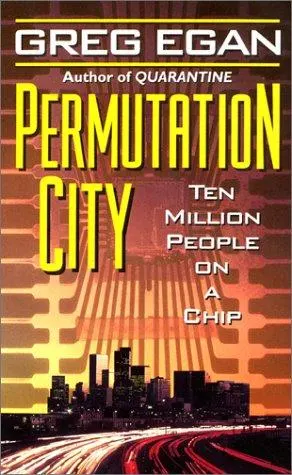
Where Blindsight asks whether consciousness is useful, Permutation City asks what consciousness actually needs in order to exist. Its opening world contains digital Copies of human minds, simulated environments, and people treating personal identity as an engineering problem; from there, Egan follows the implications with almost frightening consistency.
This is hard science fiction used as experimental philosophy, with no softening layer between the reader and the ideas. Egan makes questions about computation, continuity, reality, and personhood feel urgent and concrete rather than academic. Winner of the John W. Campbell Memorial Award and a touchstone of posthuman science fiction, it has inspired fierce reader devotion because its central conceits do not merely surprise you—they keep unfolding in your mind long after the novel ends.

Wolfe supplies something Blindsight readers often crave without realizing it: a novel that makes the reader participate in its failures of perception. Across three interlocking narratives, identities, memories, and accounts of a colonized world refuse to align cleanly. Every apparent answer subtly alters the question that produced it.
The kinship lies less in subject than in method. Like Siri Keeton, Wolfe’s narrators can report meticulously without fully comprehending what their reports reveal. The prose is controlled, the clues exact, and the resulting uncertainty feels designed rather than evasive. Widely regarded as one of Wolfe’s masterpieces, The Fifth Head of Cerberus rewards rereading so dramatically that finishing it once can feel like discovering the entrance rather than reaching the exit.