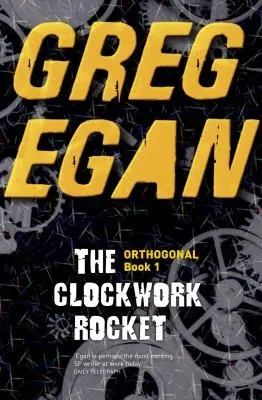
Books like The Clockwork Rocket
Reading The Clockwork Rocket feels like rebuilding intuition from scratch: every hard-won physical insight enlarges the universe, while every equation bears directly on bodies, freedom, and survival.
If you liked The Clockwork Rocket, you’ll love these
Not lookalikes — kindred books. Each one shares something essential with The Clockwork Rocket, and we tell you exactly what.
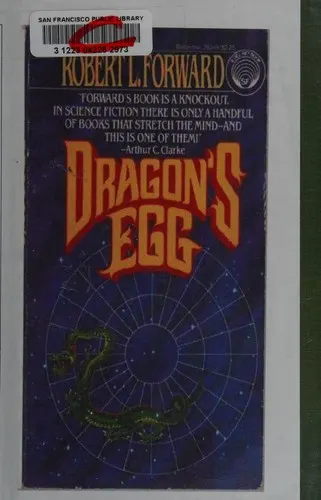
Few novels rival Egan’s pleasure in asking what life would become under radically different physical conditions. Forward—a physicist as well as a novelist—places a civilization on a neutron star, where crushing gravity, fierce magnetic fields, and an astonishingly accelerated timescale determine everything from anatomy to history.
A classic of rigorous hard science fiction, Dragon’s Egg does not merely decorate its story with astrophysics; it converts astrophysics into biology, culture, and destiny. If The Clockwork Rocket made you exhilarated by the moment an impossible world becomes logically inevitable, this is essential reading.
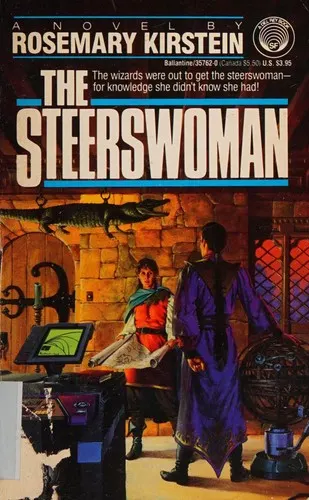
Rowan belongs to an order devoted to gathering and sharing knowledge. Steerswomen must answer any question put to them—and anyone who refuses theirs loses access to the order’s accumulated wisdom. Her investigation of some strange blue jewels begins modestly, but Kirstein makes observation, hypothesis, error, and revision as suspenseful as combat.
The kinship with Egan lies less in subject than in intellectual ethics: both novels trust readers to reason alongside women whose curiosity challenges entrenched power. The Steerswoman has become a fiercely cherished cult classic because its revelations feel earned rather than dispensed. It offers the rare thrill of watching a mind become more accurate, one stubborn question at a time.
On the ocean moon Shora, the Sharers have built an all-female society around sophisticated biological knowledge, ecological reciprocity, and disciplined nonviolence. When an expansionist culture seeks to dominate them, their science and their politics prove inseparable.
Like Egan, Slonczewski treats unfamiliar biology as a force that shapes language, social organization, and ideas of freedom—not as exotic scenery. Her scientists must confront the political uses of knowledge, while bodies dismissed as aberrant become sources of power and understanding. Winner of the John W. Campbell Memorial Award, A Door into Ocean is one of feminist science fiction’s major achievements: intellectually ambitious, morally demanding, and far too singular to miss.