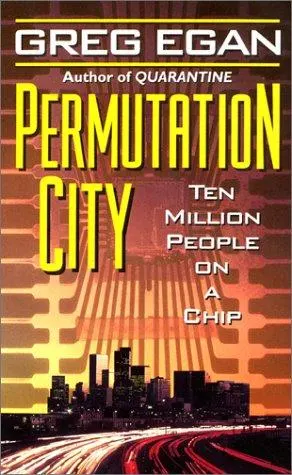
Books like Permutation City
Paul Durham opens his eyes in darkness, and the ordinary certainty of being someone, somewhere, immediately becomes suspect. These three novels share Egan’s rare ability to turn metaphysical arguments into urgent reading.
If you liked Permutation City, you’ll love these
Not lookalikes — kindred books. Each one shares something essential with Permutation City, and we tell you exactly what.
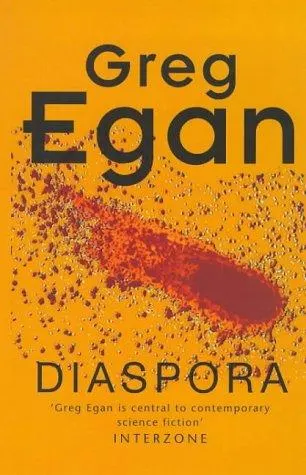
If Permutation City’s most exhilarating passages were the ones where software, identity, and mathematics became almost indistinguishable, Diaspora is essential. Its celebrated opening, “Orphanogenesis,” follows a digital consciousness assembling itself inside a virtual polis—not merely acquiring memories, but constructing perception, curiosity, and personhood from first principles.
Egan pushes harder here on embodiment, machine culture, and the possibility that mathematics is more than a description of reality. Yet the novel’s grandeur begins with something intimate: a new mind deciding what kind of being it wishes to become. Many readers regard Diaspora as Egan’s most complete achievement; skipping it would mean missing the fullest expression of the intellectual ecstasy that makes Permutation City unforgettable.
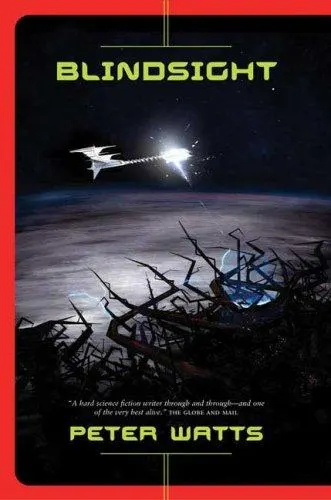
Permutation City questions whether a perfect continuation of a person really is that person. Blindsight performs an equally ruthless operation on consciousness itself: what if subjective awareness—the faculty we treasure most—is not the summit of intelligence but an expensive evolutionary mistake?
After a spectacular first-contact event, a neurologically altered observer joins a crew of radically modified specialists sent to investigate. Watts makes every member of that crew part of his argument, while the narrator’s uncertainty about other minds gives the novel an unnerving emotional core. A Hugo finalist that became a cult classic partly through Watts’s decision to release it freely online, Blindsight inspires unusually fierce devotion and debate. It is the rare hard-SF novel whose central proposition may continue bothering you years later.
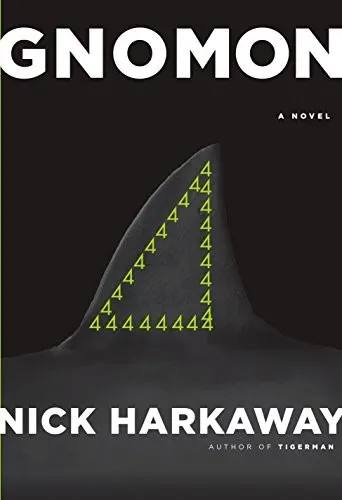
Gnomon begins with an apparent impossibility inside a near-total surveillance state: a woman has died while the system was examining her mind. An investigator enters the recorded interrogation and encounters identities, histories, and realities nested inside one another, each rendered in a different voice and genre.
Where Egan writes with crystalline austerity, Harkaway is exuberant, comic, erudite, and deliberately overwhelming. But both treat a mind as something that can contain worlds—and ask whether sufficiently coherent patterns possess their own claim to reality. Gnomon has earned a reputation as Harkaway’s maximalist masterpiece because its labyrinth is not decorative: its structure is the philosophical experiment. For a reader who loved watching Permutation City make ontology feel dangerously concrete, this is a magnificent maze to enter.