Author
Books like Georges Perec
7 books we recommend to Georges Perec readers, drawn from A Void, Life: A User's Manual and W, or the Memory of Childhood — each with the reason why.
If you loved A Void
Published as loose, unbound sections in a box, The Unfortunates asks you to shuffle most of its chapters before reading. What initially seems like literary gamesmanship becomes the exact form needed for a mind overtaken by grief: memory refuses chronology, arriving instead through accidents, repetitions and painful gaps.
Johnson’s cult novel shares A Void’s deepest achievement—the transformation of absence into structure—but its voice is rawer and more intimate. Few experimental novels make their physical design feel so emotionally inevitable; leaving it unread means missing one of the clearest proofs that formal radicalism can intensify, rather than chill, human feeling.
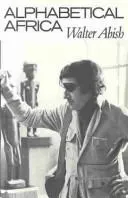
Abish begins with a chapter using only words that start with A, then admits B-words in the next, C-words after that, and so on; halfway through, the alphabet begins withdrawing again. Out of this absurdly severe rule he produces pursuit, desire, danger and a wonderfully unstable Africa assembled from the vocabulary available at each moment.
The fun lies in feeling the prose gain and lose powers before your eyes. Yet, like A Void, the novel also makes linguistic control suspicious: what looks like abundance is shaped by arbitrary exclusions, and the world on the page keeps revealing the limits of the language describing it. A landmark of American experimental fiction, it is audacious, compact and unlike almost anything else.
If you loved Life: A User's Manual
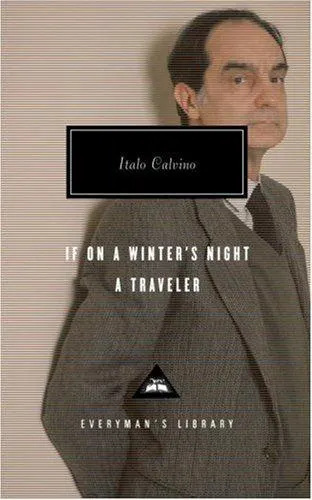
Calvino shares Perec’s rare ability to make elaborate construction feel like play. The novel repeatedly begins to tell stories, interrupts them, and draws you—the person holding the book—into the machinery. Its shifting genres are not mere virtuoso parody; together they become an inquiry into why beginnings exert such power and why readers keep wanting the world to resolve into narrative.
Like Life: A User’s Manual, it is both a puzzle and a celebration of appetite: for plots, voices, books, and other people’s imagined lives. A landmark of postmodern fiction, it has retained unusually devoted readers because the cleverness never extinguishes delight. Perec makes an apartment block contain a universe; Calvino finds one in the act of opening a novel.
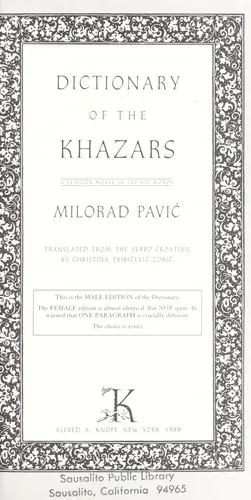
This cult classic presents itself as a lexicon assembled from three competing traditions. Entries echo, contradict, and illuminate one another; names recur in altered forms; minor details become hinges. You can read from beginning to end or follow cross-references, gradually constructing a history that never settles into a single authoritative shape.
The kinship with Perec lies in the pleasure of active assembly. Both books treat reading as searching a cabinet of curiosities, where an apparently incidental object or anecdote may connect distant lives. Yet Pavić’s atmosphere is dreamier and more occult: his architecture feels less like a Parisian building than a library glimpsed during sleep. Few novels make their physical organization so integral to their imaginative spell.
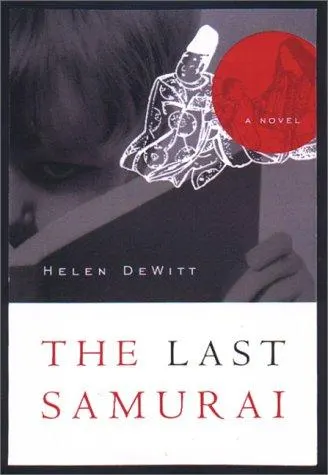
DeWitt’s novel offers a different—and deeply humane—version of Perec’s encyclopedic impulse. Its world teems with languages, mathematics, classical texts, films, typographical games, and systems of learning, all animated by a mother and son whose ferocious intelligence is also a practical problem: how do you educate an extraordinary mind, and how do you live among people who do not share your obsessions?
The book’s erudition is funny, impatient, and emotionally consequential rather than ornamental. Lists and recurring patterns become ways of showing desire, loneliness, embarrassment, and love. Once difficult to find, The Last Samurai survived through passionate word of mouth before its celebrated reissue confirmed its status as a modern cult classic. Readers who cherish the tenderness beneath Perec’s combinatorial brilliance may find DeWitt’s novel indispensable.
If you loved W, or the Memory of Childhood
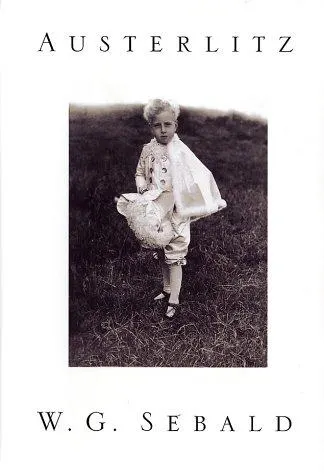
An unnamed narrator repeatedly encounters Jacques Austerlitz, an architectural historian whose talks about stations, fortresses and waiting rooms gradually acquire the pressure of something unspoken. Sebald’s immense, winding sentences move like recollection itself: digressive, delayed and suddenly pierced by recognition.
A lover of W will recognize the distrust of straightforward testimony. Photographs appear to offer evidence, yet deepen the mystery; buildings preserve history while concealing it. Widely regarded as Sebald’s masterpiece, Austerlitz achieves that rare fusion of documentary exactness and haunted invention in which every formal hesitation feels ethically necessary.
Momik, the child of Holocaust survivors, hears fragments of adult speech—coded phrases, abruptly silenced stories—and tries to turn them into an intelligible mythology. His idea of the “Nazi Beast” is at once ingenious and heartbreaking: a child’s attempt to give shape to the terror governing his household.
Grossman shares Perec’s conviction that inherited catastrophe cannot be approached through conventional realism alone. The novel keeps reinventing its imaginative terms, making fantasy not an escape from history but a perilous route toward it. A landmark of modern Israeli fiction, See Under: Love is audacious, strange and emotionally overwhelming—the kind of novel that permanently enlarges one’s sense of what fiction can attempt.