Author
Books like Elizabeth Taylor
8 books we recommend to Elizabeth Taylor readers, drawn from Mrs. Palfrey at the Claremont, Angel and A View of the Harbour — each with the reason why.
If you loved Mrs. Palfrey at the Claremont

Four unmarried office workers approaching retirement inhabit a world of lunches, bus rides, church notices, cautious invitations, and things left painfully unsaid. Pym makes these modest routines as revealing as Taylor makes the Claremont’s dining room: a glance or an awkward offer of help can expose an entire life.
Shortlisted for the Booker Prize, this was the novel that restored Pym’s reputation after years of neglect. Its wit is wonderfully dry, but its deepest kinship with Mrs. Palfrey lies in its refusal to treat lonely older people as either quaint or tragic. They remain difficult, funny, private, and capable of surprising one another. Few novels understand more clearly how thin the boundary is between solitude and belonging.
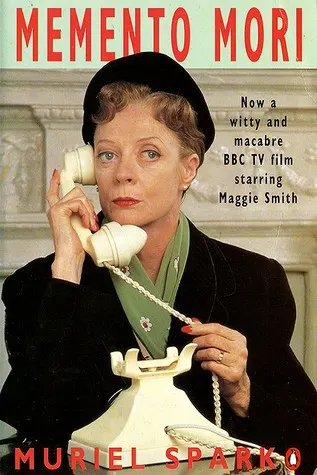
An anonymous caller begins telephoning a group of elderly Londoners with the message, “Remember you must die.” From that mordant premise, Spark creates a dazzling black comedy of vanity, resentment, desire, money, and fear.
Where Taylor’s touch is tender, Spark’s is mischievously surgical; yet both writers grant old age its full social complexity. These characters do not become interchangeable merely because they are near death: each hears the warning differently, according to the life they have made. Compact, elegant, and wickedly funny, Memento Mori is one of Spark’s finest novels—and an exhilarating next step for a reader who admired Taylor’s ability to make mortality comic without making it trivial.
On a small Finnish island, an elderly grandmother and her young granddaughter talk, quarrel, explore, invent, and share long stretches of companionable silence. Jansson builds their bond through concrete things—moss, weather, boats, animals—rather than explanations or declarations.
That restraint will feel deeply familiar to a lover of Mrs. Palfrey. Affection is expressed obliquely; grief remains present without being exploited; the grandmother’s frailty never cancels her impatience, intelligence, or appetite for mischief. Now cherished as a modern classic, The Summer Book achieves enormous emotional force in lucid, seemingly effortless prose. It is the rare novel that can be read in an afternoon and remembered for decades.
If you loved Angel
Fleur Talbot, an aspiring novelist in postwar London, takes a secretarial job with a bizarre organization devoted to writing its members’ memoirs. Soon, life begins behaving suspiciously like fiction.
Spark’s Booker-shortlisted novel offers the cerebral mirror image of Angel. Fleur understands the power of invention, whereas Angel is consumed by it; yet both books delight in the novelist as an audacious, faintly monstrous creator. Spark’s wit is sharper and more playful than Taylor’s, but equally economical: vanity is exposed in a phrase, pomposity punctured without warning. It is a wonderfully buoyant novel about artistic confidence, manipulation, and the dangerous pleasure of turning other people into material.
Undine Spragg arrives in New York society armed with beauty, appetite, and an almost sublime inability to imagine that the world might not arrange itself for her benefit. Like Angel, she is appalling, magnetic, resourceful, and impervious to correction.
Wharton makes social climbing feel both brutally funny and elemental. Undine lacks Angel’s literary fantasies, but she possesses the same absolute faith in her own deservingness—and the same talent for converting other people’s sacrifices into proof of her importance. The novel’s lasting greatness lies in Wharton’s refusal either to sentimentalize her heroine or to reduce her to a joke. Few novels sustain such exhilarating momentum while anatomizing selfishness so precisely; Undine is one of fiction’s unforgettable forces of nature.
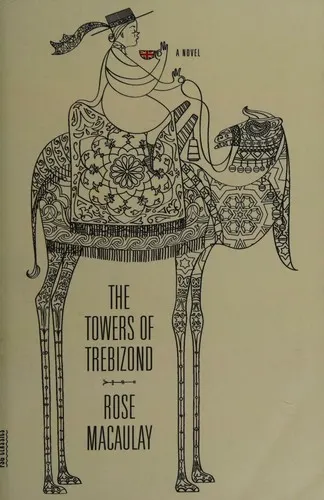
A camel, an eccentric aunt, an Anglican mission, and a journey through Turkey give Macaulay’s novel an opening of incomparable comic lightness. Beneath the absurdity, however, its narrator is carefully avoiding truths about herself that cannot be laughed away.
This is the recommendation for readers who cherish the ache beneath Angel’s satire. Macaulay understands that self-deception can be ridiculous and necessary at once, and that fantasy may protect a person even as it ruins her chances of happiness. The prose shifts effortlessly from travel comedy to spiritual longing without losing its dry intelligence. Winner of the James Tait Black Memorial Prize, it has inspired unusually devoted readers because its sadness seems to deepen after the laughter ends.
If you loved A View of the Harbour
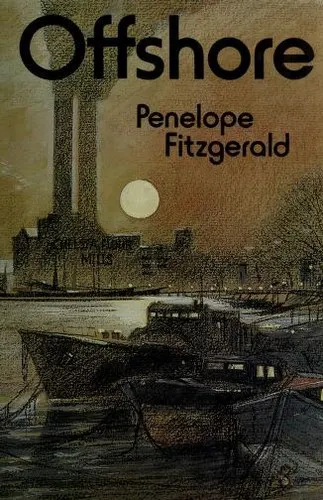
The houseboats on Battersea Reach provide an obvious echo, but the deeper kinship lies in Fitzgerald’s mobile, forgiving attention. She moves among ill-suited dreamers—a woman hoping to repair her marriage, a painter, families living at the edge of solvency—letting each person appear foolish in one scene and painfully vulnerable in the next.
Like Taylor, Fitzgerald can compress an entire disappointment into a practical detail or a line of dialogue. Offshore is shorter and more precarious than A View of the Harbour, but it has the same mingling of comedy, domestic disorder, and submerged desperation. Its 1979 Booker Prize was sometimes treated as a surprise; its growing reputation has vindicated the judges. Few novels contain so much life in so little space.
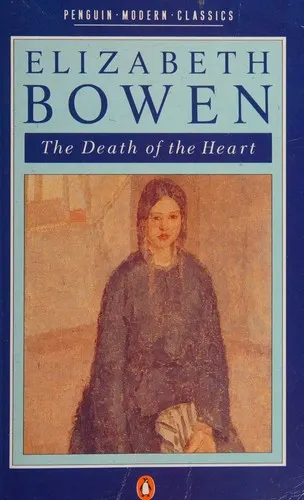
Read this for the part of Taylor that understands how adults betray children without quite admitting it to themselves. Bowen’s Portia, newly orphaned and sent to live with her polished half-brother and his wife, watches a household whose manners conceal boredom, resentment, and emotional bad faith. Her presence unsettles everyone because innocence, in Bowen’s world, is not passive: it notices.
Bowen’s prose is more baroque than Taylor’s, but the two novelists share a ruthless sensitivity to glances, silences, rooms, and the stories people invent about one another. Widely regarded as one of Bowen’s masterpieces, The Death of the Heart turns social observation into suspense. Anyone captivated by Taylor’s children, compromised marriages, and competing points of view should not miss it.