Author
Books like China Miéville
9 books we recommend to China Miéville readers, drawn from The City & the City, Embassytown and Iron Council — each with the reason why.
If you loved The City & the City
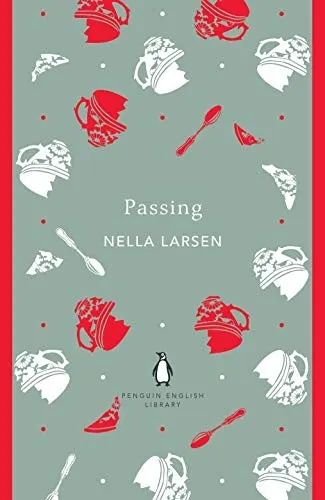
Larsen’s taut masterpiece follows Irene Redfield, a Black woman who encounters a childhood friend living as white. Like Miéville, Larsen makes “unseeing” an active social discipline: every glance is an interpretation, every public space has invisible borders, and identity depends upon what others consent—or refuse—to notice.
Its suspense comes less from incident than from the terrifying instability of perception. Larsen’s cool, compressed prose leaves motives and meanings productively unsettled, producing the same aftereffect as The City & the City: you finish questioning not only what happened, but how much reality is created by collective enforcement. Long neglected and now firmly established as a Harlem Renaissance classic, Passing achieves in fewer than two hundred pages what many novels cannot manage in five hundred.
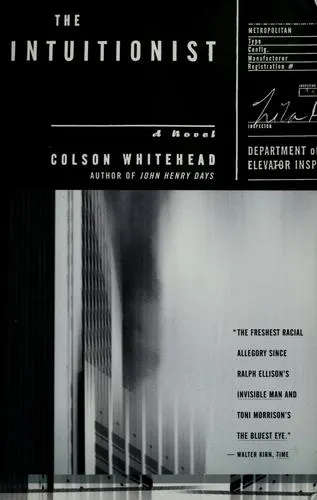
Whitehead’s audacious debut turns elevator inspection into the foundation of a city’s politics, bureaucracy, and metaphysics. Lila Mae Watson, the department’s first Black woman inspector, is drawn into an investigation after an elevator she certified catastrophically fails. What begins like institutional noir opens onto rival theories of knowledge: should an inspector trust empirical instruments, or intuit the elevator’s condition from within?
That premise has Miéville’s gift for making an absurd civic system feel both perfectly logical and politically revealing. Codes, professional factions, municipal machinery, and racial power lock together until infrastructure becomes ideology. Whitehead would later win two Pulitzer Prizes, but this strange, brilliant first novel already contains his unmistakable talent for converting an elaborate conceit into a sharp account of how societies decide whose perceptions count.
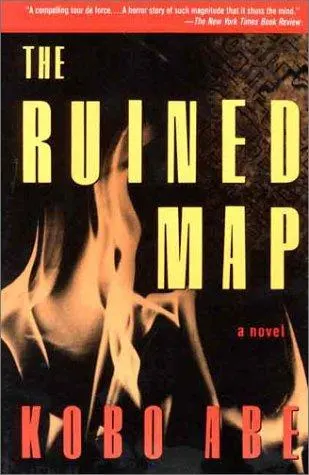
A private detective is hired to find a missing man, armed with a photograph, a matchbook, and a map that proves less helpful the longer he studies it. Abe uses the machinery of a detective story not to restore order but to dissolve it: clues loosen identities, streets become unreadable, and the investigator’s authority steadily gives way to the city’s anonymity.
Readers who loved Miéville’s refusal to separate urban geography from states of mind will recognize the deeper kinship. Abe’s city is not merely a setting but a system that makes people vanish in plain sight. The prose is spare, eerie, and darkly comic, with the existential force that made Abe one of Japan’s great postwar novelists. The Ruined Map is the rare mystery whose failure to provide ordinary reassurance becomes its most haunting success.
If you loved Embassytown
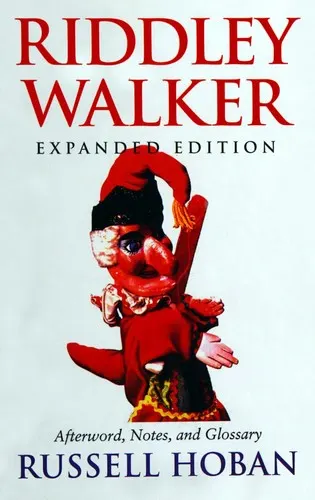
Hoban makes reading itself an act of translation. His narrator’s fractured, phonetic English initially looks forbidding; soon its puns, corruptions, and half-remembered myths disclose an entire post-catastrophe culture. Meaning is never delivered from outside—you learn to think alongside Riddley.
That is the deepest kinship with Embassytown: language is not decorative world-building but the mechanism by which a world exists and changes. Hoban’s masterpiece has earned the fierce devotion of a cult classic because its invented idiom becomes unexpectedly funny, intimate, and moving. Few novels so completely alter the reader’s mental voice.
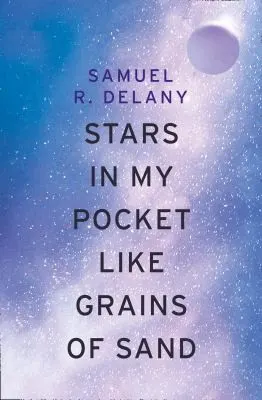
Delany offers the exhilarating sense that human beings themselves have become alien. Across a vast interstellar civilization, seemingly simple ideas—gender, family, beauty, slavery, desire—vary so radically between cultures that every encounter demands interpretation.
One of Delany’s most ambitious novels, it combines intellectual density with intense sensuality. Like Miéville, he refuses to make strangeness a puzzle that can be neatly solved: difference remains politically charged, linguistically slippery, and genuinely difficult. Its civilizations feel not merely invented but inhabited, with assumptions the reader must uncover rather than receive in an explanatory lecture.
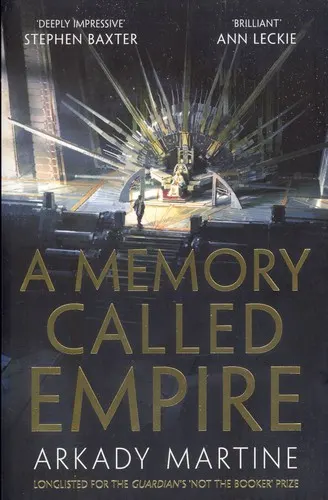
Mahit Dzmare arrives at the heart of the Teixcalaanli Empire to replace a dead ambassador, carrying an imperfect technological imprint of her predecessor’s memories. Her danger is not simply that the empire may conquer her home; it is that she loves its poetry, manners, and language.
Martine captures something Embassytown understands brilliantly: power works through fascination as effectively as force. Diplomatic conversation becomes combat, literary allusion becomes social currency, and linguistic fluency threatens to remake the speaker. This Hugo Award winner is a taut political novel as well as an unusually perceptive account of loving a culture that regards yours as peripheral. Its central seduction is hard to resist because the reader feels it too.
If you loved Iron Council
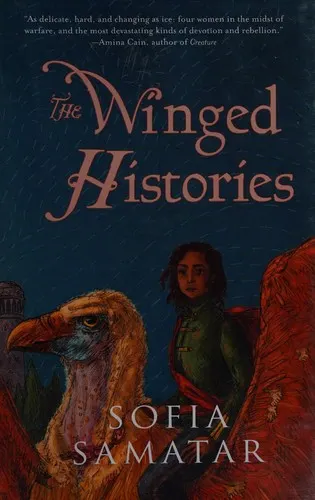
Like Iron Council, this is fantasy in which history belongs neither to rulers nor to a single heroic rebel. Four women—a soldier, a scholar, a poet, and a noblewoman—tell intersecting versions of an uprising, exposing how revolution becomes memory, scripture, propaganda, and song.
Samatar, a World Fantasy Award winner, writes with astonishing sensuous precision: empires are built from grammar and archives as much as armies. Yet the novel’s formal beauty never prettifies its politics. It asks who gets erased when liberation hardens into legend, and whose freedom is postponed for someone else’s cause. If Miéville’s fusion of political argument, collective myth, and baroque invention thrilled you, The Winged Histories is indispensable.
A young man is conscripted into a military expedition—not as an ordinary soldier, but as its official narrator. From that bureaucratically absurd premise, Cisco constructs a war novel full of diseased landscapes, grotesque comrades, unstable perceptions, and language that seems to mutate under pressure.
This is the choice for readers who loved Iron Council at its strangest: the sense that political violence deforms reality itself, and that recording events is never politically innocent. Cisco has earned a devoted cult reputation as a writer’s writer of the Weird, and The Narrator shows why. It is feverish, difficult, mordantly funny, and unlike almost anything else; reading it feels less like observing a war than being infected by its dreams.
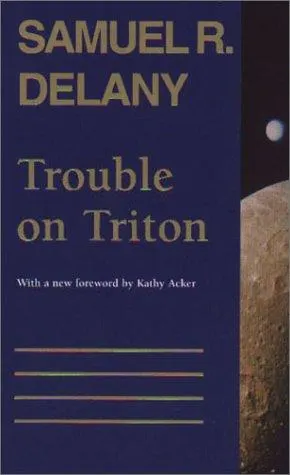
Delany turns the utopian question inside out. Triton offers an extraordinary range of freedoms, identities, living arrangements, and political affiliations—but its protagonist, Bron, may be constitutionally unable to inhabit the liberation surrounding him. The resulting tension is both darkly comic and increasingly painful.
Where Iron Council tests whether a revolutionary ideal can survive history, this Nebula-nominated classic asks whether people can survive the freedoms they claim to want. Delany’s social imagination is rigorous down to bathrooms, neighborhoods, theater, and everyday speech; every detail becomes part of an argument about desire and power. Few novels have examined utopia with such intellectual force—or such merciless insight into self-deception.