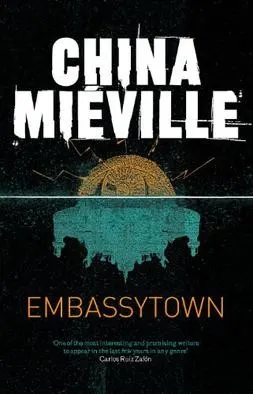
Books like Embassytown
Can language ever merely represent reality, or does every grammar quietly decide what can be thought, desired, and ruled? These novels pursue that unease in radically different directions.
If you liked Embassytown, you’ll love these
Not lookalikes — kindred books. Each one shares something essential with Embassytown, and we tell you exactly what.
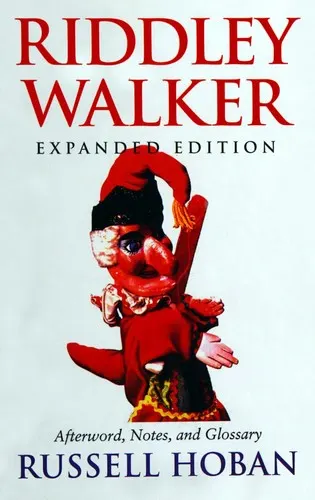
Hoban makes reading itself an act of translation. His narrator’s fractured, phonetic English initially looks forbidding; soon its puns, corruptions, and half-remembered myths disclose an entire post-catastrophe culture. Meaning is never delivered from outside—you learn to think alongside Riddley.
That is the deepest kinship with Embassytown: language is not decorative world-building but the mechanism by which a world exists and changes. Hoban’s masterpiece has earned the fierce devotion of a cult classic because its invented idiom becomes unexpectedly funny, intimate, and moving. Few novels so completely alter the reader’s mental voice.
Delany offers the exhilarating sense that human beings themselves have become alien. Across a vast interstellar civilization, seemingly simple ideas—gender, family, beauty, slavery, desire—vary so radically between cultures that every encounter demands interpretation.
One of Delany’s most ambitious novels, it combines intellectual density with intense sensuality. Like Miéville, he refuses to make strangeness a puzzle that can be neatly solved: difference remains politically charged, linguistically slippery, and genuinely difficult. Its civilizations feel not merely invented but inhabited, with assumptions the reader must uncover rather than receive in an explanatory lecture.
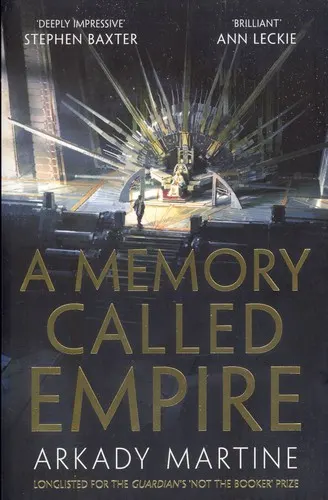
Mahit Dzmare arrives at the heart of the Teixcalaanli Empire to replace a dead ambassador, carrying an imperfect technological imprint of her predecessor’s memories. Her danger is not simply that the empire may conquer her home; it is that she loves its poetry, manners, and language.
Martine captures something Embassytown understands brilliantly: power works through fascination as effectively as force. Diplomatic conversation becomes combat, literary allusion becomes social currency, and linguistic fluency threatens to remake the speaker. This Hugo Award winner is a taut political novel as well as an unusually perceptive account of loving a culture that regards yours as peripheral. Its central seduction is hard to resist because the reader feels it too.