Author
Books like C. S. Forester
10 books we recommend to C. S. Forester readers, drawn from The Good Shepherd, The Ship, The General and Payment Deferred — each with the reason why.
If you loved The Good Shepherd
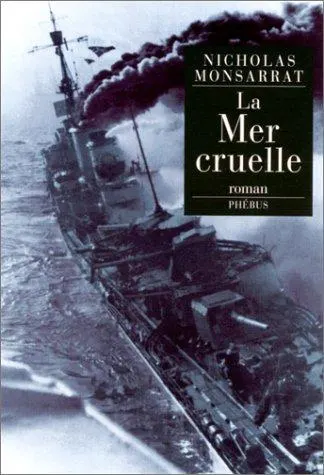
Monsarrat gives the Atlantic convoy war a broader, more intimate canvas without sacrificing the operational exactness Forester readers prize. His corvettes are cramped, wet, vulnerable machines, and their crews learn that endurance consists largely of doing ordinary tasks correctly while frightened, seasick, and bereaved.
Where The Good Shepherd concentrates on one commander’s burden, The Cruel Sea follows how that burden spreads through an entire ship. Monsarrat served on Atlantic escorts, and the novel’s authority is inseparable from its compassion: celebrated since its 1951 publication as a defining naval novel of the Second World War, it understands both professional competence and its terrible cost. If Forester made you feel every hour of Krause’s watch, Monsarrat will make you remember the men who stood theirs.
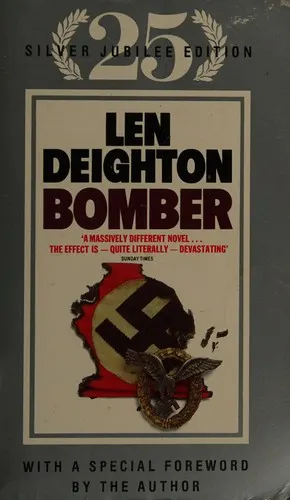
Bomber transposes Forester’s fascination with coordinated action under pressure to a single RAF operation. Planning rooms, aircraft, radar stations, maintenance crews, and civilians become parts of one immense mechanism, while small errors and uncertain reports gather consequences no participant can fully see.
Its kinship with The Good Shepherd lies in that merciless tension between the commander’s map and lived reality. Deighton writes procedure with documentary clarity, yet every technical detail carries human weight. Long regarded as one of his major achievements, Bomber is not merely suspenseful; it is an anatomy of modern warfare, showing how disciplined people make irreversible choices inside systems too large for anyone to master. Few novels make competence feel so necessary—or so tragically insufficient.
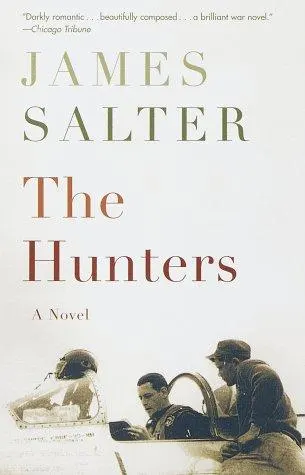
James Salter’s first novel follows an American fighter pilot in Korea whose self-command is tested by waiting, rivalry, reputation, and the need to prove himself in combat. Salter had flown fighter missions himself, and his aerial scenes possess the clean precision of firsthand knowledge; what makes the book exceptional, however, is its understanding of the loneliness beneath military authority.
A reader drawn to Krause’s private doubts will recognize Salter’s unsentimental attention to the gap between outward discipline and inward fear. The prose is leaner and more luminous than Forester’s, but equally alert to instruments, split-second judgment, and the moral danger of ambition. The Hunters established the concerns that would make Salter a writers’ writer of enduring reputation: mastery, failure, desire, and the unforgiving standards by which capable men measure themselves.
If you loved The Ship
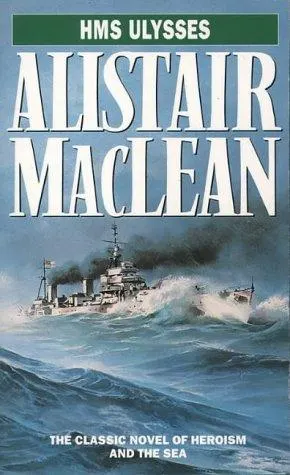
MacLean’s celebrated debut begins with a crew already driven beyond reasonable endurance and then sends its cruiser on a brutal Arctic convoy mission. The cold is not scenery but an adversary: metal burns the skin, ice burdens the ship and every duty costs men strength they no longer possess.
Like Forester, MacLean understands that heroism aboard a warship is distributed among specialists doing precise jobs while shells, weather and exhaustion dismantle the conditions that make precision possible. But his emotional register is fiercer and more tragic; the crew’s loyalty to one another gives the novel its tremendous momentum. HMS Ulysses became a defining Second World War sea novel because its ordeal feels at once technically convincing and almost mythic. Missing it would mean missing one of the genre’s great acts of collective courage.
If you loved The General
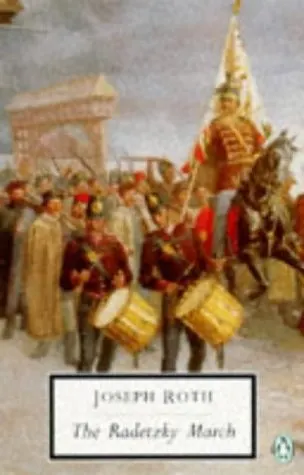
Roth’s masterpiece follows a military family whose fortunes become inseparable from the Austro-Hungarian Empire. Like Forester, Roth sees martial prestige from both sides: the uniforms, rituals, and genuine sense of duty are seductive, yet they conceal an institution losing contact with reality.
Its special kinship with The General lies in its compassionate irony. Roth’s officers are not monsters; they are limited men obeying inherited ideas long after those ideas have ceased to serve them. The lucid prose gradually turns social comedy into tragedy, while the famous opening—an accidental act of heroism at Solferino—shows how institutions manufacture legends and then imprison people inside them. Widely regarded as one of the great European novels of the twentieth century, it is the book to read if Forester left you fascinated by honorable men becoming agents of historical catastrophe.
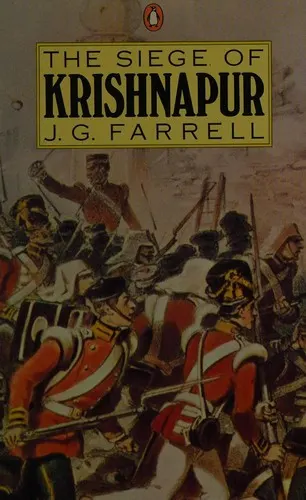
Farrell turns imperial self-confidence into brilliantly controlled farce. Faced with danger, the British inhabitants of Krishnapur cling to committees, etiquette, improving lectures, and cherished assumptions about civilization. Their absurdity is never merely decorative: every joke exposes a belief that may soon have physical consequences.
A lover of Forester’s deadpan treatment of institutional blindness will recognize the pleasure of watching confident people explain away the evidence before them. Yet Farrell also grants them ingenuity and bravery, making the satire richer and more unsettling than caricature. Winner of the Booker Prize and later selected as one of the prize’s finest winners, this is comic historical fiction with real intellectual teeth—the rare novel that can make imperial complacency hilarious without making peril feel trivial.
Wouk begins with young Willie Keith reporting aboard the Caine, an exhausted Navy minesweeper whose routines seem petty, shabby, and faintly ridiculous. From that unglamorous beginning he constructs an exceptionally acute inquiry into command: how can subordinates distinguish legitimate authority from incompetence, and what happens when personal judgment collides with military obedience?
Where Forester’s irony keeps Curzon at a revealing distance, Wouk moves among competing perspectives, repeatedly unsettling the reader’s verdicts. His great achievement is to make discipline simultaneously necessary, maddening, and morally dangerous. The novel won the Pulitzer Prize, became an immense bestseller, and remains a touchstone for arguments about leadership because its central ambiguities refuse to go stale. Read it after The General and you may find your certainty about who deserves to command becoming steadily less comfortable.
If you loved Payment Deferred
Iles begins by telling us that Dr Bickleigh has decided to murder his wife; suspense comes not from identifying the criminal but from watching intelligence, vanity and resentment harden into action. Like Forester, Iles treats murder as a practical project undertaken by a superficially unremarkable man—and then subjects that man to exquisitely controlled psychological pressure.
The social comedy is sharper and more poisonous than in Payment Deferred, but the same bleak irony governs every attempted adjustment and improvisation. A landmark of the inverted detective novel, Malice Aforethought helped establish that a crime story could reveal its culprit immediately and still be almost unbearably suspenseful.
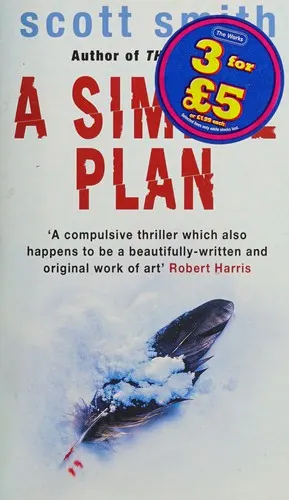
Three men find a crashed plane containing millions of dollars and agree to keep the money, provided no one comes looking for it. Their plan sounds manageable; Smith’s triumph is to make every subsequent compromise feel both appalling and, in the moment, grimly reasonable.
A reader who admired Forester’s exact accounting of temptation will recognize the mechanism: money promises liberation, secrecy demands maintenance, and an ordinary man becomes frighteningly resourceful while insisting to himself that he remains ordinary. Smith’s celebrated debut is written with such clean, pitiless momentum that its moral catastrophe feels less plotted than mathematically proved.
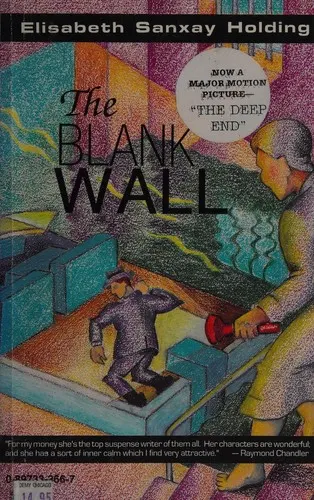
Holding shifts the pressure from a frustrated breadwinner to Lucia Holley, a wartime wife and mother trying to protect her household when her daughter’s dangerous entanglement produces a crisis. Lucia has no criminal glamour and no appetite for adventure; she has errands, servants, children and an absent husband. That domestic solidity makes each encounter with policemen, blackmailers and strangers intensely unnerving.
What connects it to Payment Deferred is the claustrophobia of maintaining normal life while terror sits inside it. Holding notices the exhausting practical details—telephone calls, money, meals, plausible explanations—that grander thrillers omit. Raymond Chandler considered her among the finest suspense writers, and The Blank Wall vindicates his devotion: it turns protective love into a trap as tense as any guilty conscience.