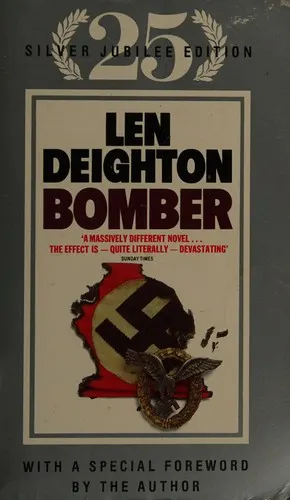
Books like Bomber
What lingers in Bomber is its pitiless enlargement of perspective: cockpit drills, domestic routines, bureaucratic decisions and private fears all become parts of one event whose full human cost no participant can see.
If you liked Bomber, you’ll love these
Not lookalikes — kindred books. Each one shares something essential with Bomber, and we tell you exactly what.
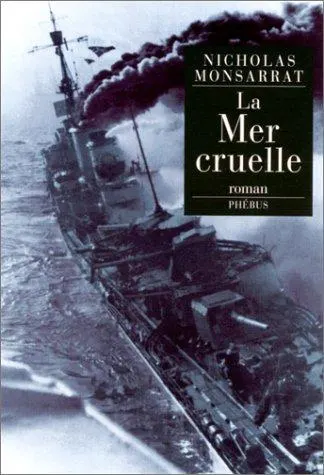
Monsarrat does for the Battle of the Atlantic what Deighton does for the bombing war: he makes procedure dramatic without making warfare glamorous. A newly assembled crew learns to operate the corvette Compass Rose, and watches, instruments, exhaustion and imperfect judgment gradually become matters of life and death.
The kinship lies in cumulative pressure. Individual courage matters, but weather, machinery, training and chance matter just as much. Monsarrat—himself a wartime naval officer—writes with hard-earned technical authority and deep compassion for people trapped inside an industrial conflict. The novel became a defining account of the Atlantic war because it understands that endurance is less spectacular, and more costly, than heroics.
If Bomber’s shifting viewpoints made you feel an entire war thinking and suffering at once, Life and Fate offers that experience on a monumental scale. Around Stalingrad, Grossman moves among soldiers, scientists, families, prisoners and officials, showing how vast historical systems enter kitchens, friendships and consciences.
Yet the book never reduces people to illustrations of an argument. Its great subject is the fragile, stubborn persistence of individual kindness under regimes that demand obedience. The Soviet authorities considered it so dangerous that the KGB confiscated the manuscript; a copy was eventually smuggled abroad. Often compared with War and Peace, it earns that comparison through moral reach rather than mere size. After Deighton’s one devastating day, Grossman’s whole human landscape is the essential next step.
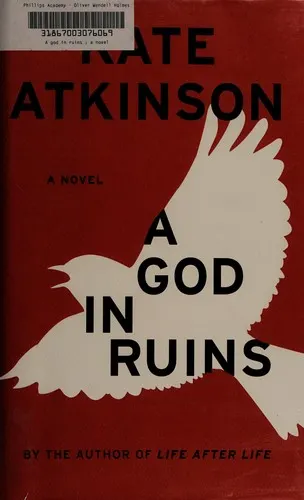
Atkinson’s Teddy Todd begins as a quiet, decent young man who becomes an RAF bomber pilot, but this is not simply another air-war narrative. The novel asks what it means to survive experiences organized around terrible statistical odds—and how one life is altered when viewed from different moments, by different people.
Deighton’s operational exactness reappears in the cold arithmetic of sorties and the intimate rituals of a crew, while Atkinson’s fractured chronology supplies a different kind of suspense: not merely what happens, but how time changes the meaning of what happened. Winner of the Costa Novel Award, A God in Ruins is admired for joining structural daring to genuine emotional force. Its bomber sequences are superb; its reckoning with survival, memory and ordinary family damage is what makes it unforgettable.