Author
Books like Anthony Burgess
6 books we recommend to Anthony Burgess readers, drawn from A Clockwork Orange and Earthly Powers — each with the reason why.
If you loved A Clockwork Orange
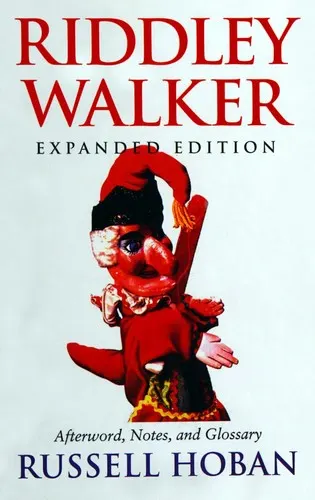
No novel comes closer to reproducing the exhilaration of learning Nadsat. Twelve-year-old Riddley narrates from a ruined future England in an English shattered and remade by centuries of oral transmission. At first every sentence resists you; soon you are thinking inside its puns, mutations and buried memories.
Hoban’s cult masterpiece makes that linguistic struggle essential to its vision. Riddley is trying to understand power, violence and the remnants of technological knowledge, while stories are continually altered by those who tell them. Like Burgess, Hoban refuses to translate the world into comfortable moral language: the reader must become an accomplice in constructing meaning. Missing Riddley Walker means missing one of the few invented voices genuinely worthy of comparison with Alex’s.
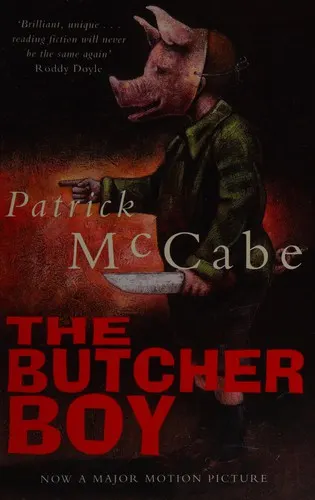
Francie Brady is one of fiction’s great frightening charmers: a neglected Irish boy whose manic monologue turns humiliation, fantasy and cruelty into savage comedy. His voice rushes past punctuation and self-knowledge, inviting laughter at precisely the moments when laughter becomes morally compromising.
Booker-shortlisted and now regarded as a modern Irish classic, The Butcher Boy shares A Clockwork Orange’s refusal to separate monstrosity neatly from vulnerability. McCabe never reduces Francie to a diagnosis or offers society as an easy excuse; instead, he traps us inside a consciousness that transforms every wound into another private legend. It is funny, hideous and desperately sad—and Francie’s voice is nearly impossible to forget.
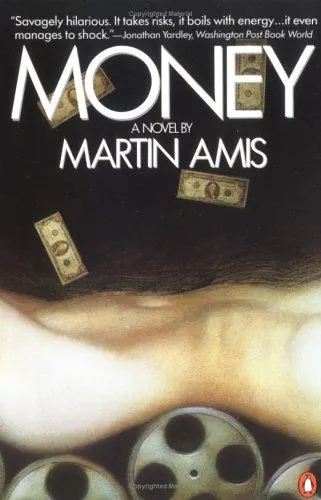
John Self, a commercials director flying between London and New York to make his first feature film, consumes booze, pornography, junk food and humiliation with heroic dedication. His narration is a virtuoso performance of slang, bravado and self-incrimination: the sentences are smarter than the man speaking them, yet inseparable from his appetites.
Money replaces Burgess’s machinery of state conditioning with the softer conditioning of advertising, celebrity and endless consumption. Its great trick is to make degradation irresistibly entertaining while ensuring that enjoyment never feels innocent. Often considered Amis’s defining novel, it offers the same disreputable pleasure as Alex’s narration: a spectacularly alive voice leading you somewhere your conscience would rather not go.
If you loved Earthly Powers
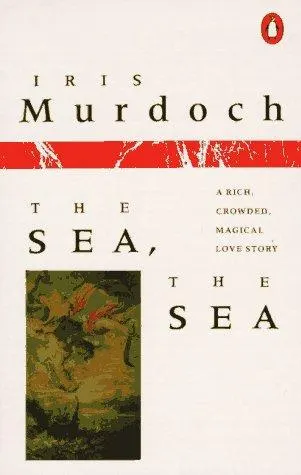
Charles Arrowby, a celebrated theatre director, retires to the coast and begins writing his memoirs. Like Kenneth Toomey, he is cultivated, theatrical, amusing, vain—and disastrously skilled at turning self-justification into art.
Murdoch makes every elegant sentence deepen the gap between what Charles tells us and what we perceive. The comedy of ego gradually acquires the force of a moral inquiry: can intelligence expose self-deception, or does it merely furnish it more beautifully? Winner of the Booker Prize, this is Murdoch at her most seductive and controlled. Anyone who loved being trapped inside Toomey’s magnificent performance should meet Charles Arrowby.
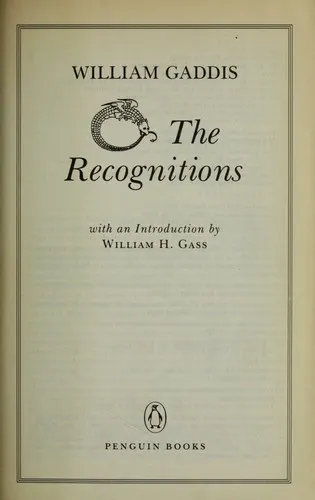
For the reader who loved the sheer abundance of Earthly Powers—its erudition, satire, theological argument, crowded social world, and refusal to separate high culture from low behavior—The Recognitions is the great American counterpart.
Its central preoccupations are authenticity, forgery, belief, and the possibility of genuine creation in a culture eager to counterfeit everything. Gaddis surrounds those questions with brilliant talkers, frauds, artists, critics, and spiritual opportunists. Initially misunderstood, the novel became a fiercely admired cult classic and is now widely regarded as a postwar American masterpiece. It demands attention, but its readers often become evangelists: few novels make intellectual comedy feel so dangerous.
Thomas Mann’s late masterpiece offers the gravest side of the kinship. A humane, somewhat old-fashioned narrator undertakes the biography of his brilliant composer friend, Adrian Leverkühn; through that intimate act of remembrance, Mann confronts art, theology, corruption, and a civilization’s susceptibility to evil.
As in Earthly Powers, private lives and public catastrophe continually illuminate one another. Ideas are not decorative: arguments about music, grace, damnation, and artistic genius become matters of lived moral consequence. Mann’s irony is colder than Burgess’s and his comedy more austere, but the reward is immense—a novel in which European culture seems to conduct its own troubled examination of conscience. John E. Woods’s translation is especially vivid and readable.