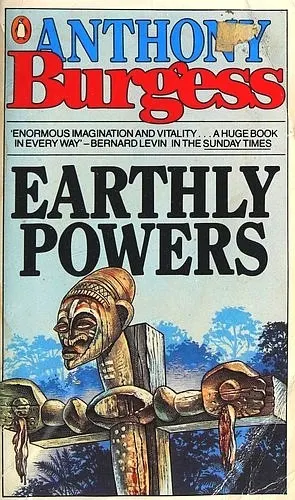
Books like Earthly Powers
The ideal Earthly Powers reader delights in a novel that can be indecently funny, intellectually formidable, and morally serious at once—especially when its charming narrator cannot be trusted to understand his own life.
If you liked Earthly Powers, you’ll love these
Not lookalikes — kindred books. Each one shares something essential with Earthly Powers, and we tell you exactly what.
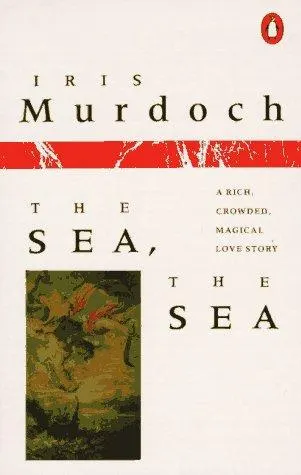
Charles Arrowby, a celebrated theatre director, retires to the coast and begins writing his memoirs. Like Kenneth Toomey, he is cultivated, theatrical, amusing, vain—and disastrously skilled at turning self-justification into art.
Murdoch makes every elegant sentence deepen the gap between what Charles tells us and what we perceive. The comedy of ego gradually acquires the force of a moral inquiry: can intelligence expose self-deception, or does it merely furnish it more beautifully? Winner of the Booker Prize, this is Murdoch at her most seductive and controlled. Anyone who loved being trapped inside Toomey’s magnificent performance should meet Charles Arrowby.
For the reader who loved the sheer abundance of Earthly Powers—its erudition, satire, theological argument, crowded social world, and refusal to separate high culture from low behavior—The Recognitions is the great American counterpart.
Its central preoccupations are authenticity, forgery, belief, and the possibility of genuine creation in a culture eager to counterfeit everything. Gaddis surrounds those questions with brilliant talkers, frauds, artists, critics, and spiritual opportunists. Initially misunderstood, the novel became a fiercely admired cult classic and is now widely regarded as a postwar American masterpiece. It demands attention, but its readers often become evangelists: few novels make intellectual comedy feel so dangerous.
Thomas Mann’s late masterpiece offers the gravest side of the kinship. A humane, somewhat old-fashioned narrator undertakes the biography of his brilliant composer friend, Adrian Leverkühn; through that intimate act of remembrance, Mann confronts art, theology, corruption, and a civilization’s susceptibility to evil.
As in Earthly Powers, private lives and public catastrophe continually illuminate one another. Ideas are not decorative: arguments about music, grace, damnation, and artistic genius become matters of lived moral consequence. Mann’s irony is colder than Burgess’s and his comedy more austere, but the reward is immense—a novel in which European culture seems to conduct its own troubled examination of conscience. John E. Woods’s translation is especially vivid and readable.