Author
Books like Wallace Stegner
7 books we recommend to Wallace Stegner readers, drawn from Crossing to Safety, The Spectator Bird and The Big Rock Candy Mountain — each with the reason why.
If you loved Crossing to Safety
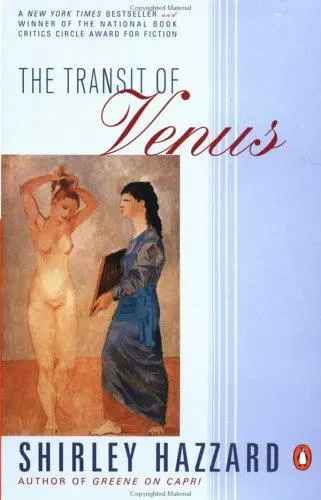
Like Stegner, Hazzard understands that generosity, dependence, admiration, and power are rarely separable. Her novel follows Australian sisters Caro and Grace Bell as they enter English society, where love and patronage bind people together while quietly placing them in one another’s debt. A reader fascinated by Charity Lang’s mingled radiance and imperiousness will recognize Hazzard’s equally exact moral vision.
The kinship also lies in the prose: compressed, elegant, and charged with meanings that may not become visible until much later. Winner of the National Book Award, The Transit of Venus has inspired unusually ardent admiration because rereading transforms it; apparently casual sentences reveal themselves as structural beams. It offers the emotional sweep of an entire life without surrendering the precision of a perfectly made object.
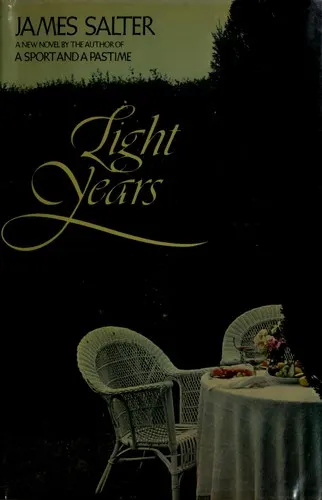
Light Years begins amid the dinners, children, rooms, weather, and cultivated pleasures of Viri and Nedra’s Hudson Valley marriage. Salter makes domestic happiness shimmer—not sentimentally, but with an acute awareness that every beautiful afternoon is already passing. That doubleness will feel familiar to anyone moved by Stegner’s older narrator looking back at the life the Langs and Morgans made together.
Salter is less consoling than Stegner and more fragmentary, but his subject is similarly profound: how years accumulate through meals, quarrels, ambitions, compromises, and moments nobody realizes are decisive. Often regarded as his masterpiece, Light Years has become a touchstone for novelists writing about marriage and time. Its sentences are so sensuous and exact that they seem to preserve what the characters cannot—and few novels leave a stronger desire to pay closer attention to one’s own vanishing days.
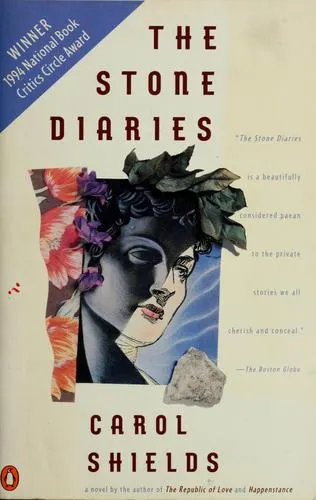
Daisy Goodwill’s life, from an extraordinary birth onward, is assembled through her own testimony and the voices, documents, and assumptions of others. Carol Shields turns an apparently ordinary existence into a mystery: How well can anyone know another person, or even herself? That question quietly shadows Crossing to Safety, whose remembered friendships are shaped as much by the narrator’s blind spots as by his devotion.
Shields brings more playfulness and formal invention than Stegner, but the same patience with aging, disappointment, work, marriage, and the small arrangements that become a life. The novel’s wit never cheapens its tenderness, and its tenderness never conceals how easily a person can disappear inside other people’s accounts of her. Winner of both the Pulitzer Prize and Canada’s Governor General’s Award, The Stone Diaries is one of the defining novels about the dignity—and unknowability—of an ordinary life.
If you loved The Spectator Bird
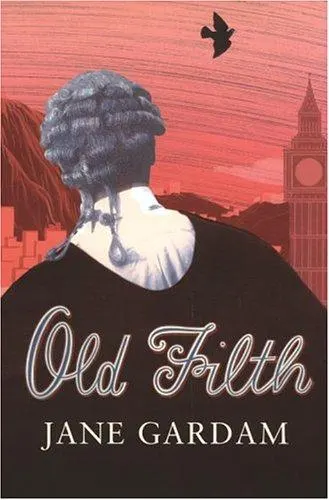
Gardam’s retired judge Edward Feathers shares Joe Allston’s dry self-command and talent for turning pain into polished anecdote. Recently widowed, he appears to have become a finished man—distinguished, courteous, emotionally self-sufficient—but memory begins reopening the life beneath that immaculate surface.
Gardam is funnier and more eccentric than Stegner, yet equally compassionate about the defenses people spend decades perfecting. Her sentences can dispatch a social world in a flicker, while her omissions gradually acquire enormous emotional weight. Widely regarded as Gardam’s masterpiece and the beginning of her beloved Old Filth trilogy, this is one of the rare novels that makes reserve itself suspenseful.
If you loved The Big Rock Candy Mountain
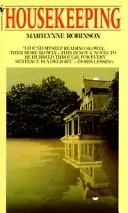
In Robinson’s PEN/Hemingway-winning debut, two orphaned sisters live in the isolated town of Fingerbone under the care of Sylvie, an aunt whose habits retain the freedom—and instability—of a drifter. Where Stegner examines wanderlust through Bo Mason’s grand schemes and Elsa’s longing for permanence, Robinson makes those opposed impulses almost metaphysical: Is a home a refuge, a burden, or merely something time will wash away?
Robinson’s sentences are luminous without prettifying hardship; houses, mountains, trains, and the dark lake beneath Fingerbone acquire the force of memory. Few novels understand so deeply that restlessness can be both selfish and visionary, or that those who crave security may also be trapped by it. Housekeeping has become a modern American classic because its beauty keeps opening onto harder questions—and Stegner’s readers are unusually well prepared to feel their full weight.
Bo Mason’s conviction that prosperity waits just beyond the next horizon finds a fierce modern counterpart in Bob Dubois, a New Hampshire oil-burner repairman who uproots his family in pursuit of a better life. Banks recognizes the same dangerous mixture of love, vanity, desperation, and optimism: a man can sincerely want to provide for his family while making every decision according to the fantasy that consumes him.
The novel widens that private tragedy by setting Bob’s pursuit beside a Haitian woman’s dangerous journey toward America. The result is not merely an indictment of the American dream but an exceptionally compassionate account of why people keep believing in it. A Pulitzer finalist, Continental Drift has the moral scale of Stegner’s novel and an even angrier sense of the forces pressing upon ordinary families. It will make Bo Mason’s hunger—and its consequences—feel newly contemporary.
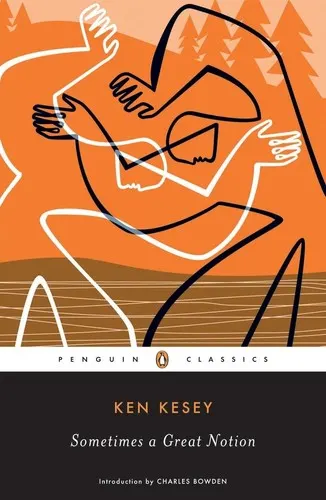
Kesey’s great Oregon logging novel centers on the Stampers, a family whose proud refusal to yield during a strike turns independence into both creed and weapon. Its deepest kinship with Stegner lies in its treatment of masculine will: the qualities that let a man master punishing work and country may make him nearly impossible to live with. Fathers, brothers, wives, and sons become caught in contests that are at once intimate and mythically American.
Kesey tells the story through shifting voices and overlapping consciousnesses, so every grievance acquires another side and every apparent villain reveals a wound. The structure is demanding at first, then thrilling: it captures family life as simultaneous memory, rivalry, loyalty, and miscommunication. Often regarded as Kesey’s masterpiece, it has inspired a particularly devoted readership. Anyone moved by Stegner’s unsparing love for difficult people should experience the tragic grandeur of the Stampers.