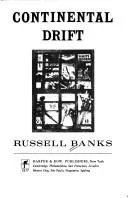
Books like Continental Drift
Continental Drift understands that every dream of escape sends its bill to someone else—and that private longing can become tragedy when money, borders, and luck decide who pays. These three novels share its moral scale, restless momentum, and compassion for compromised people.
If you liked Continental Drift, you’ll love these
Not lookalikes — kindred books. Each one shares something essential with Continental Drift, and we tell you exactly what.

Jamie Mays, fleeing with her children on a Greyhound bus, meets Bill Houston, an ex-con drifting through the same exhausted America. Johnson turns their encounter into a raw, headlong vision of people whose mistakes cannot be separated from poverty, loneliness, addiction, and the need to believe that another life remains possible.
Like Banks, Johnson refuses both condescension and comforting excuses. His characters can be reckless, cruel, funny, and heartbreakingly hopeful in the same scene; the prose flashes between hard social fact and near-biblical radiance. Readers who know Johnson through Jesus’ Son often find that this first novel contains his full tragic power on a larger canvas. If Bob Dubois’s doomed hunger for reinvention moved you, Angels is indispensable.
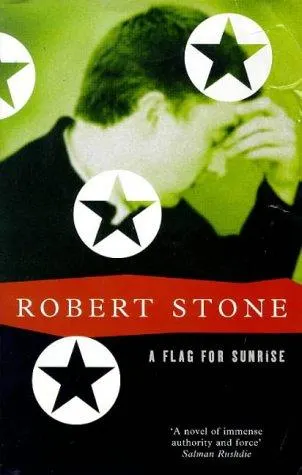
In a politically unstable Central American country, an anthropologist, an American nun, a Coast Guard officer, and several frightened opportunists move toward one another through a world of espionage, faith, narcotics, and impending violence. Stone keeps widening the field of responsibility: no one is merely an observer, and good intentions provide no immunity from consequences.
Often regarded as Stone’s masterpiece, A Flag for Sunrise has the same rare fusion Banks achieves—gripping forward motion joined to a grave inquiry into American power and individual conscience. Its tropical heat, moral vertigo, and moments of bleak comedy make politics feel bodily rather than abstract. Few novels are so unsparing about complicity while remaining so alive to the possibility of grace.
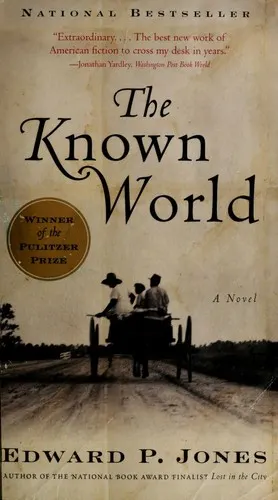
The opening premise is an astonishing moral knot: Henry Townsend, once enslaved, has died owning enslaved people himself. From that household, Jones moves freely across a whole Virginia county, entering the minds of the powerful, the captive, the defiant, the self-deceiving, and those who imagine they can remain innocent inside a corrupt order.
What links this Pulitzer Prize winner to Continental Drift is not subject matter but vision. Both novels make individual lives intimate while revealing the vast economic system enclosing them; both understand that exploitation persists through ordinary bargains as much as spectacular evil. Jones’s omniscient narration is calm, humane, and almost supernatural in its reach. The result is one of the great American novels about how a society’s defining lie inhabits everyone within it.