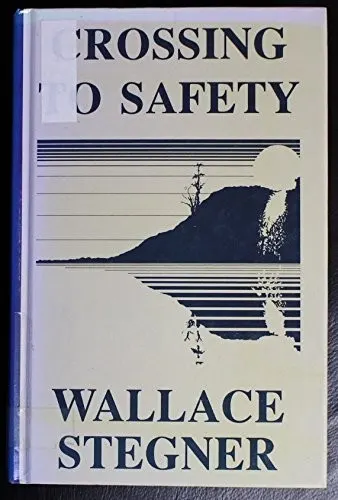
Books like Crossing to Safety
Crossing to Safety and Shirley Hazzard’s The Transit of Venus belong together among the rare novels that make decades of attachment feel both intimate and immense. These three books share Stegner’s fascination with time, loyalty, marriage, and the stories people tell to make sense of a life.
If you liked Crossing to Safety, you’ll love these
Not lookalikes — kindred books. Each one shares something essential with Crossing to Safety, and we tell you exactly what.
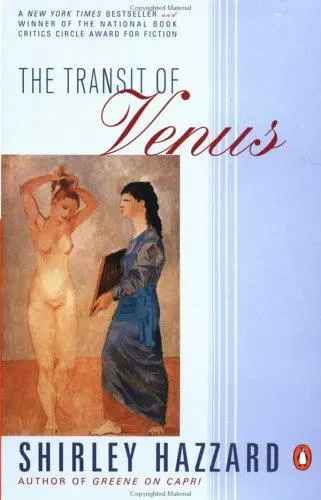
Like Stegner, Hazzard understands that generosity, dependence, admiration, and power are rarely separable. Her novel follows Australian sisters Caro and Grace Bell as they enter English society, where love and patronage bind people together while quietly placing them in one another’s debt. A reader fascinated by Charity Lang’s mingled radiance and imperiousness will recognize Hazzard’s equally exact moral vision.
The kinship also lies in the prose: compressed, elegant, and charged with meanings that may not become visible until much later. Winner of the National Book Award, The Transit of Venus has inspired unusually ardent admiration because rereading transforms it; apparently casual sentences reveal themselves as structural beams. It offers the emotional sweep of an entire life without surrendering the precision of a perfectly made object.
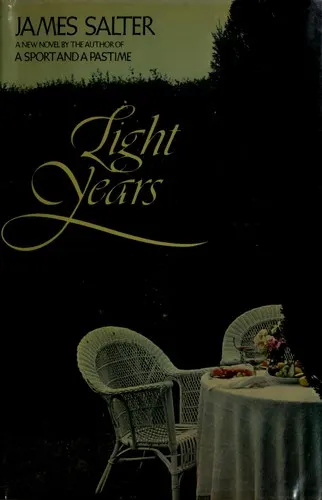
Light Years begins amid the dinners, children, rooms, weather, and cultivated pleasures of Viri and Nedra’s Hudson Valley marriage. Salter makes domestic happiness shimmer—not sentimentally, but with an acute awareness that every beautiful afternoon is already passing. That doubleness will feel familiar to anyone moved by Stegner’s older narrator looking back at the life the Langs and Morgans made together.
Salter is less consoling than Stegner and more fragmentary, but his subject is similarly profound: how years accumulate through meals, quarrels, ambitions, compromises, and moments nobody realizes are decisive. Often regarded as his masterpiece, Light Years has become a touchstone for novelists writing about marriage and time. Its sentences are so sensuous and exact that they seem to preserve what the characters cannot—and few novels leave a stronger desire to pay closer attention to one’s own vanishing days.
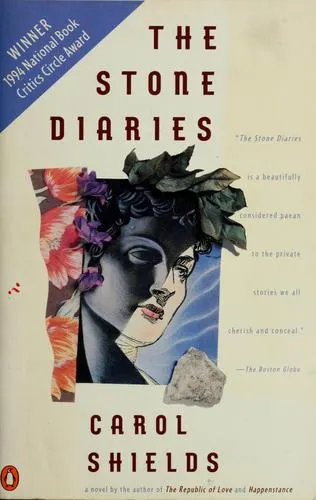
Daisy Goodwill’s life, from an extraordinary birth onward, is assembled through her own testimony and the voices, documents, and assumptions of others. Carol Shields turns an apparently ordinary existence into a mystery: How well can anyone know another person, or even herself? That question quietly shadows Crossing to Safety, whose remembered friendships are shaped as much by the narrator’s blind spots as by his devotion.
Shields brings more playfulness and formal invention than Stegner, but the same patience with aging, disappointment, work, marriage, and the small arrangements that become a life. The novel’s wit never cheapens its tenderness, and its tenderness never conceals how easily a person can disappear inside other people’s accounts of her. Winner of both the Pulitzer Prize and Canada’s Governor General’s Award, The Stone Diaries is one of the defining novels about the dignity—and unknowability—of an ordinary life.