Author
Books like Suzanne Collins
10 books we recommend to Suzanne Collins readers, drawn from Sunrise on the Reaping, The Ballad of Songbirds and Snakes, The Hunger Games and Mockingjay — each with the reason why.
If you loved Sunrise on the Reaping
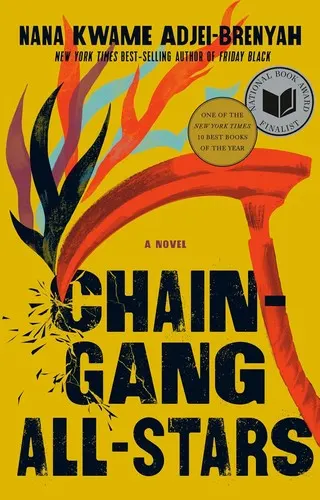
This National Book Award finalist is the strongest next read for anyone haunted by the Games as both slaughter and television. In a near-future America, incarcerated people fight in commercially sponsored death matches while commentators, fans, and protesters argue over the spectacle. Adjei-Brenyah makes the branding, euphemisms, audience complicity, and manufactured celebrity as disturbing as the violence itself.
But its real kinship with Sunrise on the Reaping lies in the private loyalties that refuse to remain content for an audience. Fierce, inventive, and painfully tender, it asks what resistance can mean when power owns the arena, the cameras, and the story told afterward. Its satirical energy only sharpens its grief.
Kathy H. begins by remembering Hailsham, the peculiar English school where she grew up with Ruth and Tommy. Her calm, intimate voice gradually makes ordinary childhood memories feel charged with meanings the children cannot yet articulate.
Readers who loved Haymitch’s attempts to preserve love and truth inside an institution built on dehumanizing language will recognize Ishiguro’s devastating method: horror is normalized through routines, rules, and gentle euphemisms. The novel’s restraint makes every friendship, jealousy, and missed chance matter enormously. Booker-shortlisted and now regarded as a modern classic, it leaves the same ache of lives made precious—not less precious—by what has been stolen from them.
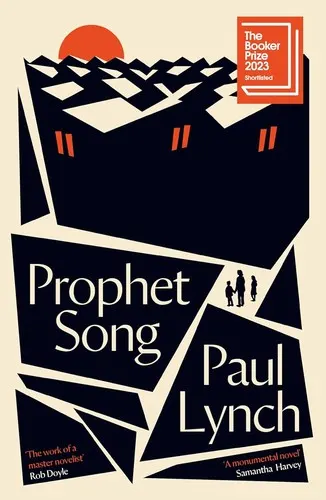
A secret-police visit to Eilish Stack’s Dublin home begins a swift constriction of her family’s world. Laws shift, public language curdles, familiar institutions become threatening, and each apparently practical choice narrows the choices that remain.
The 2023 Booker Prize winner captures authoritarianism not as an abstract political system but as bewilderment at the kitchen table: whom to trust, when to act, how to protect people who want different things. Lynch’s surging prose creates the breathless pressure Sunrise on the Reaping generates when official reality and lived reality split apart. It is uncompromising about the cost of tyranny—and unforgettable about the stubborn human impulse to keep loving anyway.
If you loved The Ballad of Songbirds and Snakes
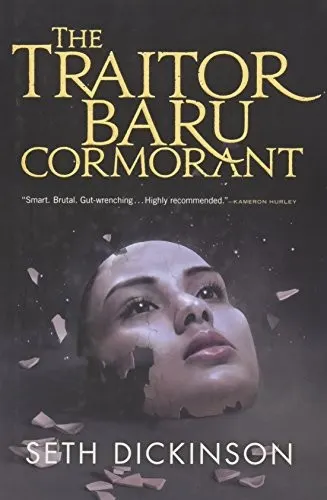
Baru is a gifted young woman whose homeland has been absorbed by the ruthlessly efficient Masquerade. Convinced she can defeat the empire from within, she enters its service and learns to turn economics, etiquette, and other people’s trust into weapons.
Like Coriolanus Snow, Baru is fascinating because intelligence keeps giving her persuasive reasons to cross the next moral line. Dickinson makes bureaucracy feel as dangerous as an arena: a budget can ruin thousands, a social gesture can expose a secret, and affection may be either refuge or fatal leverage. Celebrated by fantasy readers for its political sophistication and emotional ferocity, this is the essential next novel if Snow’s gradual transformation—not merely the Games—was what held you.
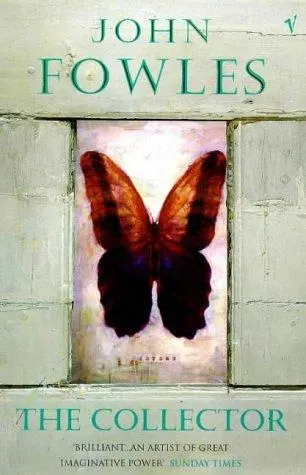
Frederick Clegg is a lonely, socially resentful young man who wins a fortune and decides to use it to possess Miranda, an art student he has admired from afar. What makes this modern classic so disturbing is not mystery but proximity: Frederick narrates his choices in the mild language of fairness, love, and injured innocence.
Readers captivated by Snow’s talent for converting desire into entitlement will recognize the chill immediately. Fowles then complicates Frederick’s account by allowing Miranda’s consciousness to press against his, exposing everything his tidy self-portrait excludes. The result is one of literature’s most unforgettable studies of control masquerading as devotion—a short, compulsive novel whose psychological trap continues to close after the final page.
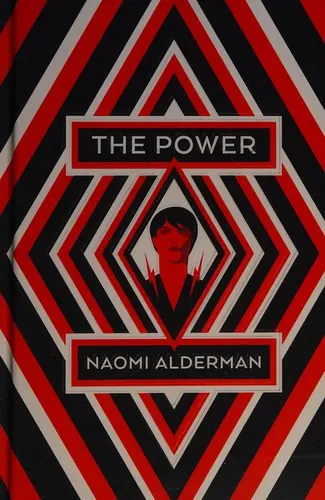
When teenage girls discover that they can produce devastating electrical force, the world’s assumptions about gender and authority begin to shift. Alderman follows several people who understand, exploit, fear, or mythologize the change, showing power becoming spectacle, religion, political currency, and eventually its own justification.
Where Collins reveals how a regime manufactures public meaning through mentors, broadcasts, costumes, and carefully edited violence, Alderman examines that machinery on a global scale. Her Women’s Prize–winning novel is provocative not because it simply reverses who dominates whom, but because it asks how quickly liberation can acquire hierarchies, propaganda, and cruelty. Its sly historical framing makes the reader complicit in interpreting the evidence—an audacious choice that gives the book much of its lasting sting.
If you loved The Hunger Games
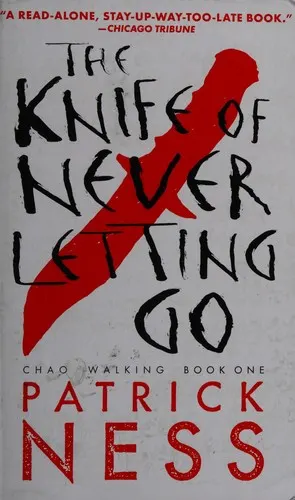
Few novels reproduce The Hunger Games’ combination of breathless momentum and moral urgency as powerfully as this first volume of the Chaos Walking trilogy. Todd lives in a settlement where everyone can hear men’s thoughts in an inescapable torrent called Noise. When he discovers a patch of silence, he is forced to run.
Ness’s jagged typography and feverish first-person voice put you directly inside Todd’s fear, confusion, and dawning suspicion of everything he has been taught. Like Katniss, he must remain humane while adults weaponize his ignorance. Winner of the Guardian Children’s Fiction Prize, it has become a modern YA landmark—and its final pages make stopping after one volume nearly impossible.
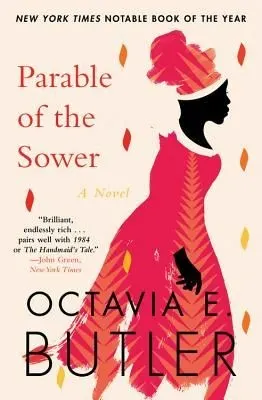
Lauren Olamina has Katniss’s defining gift: she sees the world as it is while everyone around her clings to comforting illusions. In a collapsing near-future California, she prepares for dangers her protected community refuses to acknowledge. Her intelligence is practical—packs, maps, water, weapons—but Butler is equally interested in the beliefs that might help people build rather than merely survive.
The result is harsher and more adult than Collins, yet it carries the same fascination with reluctant leadership, chosen family, and the moral cost of staying alive. Published in 1993, this once-futuristic novel has acquired an almost unnerving reputation for prescience. Butler’s clear-eyed masterpiece shows what comes after recognizing that the system is broken: imagining something worth replacing it with.
If you loved Mockingjay
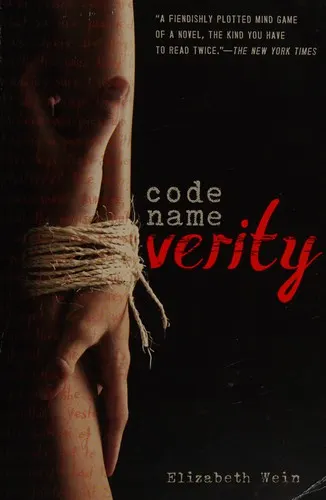
A captured British agent begins this Printz Honor novel by writing a confession for her Nazi interrogators. What emerges is also the story of her friendship with Maddie, a pilot—and a demonstration that storytelling can be camouflage, resistance, intimacy, and survival all at once.
Readers who loved Mockingjay for Katniss’s traumatized voice and fierce attachments will recognize Wein’s refusal to turn courage into clean heroism. Her young women are frightened, funny, resourceful, and painfully aware that war exploits loyalty. Code Name Verity has inspired unusually devoted readers because its emotional force is inseparable from its intricate construction: every sentence feels alive with pressure. It is the kind of novel people finish in tears and immediately want someone else to read.
In this Hugo-finalist military science-fiction novel, corporations govern Earth and soldiers are transmitted to battlefields as light. Dietz enlists after a devastating attack, expecting purpose and revenge—but combat arrives as fractured experience, with official accounts that do not fit what Dietz remembers.
Hurley captures the aspect of Mockingjay that many imitators avoid: the bewilderment of being used by a war machine whose slogans are simpler than its motives. The action is ferocious, yet the novel’s real suspense lies in whether one soldier can assemble the truth before institutions overwrite it. Its broken chronology makes trauma structural rather than decorative, placing you inside Dietz’s uncertainty. For anyone haunted by Katniss trying to distinguish reality from propaganda, The Light Brigade is essential.