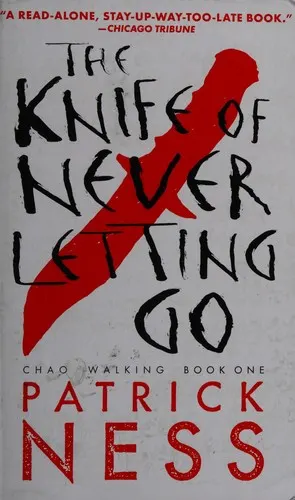
Books like The Knife of Never Letting Go
Russell Hoban’s Riddley Walker turns difficult language into a form of suspense: understanding the narrator’s words means discovering his dangerous world alongside him. All three choices share Patrick Ness’s deeper strengths—voices that seize the page, young people trapped inside adult-made systems, and moral decisions with irreversible costs.
If you liked The Knife of Never Letting Go, you’ll love these
Not lookalikes — kindred books. Each one shares something essential with The Knife of Never Letting Go, and we tell you exactly what.
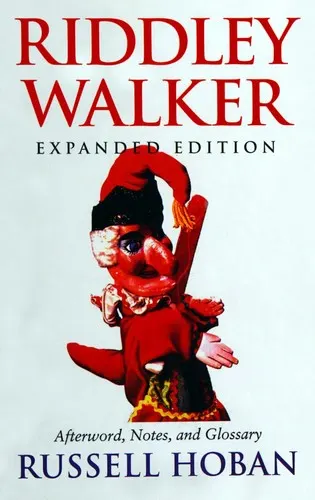
Like Todd’s Noise, Riddley’s fractured dialect initially feels disorienting; soon it becomes the only imaginable way his mind could speak. Twelve-year-old Riddley lives among the remnants of a civilization whose history survives as ritual, propaganda and half-understood story. When he acquires a new public role, powerful adults begin trying to use him.
Hoban makes reading itself an act of discovery. Jokes, threats and buried meanings emerge as your ear adjusts, while Riddley struggles to distinguish inherited lies from truth. This enduring cult classic is stranger and more demanding than most young-adult dystopias, but admirers of Ness’s linguistic daring and distrust of authority may find it uniquely rewarding.

Saba’s twin brother is taken in the opening pages, and she pursues him with such furious single-mindedness that the novel seems to run rather than read. Moira Young strips away quotation marks and conventional polish, giving Saba a rough, immediate voice whose rhythms carry fear, anger and stubborn love.
What connects her to Todd is not merely flight through a brutal world, but painful moral growth. Saba is abrasive, prejudiced and often wrong; her courage matters because it does not make her automatically good. Winner of the Costa Children’s Book Award, Blood Red Road delivers the breathless momentum of Ness’s novel while insisting that survival and decency are separate achievements.
After a civil war over abortion, society reaches a grotesque compromise: teenagers may be legally ‘unwound,’ with their bodies divided for transplantation. Connor, Risa and Lev face that fate for very different reasons, and their intersecting perspectives expose how families, religion and bureaucracy manufacture comforting language for cruelty.
Shusterman’s great weapon is escalation. Every new detail follows logically from the premise, making the world more horrifying precisely because ordinary people have learned to accept it. As in The Knife of Never Letting Go, a gripping chase becomes an argument about personhood, complicity and what adults owe children. Unwind remains one of YA dystopia’s most unsettling novels because its central euphemism is impossible to forget.