Author
Books like Rabih Alameddine
9 books we recommend to Rabih Alameddine readers, drawn from An Unnecessary Woman, The Hakawati and Koolaids: The Art of War — each with the reason why.
If you loved An Unnecessary Woman

Like Alameddine, Szabó understands that an elderly woman’s guardedness may be an achievement rather than a defect. A writer hires Emerence, an imperious housekeeper whose ferocious competence conceals a private moral order. Their attachment becomes a struggle between affection, pride, secrecy, and the dangerous wish to help another person.
Len Rix’s translation helped make this Hungarian classic an international favorite. Its emotional force is immense but never sentimental: every revelation complicates rather than softens Emerence. Anyone captivated by Aaliya’s dignity, abrasiveness, and buried need for connection should not miss one of modern fiction’s most formidable women.

Janina Duszejko is exactly the kind of woman society dismisses at its peril: aging, solitary, opinionated, and sustained by an elaborate intellectual life. She translates William Blake, studies astrology, loves animals, and refuses to accept the explanations offered when deaths begin disturbing her remote community.
Tokarczuk, a Nobel laureate, gives Janina a voice at once funny, obsessive, erudite, and gloriously unruly. The kinship with Aaliya lies deeper than their shared work as translators: both women use language to resist the identities others impose on them. This dark, mischievous novel turns supposed eccentricity into a complete—and thrillingly insubordinate—way of seeing.
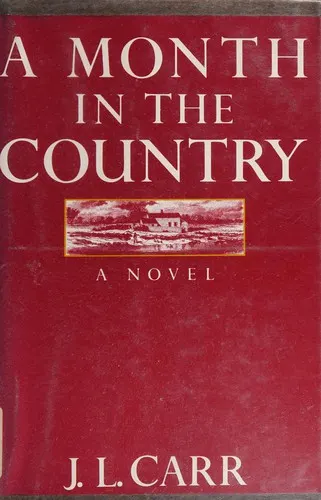
Carr’s Booker-shortlisted miniature begins with a veteran arriving in a Yorkshire village after the First World War to uncover a medieval wall painting. What follows is quiet, exact, and devastating: damaged lives briefly restored through concentrated work, accidental companionship, and beauty that has survived beneath layers of neglect.
Readers who loved Aaliya’s secret annual translations will recognize the sanctity Carr grants to private artistic labor. He also shares Alameddine’s gift for letting catastrophe remain present without allowing it to dominate every page. Barely longer than an evening’s reading, this much-loved novel leaves the afterimage of a whole vanished season—and proves how much feeling restraint can hold.
If you loved The Hakawati
Beside an unconscious Palestinian fighter, Khalil tells stories: of exile and return, marriages and betrayals, ordinary appetites and historical catastrophe. Like The Hakawati, the novel makes narration an act of love—an attempt to keep both a person and a people from disappearing.
Widely regarded as Khoury’s masterpiece, Gate of the Sun is polyphonic, intimate, and magnificently humane. Its stories correct and contradict one another because memory is alive, not archival. Readers who loved Alameddine’s movement between a deathbed and an immense inherited past will find here a darker but equally transporting demonstration of why tales must keep being told.
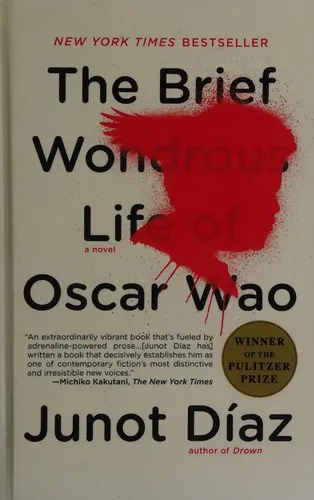
Díaz braids a Dominican family’s history with dictatorship, comic books, fantasy epics, footnotes, slang, and the legend of a hereditary curse. The kinship with The Hakawati lies in that audacious mixture: private sorrow and national violence are filtered through a narrator who refuses to separate high literature from the stories people obsessively tell themselves.
Winner of the Pulitzer Prize, the novel became beloved because its verbal electricity never cancels its tenderness. Oscar’s extravagant imagination is funny until it becomes piercing; the digressive footnotes become a rival history of the Americas. Few novels make inherited trauma feel so intellectually alive—or make erudition this entertaining.

If Alameddine taught you to welcome every detour, Pavić offers a whole novel made of them. Presented as a lexicon concerning a vanished people, it lets you move among saints, demons, dream hunters, disputed documents, and mutually incompatible versions of the same ancient conversion.
This Serbian cult classic rewards curiosity rather than obedience: a minor name in one entry opens another story, which alters a third, until the book feels less written than discovered. Its celebrated male and female editions differ by only a tiny passage—an emblem of its fascination with how minute changes reshape entire histories. Missing it would mean missing one of the boldest modern reinventions of the storyteller’s labyrinth.
If you loved Koolaids: The Art of War
Johnson’s novel arrives as twenty-seven unbound sections in a box; apart from the first and last, they may be read in any order. That famous design is no stunt. A routine reporting assignment keeps returning the narrator to memories of a friend dying of cancer, and grief behaves exactly as the book does: interrupting, repeating, refusing chronology.
A reader who admired how Koolaids makes fragmentation carry emotional truth will recognize a kindred intelligence here. Johnson’s candor, impatience with conventional fiction, and flashes of bleak comedy keep the novel from becoming a tasteful memorial. Long regarded as his masterpiece, The Unfortunates is one of those rare experimental novels whose physical form becomes inseparable from its tenderness.
The Color of Summer turns tyranny into a delirious carnival. Reinaldo Arenas multiplies himself into competing personae, scrambles chronology, parodies literary culture, and unleashes a huge cast upon a grotesque celebration for Cuba’s dictator. The prose keeps changing masks—camp spectacle, political invective, erotic mischief, slapstick—while exile and mortality darken every joke.
This is the choice for the reader who loved Alameddine’s refusal to make suffering decorous. Arenas, writing near the end of his life, answers persecution with formal abundance and insolent laughter. The culminating volume of his celebrated Pentagonía, it feels less like a conventional novel than an entire dissident imagination staging one last, glorious riot.
Twenty letters, numbered but designed to be read in more than one sequence, circle the end of a love affair. From Paris, Taipei, and Tokyo, Qiu Miaojin writes with naked intensity about desire, abandonment, art, cinema, writing, and the unstable self assembled from all of them. The repetitions do not clarify the relationship; they show longing worrying the same wound from different angles.
Where Koolaids leaps among voices to resist a clean story about death, Qiu breaks confession into rearrangeable shards. Yet her language can be sensuous, cerebral, theatrical, and startlingly direct within a single page. Published posthumously, Last Words from Montmartre became a cult landmark of queer literature because it makes private anguish feel formally daring rather than merely disclosed. Its devotees do not simply remember it—they carry it around.