Author
Books like R.F. Kuang
8 books we recommend to R.F. Kuang readers, drawn from The Poppy War, Babel, or the Necessity of Violence and Yellowface — each with the reason why.
If you loved The Poppy War
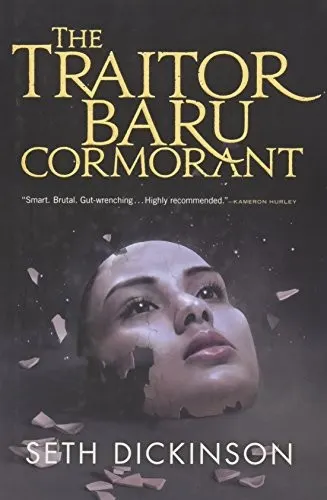
Baru’s homeland is conquered not merely by soldiers but by schools, trade, medicine, and laws. Determined to destroy the empire responsible, she enters its service and discovers that excelling within a monstrous system may transform her more efficiently than she can transform it.
Like Rin, Baru is brilliant, furious, and willing to treat herself as a weapon. Dickinson makes accounting and statecraft feel as dangerous as battlefield magic, while examining colonialism with unusual precision: how power rewrites desire, family, and even common sense. The novel’s devoted reputation rests on its merciless moral pressure. If Rin’s compromises fascinated you as much as her victories, Baru is indispensable.
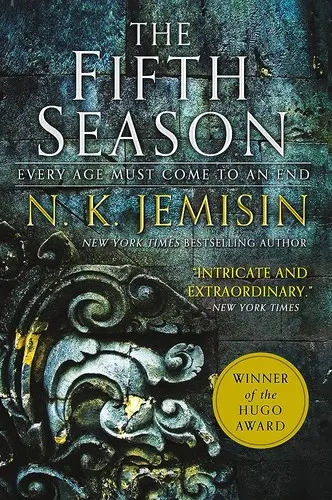
The world is ending, and Essun’s son has been murdered. From that brutal opening, Jemisin builds a civilization that survives recurring apocalypse by enslaving people who can control seismic energy. Its spectacular magic is inseparable from institutional cruelty—the gifted are feared, trained, used, and punished.
What connects it most deeply to The Poppy War is its conviction that rage can be both justified and catastrophic. Jemisin writes trauma into the novel’s structure as well as its story, gradually revealing why its unusual form is necessary. The Broken Earth became the first trilogy whose every volume won the Hugo Award; the acclaim is deserved. Few fantasies combine world-shattering power, intimate grief, and systemic violence this completely.
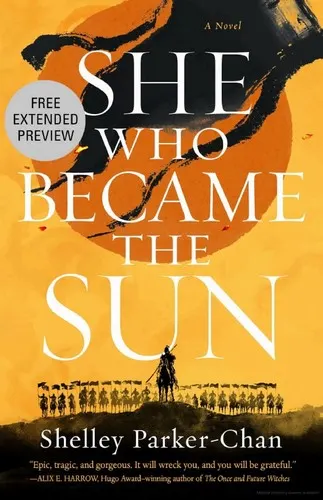
During a famine, a nameless girl is told she is destined for nothing, while her brother is promised greatness. When he dies, she takes his identity—and his fate. What follows is not a comforting tale of hidden nobility, but a feverishly compelling study of someone who refuses oblivion with every act of will available to her.
Readers who loved Rin’s hunger—to escape poverty, to command respect, to force history to acknowledge her—will recognize the dangerous momentum here. Parker-Chan makes ambition bodily and immediate, entangling it with gender, desire, shame, and the intoxicating logic of power. This Hugo-finalist debut has the sweep of an epic but the psychological intensity of a duel. Its protagonist does not ask whether greatness will corrupt her; she asks what she is prepared to become in order to seize it.
If you loved Babel, or the Necessity of Violence
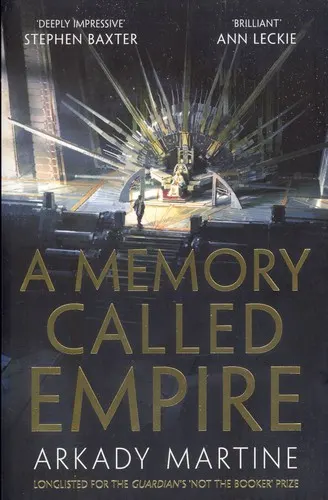
Mahit Dzmare arrives as ambassador to the vast Teixcalaanli Empire already half in love with its poetry, manners, and dazzling cultural confidence. Her predecessor is dead, court politics are shifting, and the civilization threatening her home is also the civilization that formed her imagination.
Martine understands, as Kuang does, that empire rules partly by making itself beautiful. Diplomatic phrasing, literary allusion, naming, and translation carry political force, while Mahit’s longing to belong complicates every judgment she makes. Winner of the Hugo Award for Best Novel, this is an unusually elegant political thriller—and a painfully precise portrait of loving a culture that regards you as peripheral.
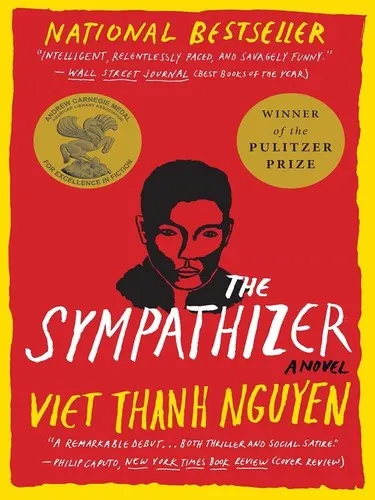
Nguyen’s Pulitzer Prize–winning novel is narrated by a Vietnamese communist agent embedded among South Vietnamese exiles: a man educated in the West, fluent in incompatible ideologies, and condemned to see every argument from both sides.
Readers drawn to Babel’s anger, intellectual combat, and questions about revolutionary violence will recognize the pressure of living between languages and allegiances. But Nguyen adds a savage comic energy all his own, exposing how colonial power survives in films, clichés, memories, and even the vocabulary of liberation. The result is both a spy novel and a corrosive critique of who gets to narrate history—brilliant, merciless, and impossible to read passively.
If you loved Yellowface
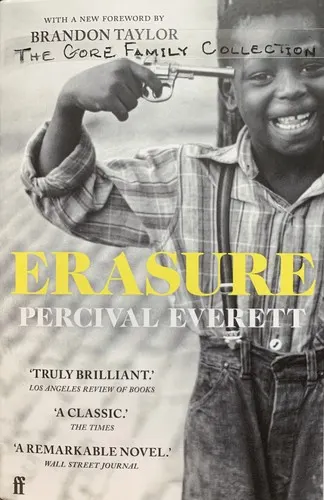
Thelonious “Monk” Ellison is a Black novelist whose cerebral books are dismissed as insufficiently “Black,” so he writes a furious parody of the stereotyped fiction publishers seem to want—and watches the industry take it seriously. Like Kuang, Everett exposes how supposedly progressive gatekeepers commodify identity while congratulating themselves on their virtue.
The source novel for the acclaimed film American Fiction, Erasure is stranger, sharper, and more intellectually unruly than its adaptation. Its satire bites hard, but Monk’s family life and wounded pride keep it from becoming merely a clever publishing joke. If Yellowface made you laugh while implicating you in the marketplace it attacks, Everett’s modern classic is indispensable.
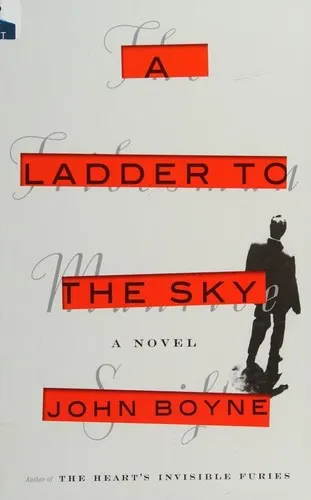
Maurice Swift desperately wants to be a celebrated novelist; his only difficulty is that he has nothing to write about. Beautiful, charming, and remorseless, he learns to extract other people’s stories and turn them into rungs on his ascent.
Where June Hayward constantly manufactures excuses, Maurice barely needs them. Boyne lets different people orbit and observe him, creating a delicious tension between his polished public persona and the damage visible to everyone else. This is literary ambition stripped of every flattering illusion: elegant, venomous, and compulsively readable, with one of contemporary fiction’s most memorable predators at its center.
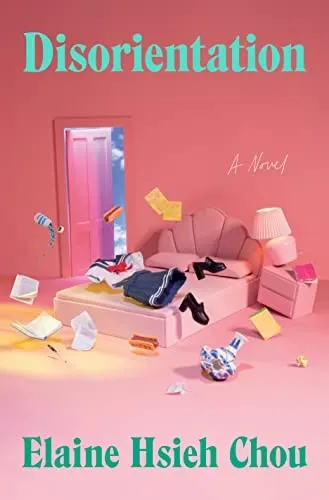
Ingrid Yang has spent years writing a dissertation about a canonical Chinese American poet she has come to hate. When her research begins to reveal something unexpected, the orderly assumptions of her academic world collapse into identity politics, institutional hypocrisy, and increasingly extravagant absurdity.
Chou shares Kuang’s gift for making ideological language both hilarious and menacing. Her targets include white liberal fetishization, scholarly careerism, racial authenticity, and the pressure to perform a legible version of oneself. Disorientation is wilder and more surreal than Yellowface, but it generates the same exquisite discomfort: every righteous position conceals vanity, appetite, or self-deception. It is the rare campus satire that feels genuinely dangerous rather than merely clever.