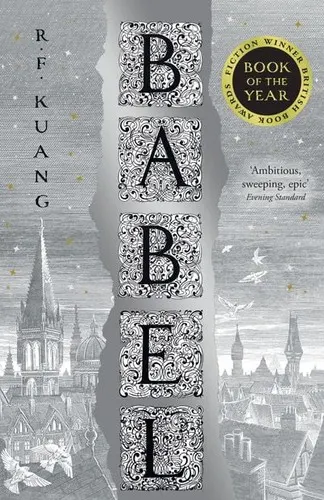
Books like Babel, or the Necessity of Violence
If Babel turns the dictionary into a battlefield, Seth Dickinson’s The Traitor Baru Cormorant makes accountancy just as lethal.
If you liked Babel, or the Necessity of Violence, you’ll love these
Not lookalikes — kindred books. Each one shares something essential with Babel, or the Necessity of Violence, and we tell you exactly what.
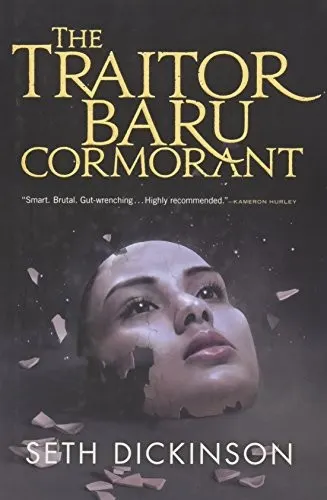
After an expansionist empire conquers her homeland, prodigiously gifted Baru enters its civil service, intending to destroy the regime from within. The weapon she chooses is mastery: of money, administration, and the imperial logic imposed on her.
Like Babel, this is unsparing about the seductions of elite education and the compromises involved in using an oppressor’s tools. Dickinson makes colonialism feel systemic rather than merely villainous, while Baru’s divided loyalties give every political calculation an intimate cost. Few modern fantasies have inspired such devoted, anguished admiration; refusing this novel means missing one of the genre’s sharpest examinations of complicity.
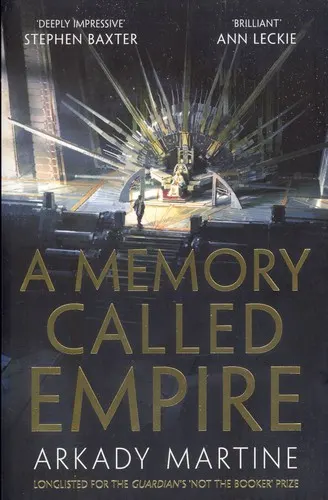
Mahit Dzmare arrives as ambassador to the vast Teixcalaanli Empire already half in love with its poetry, manners, and dazzling cultural confidence. Her predecessor is dead, court politics are shifting, and the civilization threatening her home is also the civilization that formed her imagination.
Martine understands, as Kuang does, that empire rules partly by making itself beautiful. Diplomatic phrasing, literary allusion, naming, and translation carry political force, while Mahit’s longing to belong complicates every judgment she makes. Winner of the Hugo Award for Best Novel, this is an unusually elegant political thriller—and a painfully precise portrait of loving a culture that regards you as peripheral.
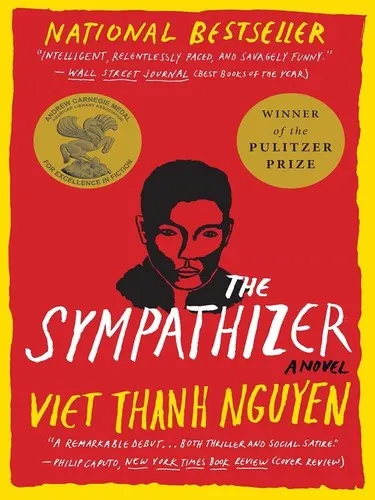
Nguyen’s Pulitzer Prize–winning novel is narrated by a Vietnamese communist agent embedded among South Vietnamese exiles: a man educated in the West, fluent in incompatible ideologies, and condemned to see every argument from both sides.
Readers drawn to Babel’s anger, intellectual combat, and questions about revolutionary violence will recognize the pressure of living between languages and allegiances. But Nguyen adds a savage comic energy all his own, exposing how colonial power survives in films, clichés, memories, and even the vocabulary of liberation. The result is both a spy novel and a corrosive critique of who gets to narrate history—brilliant, merciless, and impossible to read passively.