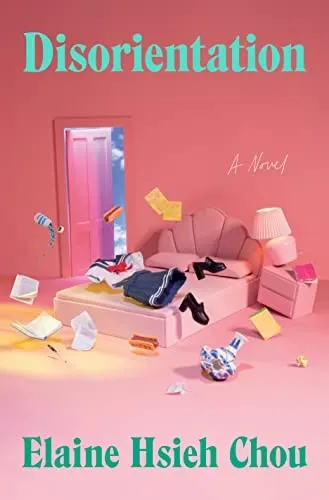
Books like Disorientation
—because what lingers is not simply the academic setting or the mystery, but Chou’s exhilarating mix of farce, fury, self-deception, and ruthless scrutiny of who gets to manufacture Asian American identity. These three novels strike that same nerve in distinct ways.
If you liked Disorientation, you’ll love these
Not lookalikes — kindred books. Each one shares something essential with Disorientation, and we tell you exactly what.
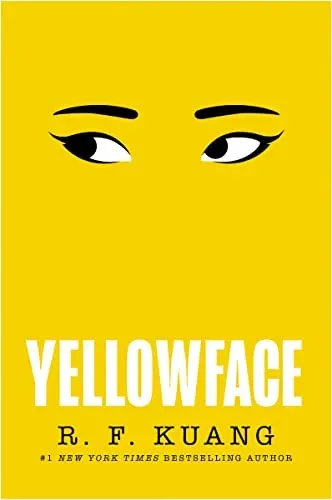
June Hayward begins the novel by taking the manuscript of her suddenly dead friend, Athena Liu, a celebrated Chinese American writer—and deciding she can make it her own. From there, Kuang builds a brutally entertaining study of appropriation, envy, publishing, and the stories people tell themselves to remain innocent.
Like Ingrid in Disorientation, June is intelligent enough to diagnose the system around her yet astonishingly skilled at evading what that diagnosis reveals about herself. Her first-person rationalizations are appalling, funny, and horribly persuasive; the pleasure lies in watching each excuse generate the need for another. A bestseller that became one of the most argued-over literary novels of its year, Yellowface has the pace of a thriller and the uncomfortable intimacy of a confession. If Chou made you laugh while implicating you in the laughter, Kuang will keep you turning pages long after you have stopped trusting the hand guiding you.
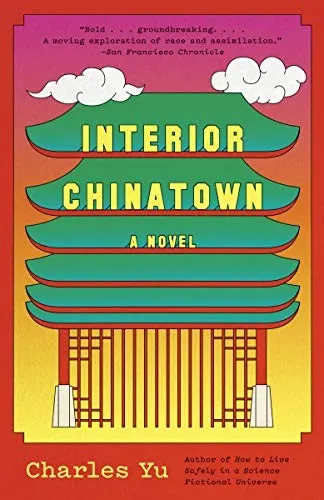
Willis Wu thinks of himself as “Generic Asian Man,” a minor player in the police procedural being performed around him, and dreams of earning the coveted role of Kung Fu Guy. Yu turns that premise into a screenplay-shaped novel about racial casting—not only in entertainment, but in families, workplaces, national myths, and the imagination.
Where Disorientation exposes how institutions turn Asian people into usable ideas, Interior Chinatown shows what it feels like to internalize those assigned parts. Its formal playfulness is never decorative: the script directions, shifting sets, and recurring roles make stereotype feel like an architecture the characters must inhabit. Winner of the National Book Award, it is ingenious, comic, and unexpectedly tender. Few novels make the machinery of representation so visible—or make escaping it feel so emotionally consequential.
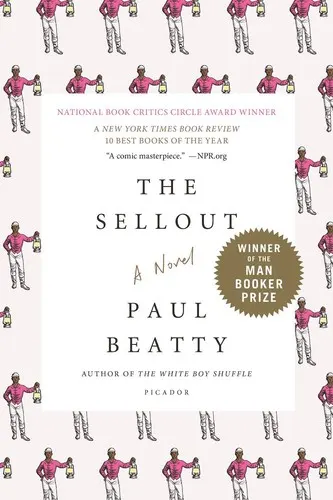
If your favorite moments in Disorientation were the ones when satire abandoned good manners and kept accelerating, read The Sellout. Its narrator, a Black farmer from a vanished California town, recounts from the Supreme Court how his attempt to restore his community led to an indefensible civic experiment. That outrageous opening establishes Beatty’s method: follow America’s racial logic past respectability and into its most grotesquely honest conclusions.
Beatty shares Chou’s refusal to let virtuous language stand in for virtue. His jokes arrive densely, target everyone, and expose the vanity hidden inside public righteousness; yet beneath the verbal pyrotechnics is a serious inquiry into belonging and the exhausting demand to make identity politically legible. The first American novel to win the Man Booker Prize, and also a National Book Critics Circle Award winner, The Sellout is not merely provocative. It is one of the rare satires whose wildness enlarges what the novel can think.