Author
Books like Namwali Serpell
6 books we recommend to Namwali Serpell readers, drawn from The Old Drift and The Furrows — each with the reason why.
If you loved The Old Drift
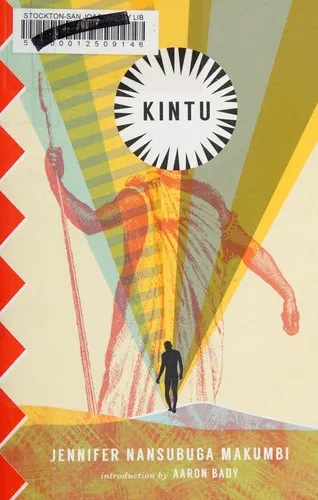
Makumbi builds Uganda’s history through one family line, beginning in the eighteenth-century kingdom of Buganda and tracing the afterlife of an ancestral catastrophe into the present. Like Serpell, she makes genealogy feel less like orderly inheritance than a volatile mixture of secrets, accidents, desires, and stories altered in the telling.
What makes Kintu indispensable is its refusal to treat Africa’s history as beginning with European arrival. Its crowded family drama is intimate, funny, spiritually charged, and intellectually alert, with competing explanations—psychological, religious, historical—for what binds the descendants together. Widely embraced as a modern Ugandan classic, it offers the rare pleasure of a family saga that seems to redraw the map beneath your feet.
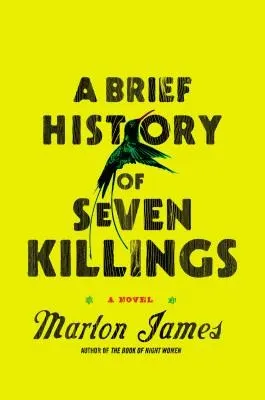
If Serpell’s swarming voices were part of the thrill, Marlon James turns polyphony into a controlled explosion. His Booker Prize–winning novel circles the attempted killing of a Jamaican reggae star known simply as the Singer, letting gang members, CIA operatives, journalists, politicians, and ghosts seize the microphone in turn.
Every voice has its own pressure, rhythm, evasions, and moral weather; history emerges not as an official account but as a cacophony of people trying to survive or manipulate it. James is darker and more ferocious than Serpell, but he shares her conviction that a nation’s story must be told from many unstable vantage points. Few novels make political history feel so immediate—or display such exhilarating command of language.
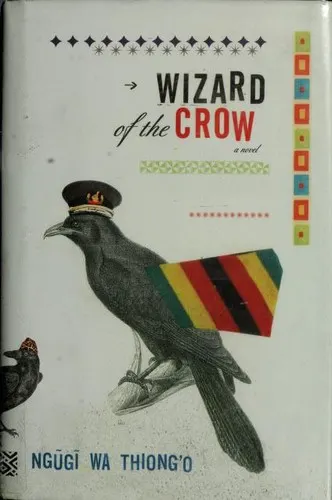
In the imaginary African dictatorship of Aburĩria, a ruler plans a tower tall enough to reach heaven, while queues, rumors, bureaucratic rituals, and a makeshift wizard begin generating consequences no one can control. Ngũgĩ’s immense comic novel treats authoritarian politics, international finance, modern medicine, folklore, and popular resistance as parts of one grotesque living system.
Translated by Ngũgĩ from his own Gĩkũyũ original, Wizard of the Crow has the expansive confidence of oral storytelling: episodes proliferate, absurdities acquire mythic force, and jokes expose structures of power more sharply than sober realism could. A reader who admired The Old Drift’s ability to make technology, history, and fable contaminate one another will find this a riotous, foundational masterpiece of African speculative satire.
If you loved The Furrows
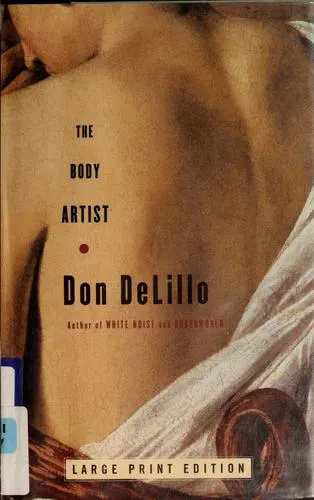
After her husband’s death, performance artist Lauren Hartke withdraws to a lonely coastal house, where time begins behaving strangely and an uncanny visitor speaks in fractured, borrowed phrases. DeLillo’s slim novel has the same unnerving power as The Furrows: mourning does not distort an otherwise stable reality; mourning reveals how unstable reality has always been.
The prose is spare where Serpell’s is lush, but both writers obsess over repetition, doubles, voices, and the body’s refusal to inhabit ordinary time. The Body Artist is among DeLillo’s most concentrated achievements—a ghost story stripped of conventional explanations, and a devastating demonstration that language can preserve the dead while making their absence more acute.
This cult masterpiece arrives as twenty-seven unbound sections in a box: the first and last are fixed, while the rest can be read in any order. Its narrator, a sportswriter sent to cover a football match, finds the city triggering memories of his friend Tony’s illness and death.
The format is not a clever accessory. It reproduces the way grief actually moves—through ambush, recurrence, irrelevant detail, and the sudden collapse of past into present. First published in 1969, The Unfortunates became a landmark of British experimental fiction because its radical construction serves such naked feeling. Anyone moved by Serpell’s repeated, mutually incompatible accounts of loss should experience Johnson’s proof that a broken form can tell the emotional truth more faithfully than a seamless one.
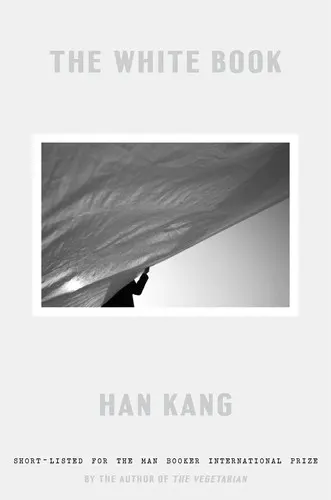
Han Kang builds this luminous novel from white things: salt, snow, rice, swaddling cloth, a shroud. At its center is the narrator’s older sister, who died only hours after being born—a person known entirely through absence, yet capable of casting a second possible life beside the narrator’s own.
Like The Furrows, it understands a lost sibling as more than a memory: the missing child becomes a double, an alternative self, and a question about who has the right to occupy the surviving life. Han’s brief fragments possess an almost physical clarity, turning whiteness into cold, breath, blankness, and fragile renewal. Shortlisted for the International Booker Prize years before Han received the Nobel, The White Book is small enough to read in an afternoon and haunting enough to rearrange the emotional weather of many days afterward.